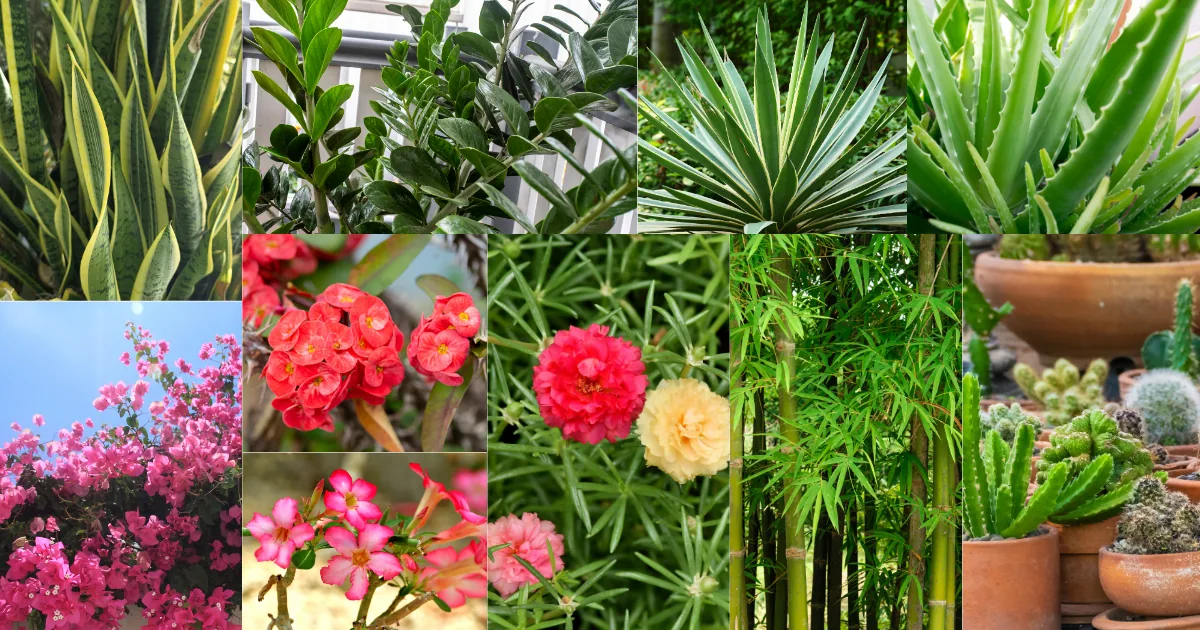
Why Drought Tolerance Matters in the Philippines
Drought tolerant plants in the Philippines are essential for surviving El Nino events and the intense dry season from March to May. During El Nino years, rainfall drops by 40 to 60 percent in many parts of Luzon, Visayas, and Mindanao. Water restrictions hit Metro Manila, Cebu, and Davao hardest. Gardens that rely on regular watering suffer the most.
Choosing plants that store water internally or have deep root systems protects your garden from total loss during extended dry spells. These plants also reduce your water bill year-round. Many of them thrive in full sun and actually bloom better when slightly stressed by heat. For colour, try celosia. It handles heat and short dry spells once it settles in.
The plants listed below survive weeks without rain, tolerate temperatures above 35 degrees Celsius, and recover quickly once the monsoon returns. Most are available at local plant markets for under 200 pesos each. For lawns, Bermuda grass is one of the toughest in a dry spell, and it greens up fast once the rain comes back.
1. Snake Plant (Sansevieria trifasciata)
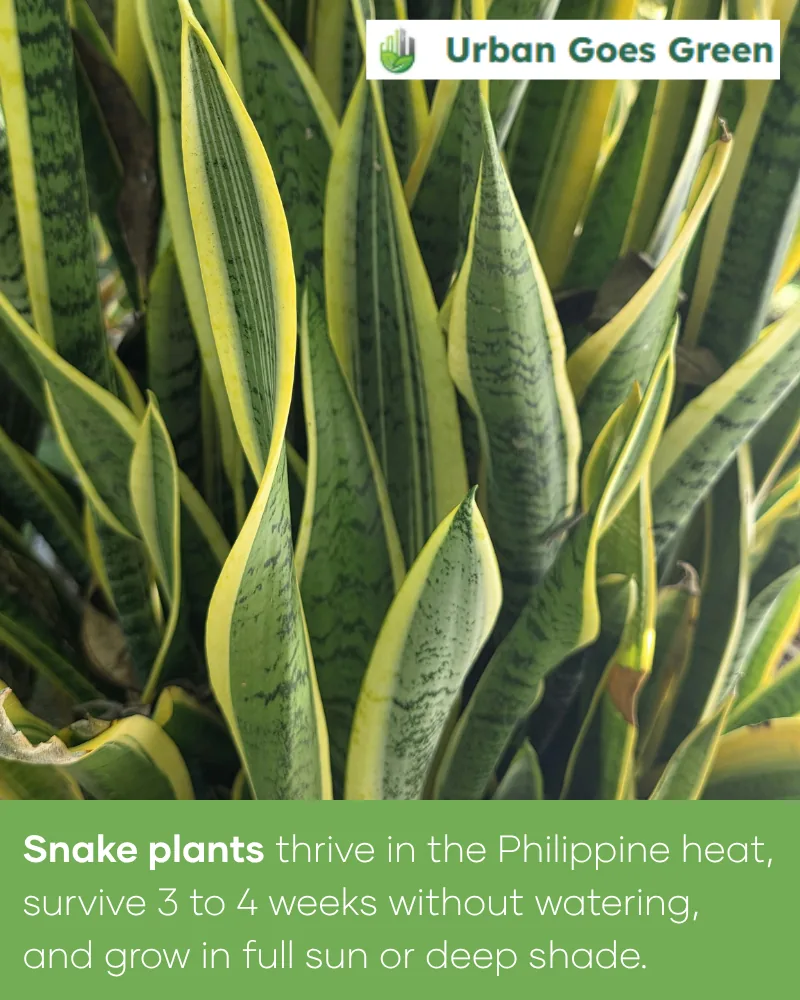
The snake plant is one of the toughest drought survivors in the Philippines. Its thick, upright leaves store water efficiently and lose very little moisture through transpiration. Snake plants survive 3 to 4 weeks without watering, even during peak summer heat. They grow in full sun, partial shade, or deep shade, making them versatile for any garden spot. Place them along driveways, fence lines, or building edges where other plants struggle. The Sansevieria trifasciata "Laurentii" variety with yellow leaf margins is the most popular in Philippine markets.
2. ZZ Plant (Zamioculcas zamiifolia)
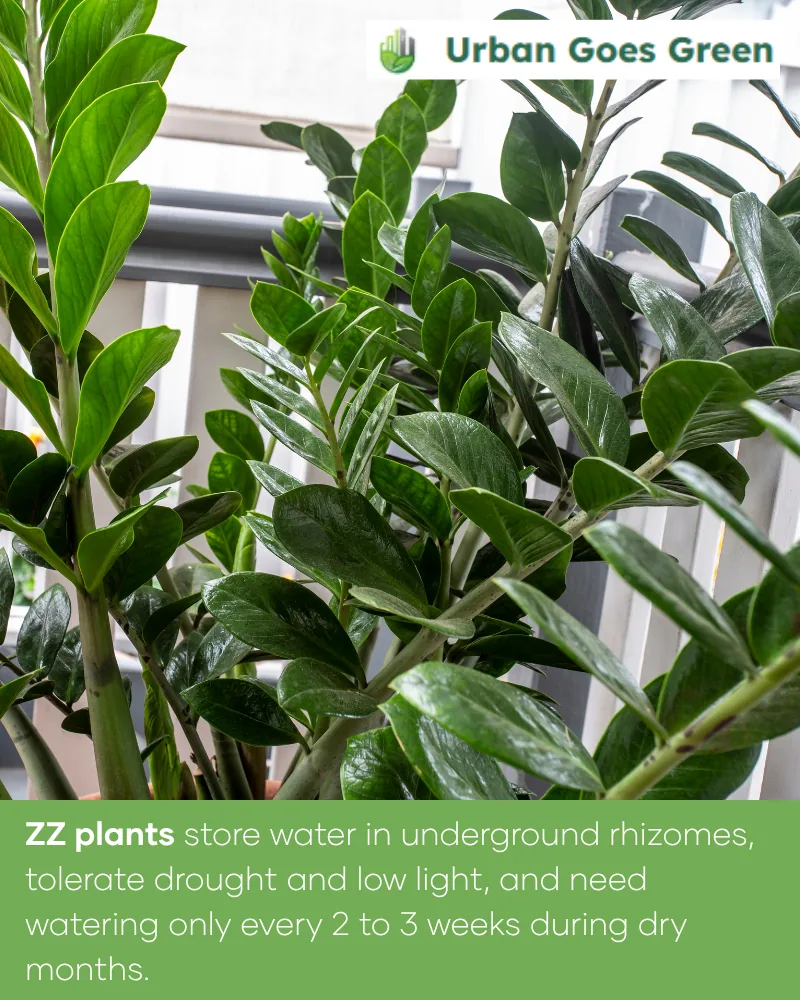
The ZZ plant stores water in its thick underground rhizomes and glossy stems. This means it handles drought far better than most tropical plants. It survives in dimly lit areas under trees or in bright outdoor patios. Water every 2 to 3 weeks during the dry season and even less during the rainy months. ZZ plants grow slowly but steadily, reaching about 60 cm tall in containers. Their waxy leaves repel dust naturally, so they always look fresh even without regular cleaning. Propagate easily by dividing the rhizomes during repotting.
3. Agave
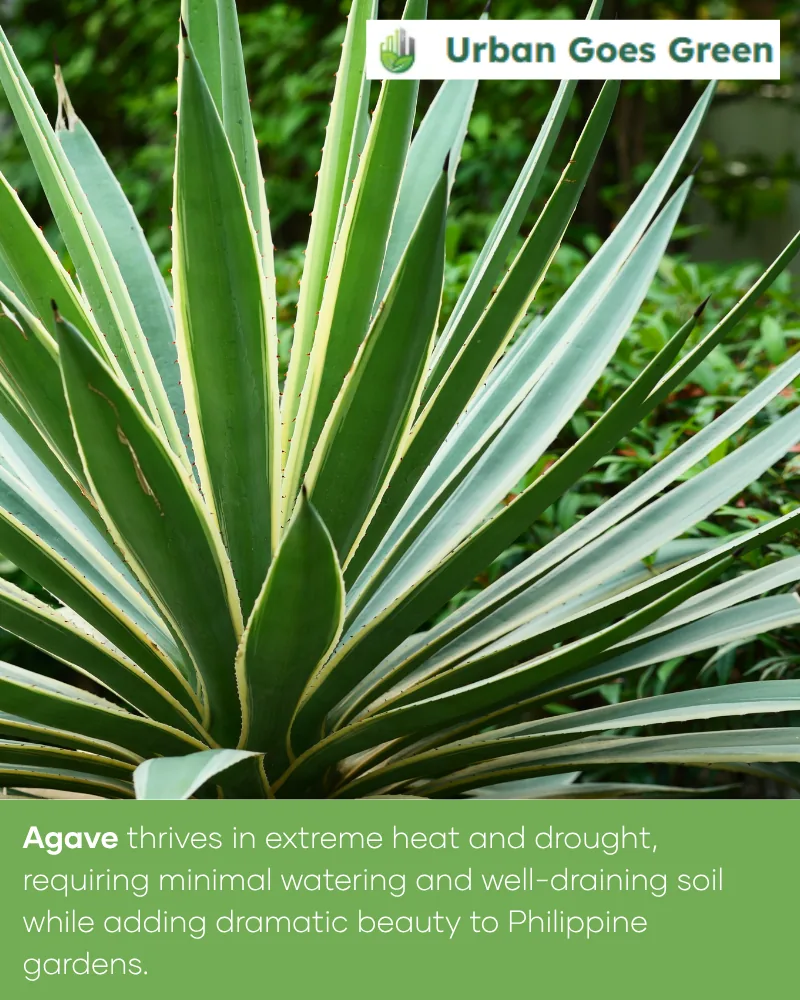
Agave plants are built for extreme heat and drought. Their thick, fleshy rosettes hold reserves of water that last through the longest dry spells. The blue agave and century plant varieties grow exceptionally well across the Philippines. Plant them in rocky or sandy soil with excellent drainage. Agave needs almost no watering once established. It handles full sun all day without wilting or scorching. Use agave as dramatic focal points in xeriscaped gardens or as boundary plants along walls. Be mindful of the sharp spines at leaf tips, especially near walkways and play areas.
4. Aloe Vera
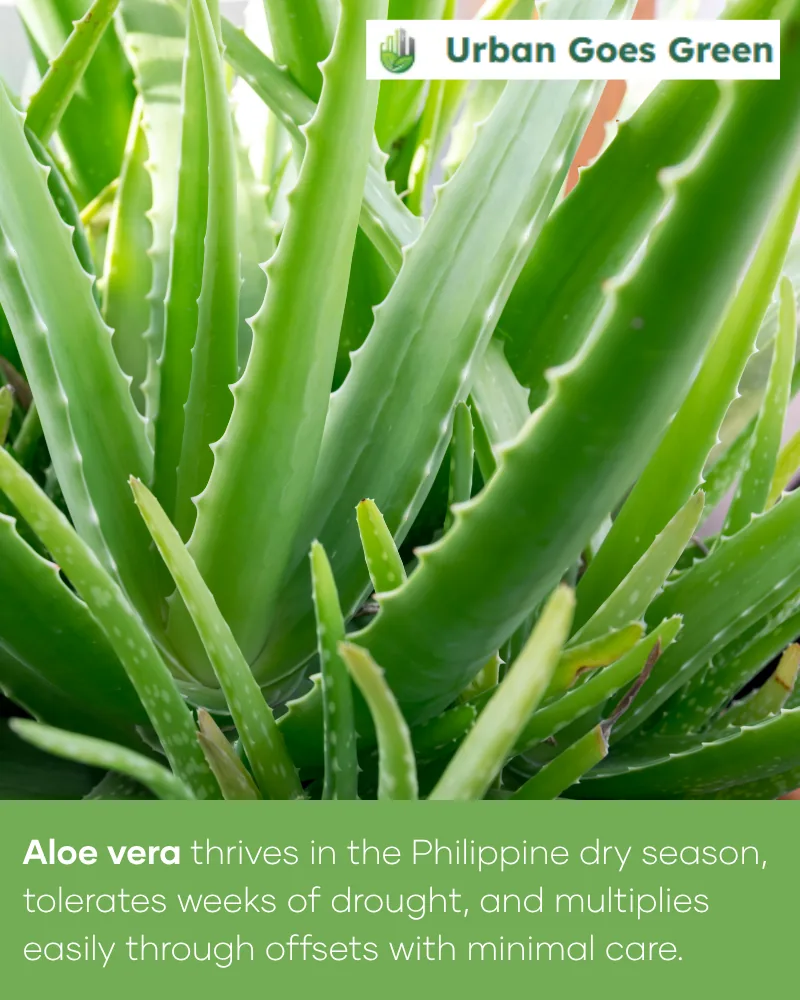
Aloe vera thrives in the Philippine dry season with virtually no care. Its gel-filled leaves store enough water to survive weeks of drought. Beyond ornamental value, aloe vera provides a steady supply of healing gel for burns, cuts, and skin care. Plant it in well-drained soil in a spot that gets at least 4 hours of direct sunlight daily. Water deeply once every 10 to 14 days during summer. Aloe vera multiplies quickly through offsets or "pups" that grow around the mother plant. A single plant produces dozens of new plants each year at no cost.
5. Bougainvillea
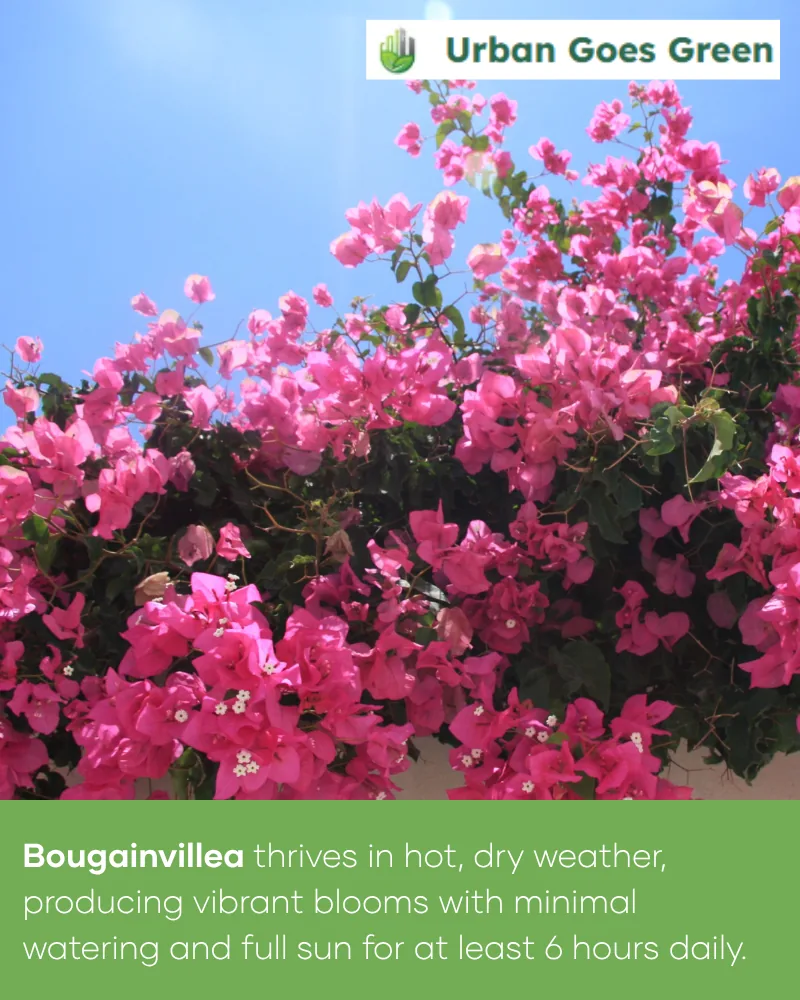
Bougainvillea is the queen of drought tolerant flowering plants in the Philippines. It produces its most spectacular blooms during dry, hot weather. The colourful bracts come in magenta, orange, purple, white, and pink. Bougainvillea grows aggressively once established and covers walls, fences, and trellises within a single season. It needs full sun for at least 6 hours daily. Water sparingly because overwatering actually reduces flowering. Prune after each flowering cycle to encourage bushier growth and more blooms. This plant handles Philippine typhoon conditions well due to its flexible woody stems.
6. Crown of Thorns (Euphorbia milii)
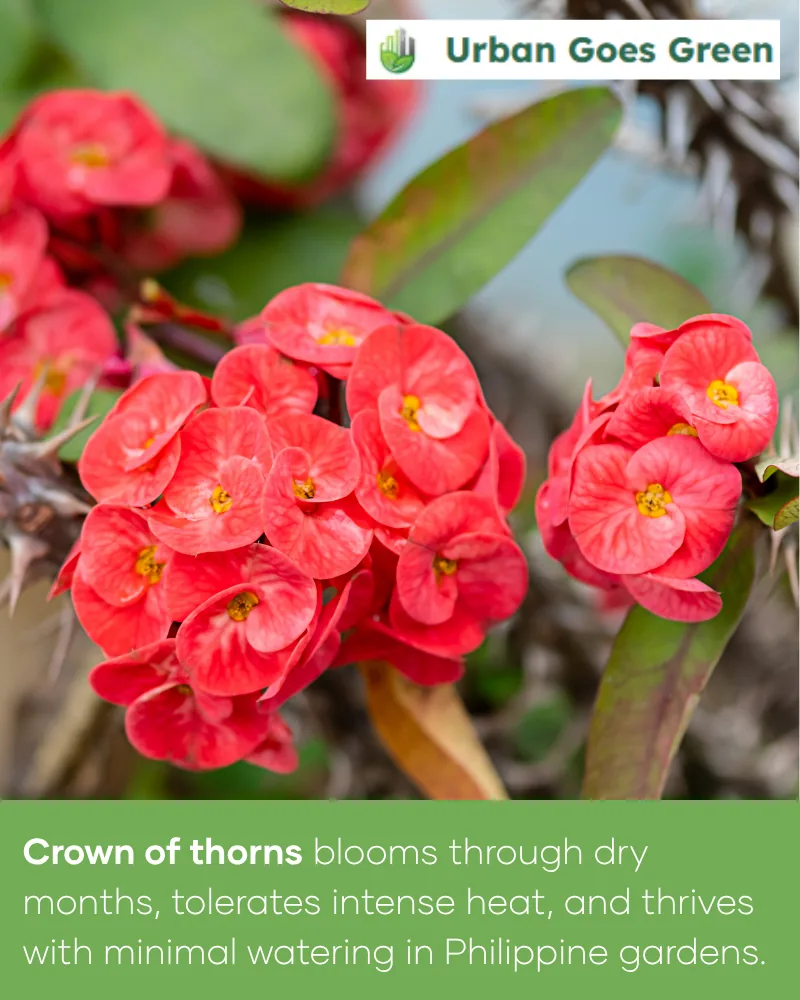
Crown of thorns produces small, bright flowers continuously through the driest months. Filipino gardeners grow it in pots, borders, and rock gardens across the country. This plant stores water in its thick stems and needs watering only every 10 to 14 days. It tolerates poor soil, intense sun, and temperatures above 40 degrees Celsius. Flowers come in red, pink, yellow, white, and bi-coloured varieties. Crown of thorns grows 30 to 60 cm tall and makes an excellent security plant along property boundaries due to its sharp thorns. Handle with gloves because the white sap irritates skin.
7. Adenium (Desert Rose)
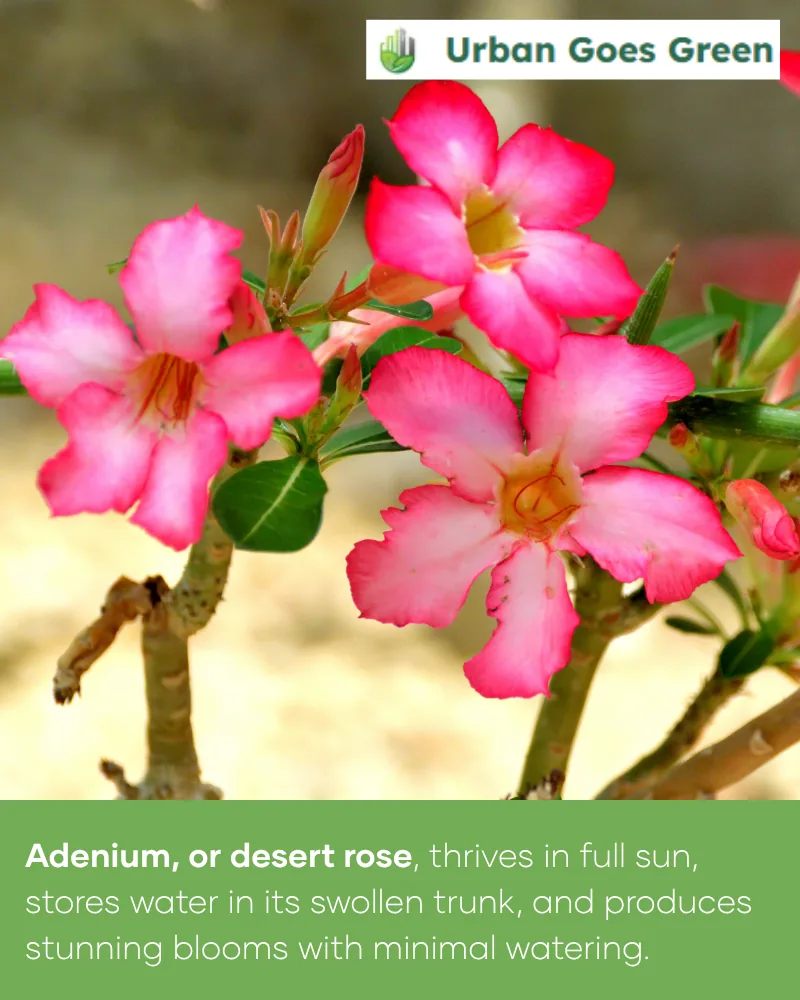
The adenium or desert rose is a stunning drought tolerant plant with a swollen trunk called a caudex. This caudex stores water reserves that sustain the plant through extreme dry periods. Adenium produces large trumpet-shaped flowers in red, pink, white, and multi-coloured patterns. It loves full sun and requires very little water once its caudex develops fully. Water once a week during summer and once every 2 to 3 weeks during the cooler months. Adenium collectors in the Philippines pay thousands of pesos for rare grafted varieties. Even common varieties produce show-stopping blooms from February through October.
8. Portulaca (Moss Rose)
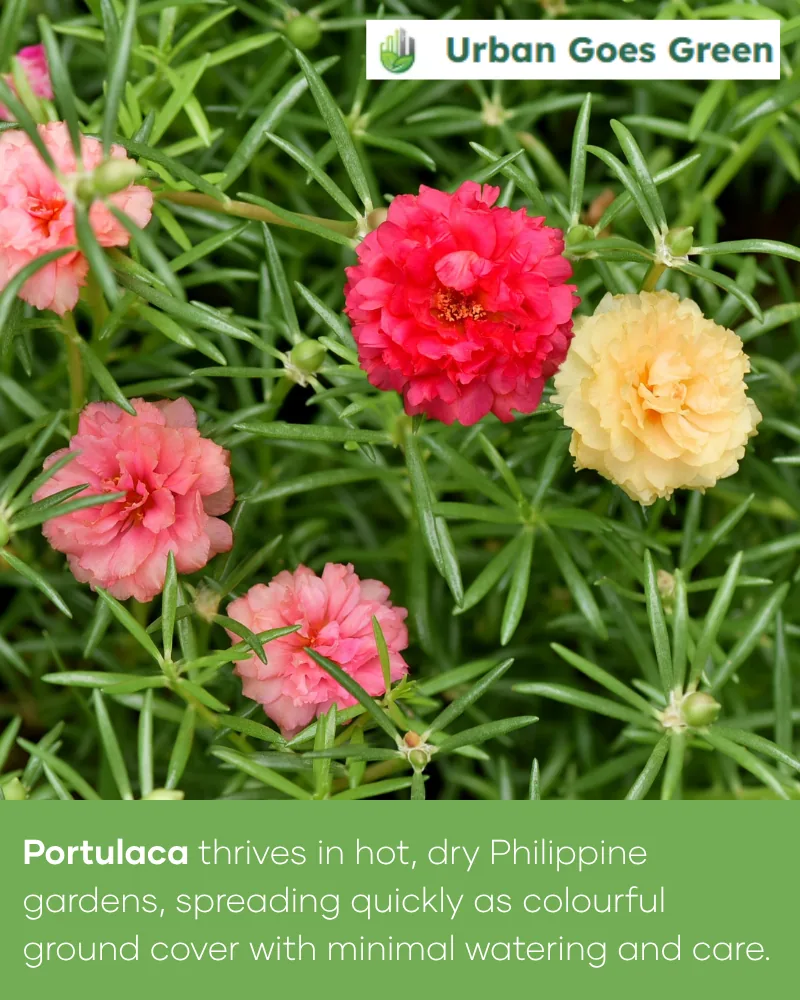
Portulaca is the best ground cover for dry, sun-baked areas in Philippine gardens. Its small succulent leaves retain water while its bright flowers open each morning in full sun. Colours include red, orange, yellow, pink, white, and striped varieties. Portulaca grows rapidly from seed or cuttings and fills bare patches within weeks. It thrives in sandy, nutrient-poor soil where other plants refuse to grow. Water minimally because portulaca prefers dry conditions. This plant self-seeds freely, so one planting provides ground cover for years. Use it along driveways, pathways, and rooftop containers.
9. Cactus Varieties
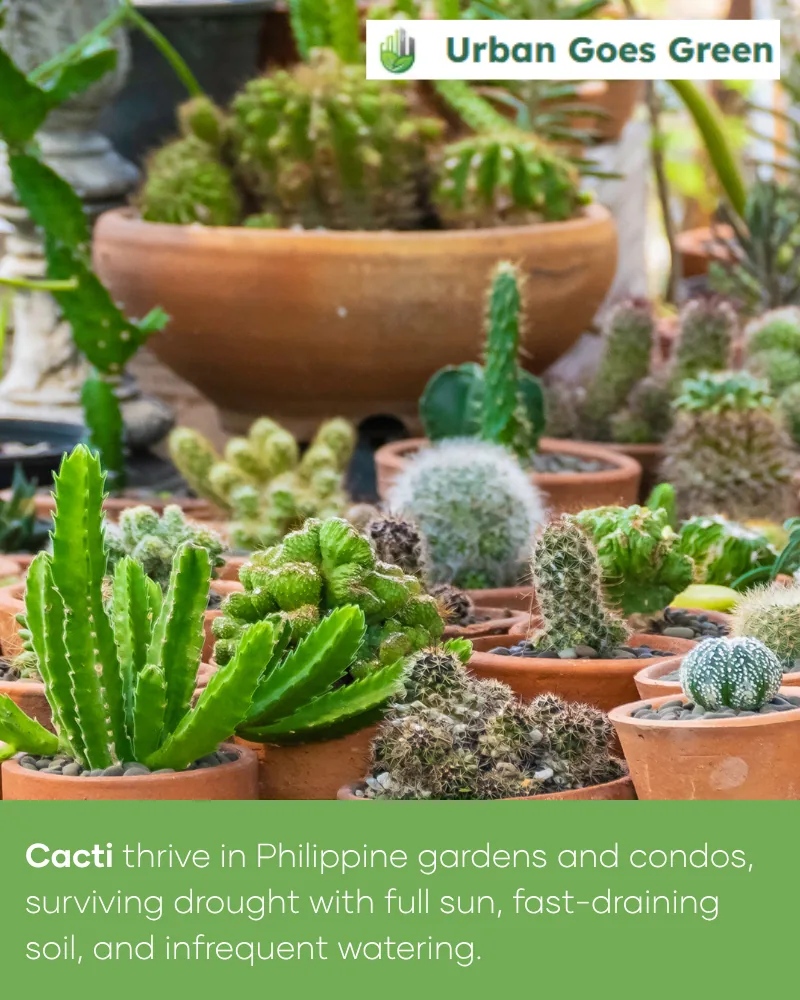
Cacti are the ultimate drought survivors for Philippine gardens and containers. Popular varieties that grow well locally include the prickly pear (Opuntia), barrel cactus, cereus, and the smaller mammillaria and gymnocalycium types. Cacti store water in their thick stems and have reduced leaves (spines) that minimise moisture loss. They need full sun, fast-draining soil, and very infrequent watering. During the dry season, water once every 2 to 3 weeks. During the rainy season, protect them from waterlogging by placing them under eaves or using raised containers with drainage holes. Cacti make excellent rooftop and balcony plants in Philippine condos.
10. Bamboo
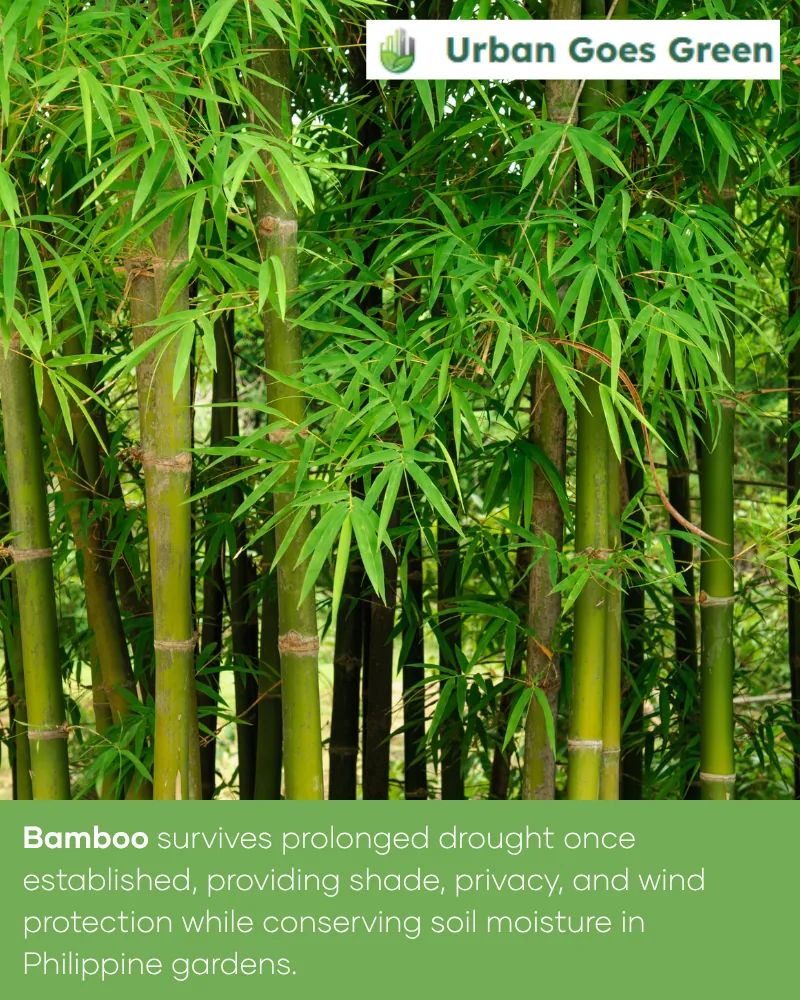
Bamboo develops deep, extensive root systems that reach groundwater other plants cannot access. Once established, most bamboo species survive prolonged drought without supplemental watering. Giant bamboo (Bambusa), golden bamboo, and Buddha belly bamboo all grow vigorously in the Philippines. Bamboo provides shade, privacy screening, and windbreaks for other garden plants. The dense canopy reduces soil moisture evaporation underneath. Plant bamboo at the edges of your garden to create a microclimate that protects more delicate plants during El Nino. Clumping varieties are best for urban gardens because they do not spread aggressively like running types.
Water-Saving Tips for Philippine Gardens
Growing drought tolerant plants is only part of the solution. These water-saving strategies keep your entire garden healthy during dry spells.
- Mulch heavily - Apply 5 to 8 cm of dried leaves, rice hulls, or coco coir around plant bases. Mulch reduces soil moisture evaporation by up to 70 percent.
- Water early morning - Water before 7 AM when temperatures are lowest. This gives roots maximum absorption time before the heat begins.
- Use drip irrigation - Drip systems deliver water directly to roots with minimal waste. They use 50 to 70 percent less water than overhead sprinklers. For a small lawn that never needs watering, some homeowners switch to artificial grass.
- Collect rainwater - Set up collection barrels during the monsoon season. A single typhoon can fill multiple barrels to last weeks into the dry season.
- Group plants by water needs - Place drought tolerant plants together and thirsty plants together. This prevents overwatering or underwatering entire sections.
- Improve soil structure - Mix coco coir and compost into garden beds. These organic materials hold moisture longer than plain garden soil.
Premium Soil for Drought Tolerant Plants
Our garden soil mix retains moisture while providing excellent drainage. Perfect for succulents, cacti, and other drought tolerant plants. Same-day delivery across Metro Manila.
Philippine Climate Tips for Drought Tolerant Plants
The Philippine climate has two main seasons that affect how you care for drought tolerant plants. Understanding both helps you plan a resilient garden.
- Dry season (March to May) - Temperatures regularly exceed 35 degrees Celsius in Metro Manila and Central Luzon. Even drought tolerant plants benefit from early morning watering every 7 to 10 days during this period.
- Rainy season (June to November) - Switch your focus from drought survival to drainage management. Ensure all containers have drainage holes and elevate pots on bricks or stands to prevent waterlogging.
- El Nino years - The dry season extends into June or July with significantly reduced rainfall. Stock up on mulching materials and set up rainwater collection before El Nino is officially declared by PAGASA.
- Transition months - December to February are relatively mild. Use this time to plant new drought tolerant specimens so they establish root systems before the heat arrives.
- Urban heat island effect - Rooftops, balconies, and concrete-surrounded gardens in Metro Manila experience temperatures 3 to 5 degrees higher than readings suggest. Choose the toughest species like agave and bougainvillea for these locations.
Frequently Asked Questions
What plants survive El Nino in the Philippines?
Snake plants, agave, aloe vera, bougainvillea, adenium, portulaca, crown of thorns, and most cactus varieties survive El Nino conditions in the Philippines. These plants store water in their leaves, stems, or roots, allowing them to go weeks without rain. Bougainvillea actually blooms more vigorously during dry spells. For best results, apply a thick layer of mulch around the base of each plant to retain soil moisture during extended heat waves.
How often should I water drought tolerant plants in summer?
Most drought tolerant plants need watering only once every 7 to 14 days during Philippine summers. Succulents like agave and aloe vera can go even longer at 2 to 3 weeks between waterings. Always check the soil first by pushing your finger 5 cm deep. If it feels dry at that depth, water thoroughly until it drains from the bottom. Water early in the morning before 7 AM to reduce evaporation and give roots time to absorb moisture before peak heat.
Can drought tolerant plants survive the Philippine rainy season too?
Yes, most drought tolerant plants handle the rainy season well if they have proper drainage. The biggest risk is root rot from waterlogged soil, not the rain itself. Plant them in raised beds or containers with drainage holes and use a fast-draining soil mix with perlite or pumice. Avoid saucers that collect standing water. Agave, snake plant, and bougainvillea are particularly adaptable to both extreme heat and heavy monsoon rains common in the Philippines.