Everything You Need to Know About Guyabano (Soursop) — Care, Propagation & More
Your complete Filipino gardener’s guide to growing, caring for, and harvesting Guyabano — prized for its creamy flesh, refreshing juice, and herbal leaf tea.
What Can You Eat?
Discover the edible parts and how Filipinos enjoy this plant.
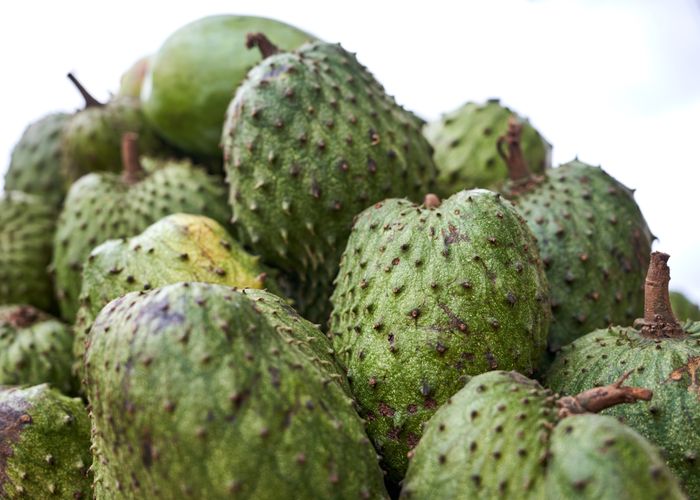
Guyabano is blended into refreshing juices, shakes, and ice cream. The creamy white flesh is eaten fresh, scooped with a spoon. Guyabano leaves are dried and brewed into herbal tea, widely believed to have health benefits. The fruit is also used in smoothie bowls and desserts.
Guyabano is popular in the Philippines both as a food and for traditional herbal medicine. The leaf tea is one of the most sought-after herbal remedies in Filipino folk medicine. Commercially, guyabano juice and flavoring are used in candies, ice cream, and bottled drinks. The tree grows easily in Philippine lowland conditions and fruits abundantly.
Germination Guide
From seed to sprout — here’s what to expect.
Planting Instructions
Everything you need to prepare.
Propagation Methods
Learn the best ways to multiply your plants.
Care Guide
Keep your plant happy and thriving.
Full sun to partial shade (6-8 hours daily)
Regular watering; keep soil consistently moist. Sensitive to drought stress which causes flower and fruit drop.
Apply balanced fertilizer (14-14-14) quarterly. Top-dress with compost or vermicast. Increase potassium during fruiting.
25-35°C (tropical lowland; no frost tolerance)
65-85%
Mulch to retain moisture. Prune crossing branches for airflow. Protect from strong winds which can damage branches.
Harvest Guide
Know when and how to harvest.
Fruit spines flatten and spread apart. Skin turns from dark green to yellowish-green. Fruit yields slightly to pressure. Harvest slightly before fully ripe for best handling.
Cut fruit from the branch with a sharp knife or pruning shears, leaving a short stem attached. Handle very gently as ripe fruit bruises easily. Allow to ripen fully at room temperature for 1-2 days after picking.
Common Problems & Solutions
Spot issues early and fix them fast.
Mealybug infestation
Cause: Mealybugs clustering on fruit and leaf undersides
Solution: Spray with neem oil or insecticidal soap. Remove heavily infested fruit. Encourage natural predators.
Fruit rot before ripening
Cause: Anthracnose fungus, especially during wet season
Solution: Harvest before fully ripe. Improve air circulation around the canopy. Apply copper-based fungicide preventively.
Flower drop
Cause: Water stress, nutrient deficiency, or poor pollination
Solution: Maintain consistent watering. Apply balanced fertilizer. Hand-pollinate if natural pollinators are scarce.
Deformed or small fruit
Cause: Incomplete pollination
Solution: Hand-pollinate by collecting pollen from mature flowers and applying to receptive stigmas early in the morning.
Perfect Plant Partners
Plants that grow well together.