Everything You Need to Know About Jackfruit Seeds — Care, Propagation & More
Your complete Filipino gardener’s guide to growing, preparing, and enjoying Buto ng Langka — the protein-rich seed most Filipinos throw away but shouldn’t.
What Can You Eat?
Discover the nutritional powerhouse hiding inside every jackfruit that most Filipinos discard.
Jackfruit seeds are most commonly boiled in salted water for 20-30 minutes until tender, then peeled and eaten as a simple merienda snack. In the Visayas and Mindanao, boiled seeds are mashed and mixed into ginataang langka (jackfruit in coconut milk) for added body and protein. Roasted jackfruit seeds, prepared similarly to chestnuts over charcoal, have a nutty, starchy flavor beloved by older Filipinos who remember this as a childhood treat. The seeds can also be sliced thin and deep-fried into chips, ground into flour for baking, or added to vegetable stews as a potato substitute. In some Bicolano households, the seeds are simmered in coconut milk with sugar and served as a simple dessert called nilupak na buto ng langka.
In many Filipino provinces, throwing away jackfruit seeds is considered a waste, especially among the older generation who grew up during times of scarcity. A single large jackfruit can contain 100-500 seeds, representing a significant source of free protein and carbohydrates. Provincial families traditionally boil the seeds in large batches and share them with neighbors. Despite being one of the most nutritious parts of the fruit, containing roughly 7 grams of protein per 100 grams, jackfruit seeds remain underappreciated in modern Filipino urban kitchens. The growing interest in zero-waste cooking and sustainable food practices has recently revived attention to this humble ingredient, with some farm-to-table restaurants in Metro Manila featuring jackfruit seed dishes on their menus.
Germination Guide
From seed to sprout — jackfruit seeds germinate quickly and reliably.
Planting Instructions
Everything you need to know to give your jackfruit seedling the best start.
Jackfruit trees require a spacious, permanent planting site because of their massive size at maturity. Choose a location at least 8 meters from buildings, walls, and other large trees. Dig a hole 60 cm wide and 60 cm deep. Mix the excavated soil with aged compost or well-rotted carabao manure at a 3:1 ratio. Plant the seedling at root ball level, firm the soil around the base, and water deeply. Apply a 10 cm layer of dried grass or rice straw mulch around the base, keeping it 15 cm away from the trunk. During the first dry season, water the tree 3 times per week. Jackfruit trees planted from seed generally begin fruiting in 3-5 years. If space is limited, ask your local nursery about grafted dwarf varieties that fruit earlier and stay smaller.
Propagation Methods
How to grow more jackfruit trees and ensure productive varieties.
Care Guide
Keep your jackfruit tree healthy and productive in Philippine conditions.
Full sun, 6-8 hours daily. Young seedlings benefit from partial shade during their first 2-3 months, but mature trees need full sun for maximum fruit production. Jackfruit planted in shaded locations produce fewer and smaller fruits.
Water young trees 2-3 times weekly during the dry season. Once established (after 2 years), jackfruit is quite drought-tolerant due to its deep taproot. However, consistent watering during flowering and fruit development significantly improves yield and fruit size. Avoid waterlogging, which causes root rot.
Apply complete fertilizer (14-14-14) at 200-500 grams per tree quarterly during the first 3 years. For fruiting trees, increase to 1-2 kg per application and add muriate of potash (0-0-60) during flowering. Organic options include well-composted carabao manure or chicken manure applied in a ring around the drip line. Avoid placing fertilizer directly against the trunk.
25-38°C (ideal). Jackfruit is a true tropical tree that thrives in Philippine lowland heat. It has zero frost tolerance and does not perform well above 1,000 meters elevation. The tree grows fastest in the warm, humid conditions found throughout the Philippine lowlands.
60-90% (Philippine conditions are perfect). Jackfruit is native to the Western Ghats of India but has been cultivated in the Philippines for centuries and is fully adapted to the local climate. High humidity during flowering can promote fruit rot, so ensure good air circulation around the canopy.
Maintain a thick mulch layer around the base to suppress weeds and retain moisture. Prune lower branches to maintain a clean trunk up to 1.5-2 meters for easy walking underneath. Remove dead or diseased branches annually. Avoid heavy pruning during the rainy season when fungal diseases spread more easily. Apply lime if soil pH drops below 5.5.
Harvest Guide
Know when your jackfruit is ready and how to collect and prepare the seeds.
Jackfruit trees in the Philippines typically fruit twice a year, with main harvests from March to June and a smaller harvest from September to November. A mature tree can produce 50-200 fruits per year, each containing 100-500 seeds. This represents an enormous amount of free, nutritious food that is often wasted.
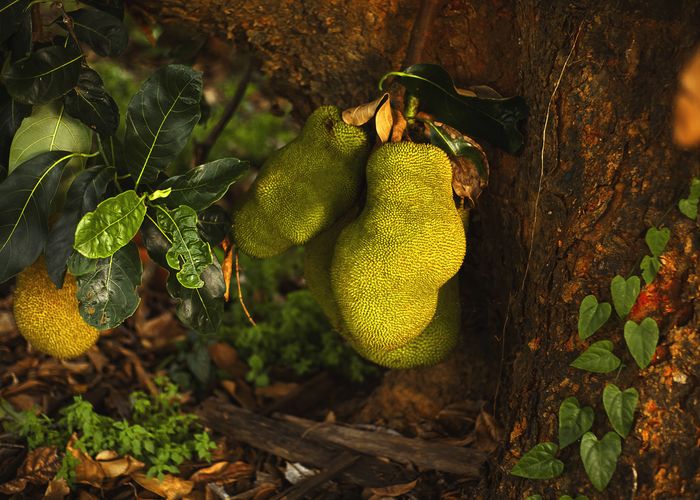
The jackfruit is ripe when the skin changes from green to yellowish-brown, the spines flatten and spread apart, the fruit emits a strong sweet aroma, and a hollow sound is produced when tapped. For cooking purposes (ginataang langka), green unripe jackfruit is harvested when the skin is still dark green and firm. The seeds are collected after opening the ripe or mature fruit.
Cut open the jackfruit and remove the fleshy arils. Extract the seeds from each aril by peeling away the thin, rubbery seed coat. Wash seeds thoroughly to remove all sticky latex. For boiling, place seeds in a pot of salted water and boil for 20-30 minutes until tender when pierced with a fork. For roasting, score the seed coat with a knife and roast over charcoal or in an oven at 200°C for 20 minutes. The inner seed has a texture similar to a chestnut and a mild, starchy-nutty flavor. Seeds must always be cooked before eating, as they contain trypsin inhibitors that are neutralized by heat.
Common Problems & Solutions
Spot issues early and fix them fast.
Fruit fly infestation (Bactrocera spp.)
Cause: Oriental fruit flies lay eggs inside ripening fruit. Larvae feed on the flesh, causing premature rot and fruit drop. This is the most common pest of jackfruit in the Philippines.
Solution: Set up methyl eugenol fruit fly traps around the tree 4-6 weeks before harvest. Bag developing fruits with newspaper or old rice sacks when they reach fist size. Harvest fruit at the mature-green stage and ripen indoors. Collect and destroy all fallen fruit to break the pest cycle.
Trunk borer (Batocera spp.)
Cause: Longhorn beetle larvae bore into the trunk and main branches, creating tunnels that weaken the tree structure. Frass (sawdust-like excrement) at the base of the tree or on branches is the telltale sign.
Solution: Inject insecticide into visible bore holes using a syringe and seal with clay or putty. Maintain tree health through proper fertilization, as stressed trees are more susceptible. Check the trunk regularly and kill adult beetles on sight.
Rhizopus fruit rot
Cause: A fungal disease that causes soft, watery rot on ripe fruit, especially during humid rainy season conditions. The fungus enters through wounds or insect damage.
Solution: Handle fruit carefully during harvest to avoid wounds. Harvest at the correct maturity stage. Store fruit in a well-ventilated area. Avoid piling fruit in enclosed, humid spaces. Discard infected fruit immediately to prevent spread.
Poor fruiting or no fruit
Cause: Seed-grown trees may take 5-8 years to fruit. Other causes include insufficient sunlight, over-fertilization with nitrogen (promotes leaves over flowers), or lack of pollinators.
Solution: Be patient with young trees. Ensure the tree receives full sun. Reduce nitrogen fertilizer and increase potassium during the expected flowering period. Jackfruit flowers are wind-pollinated and also visited by small flies; avoid broad-spectrum insecticide sprays during flowering.
Perfect Plant Partners
Plants that thrive alongside jackfruit trees or complement the seeds in the kitchen.