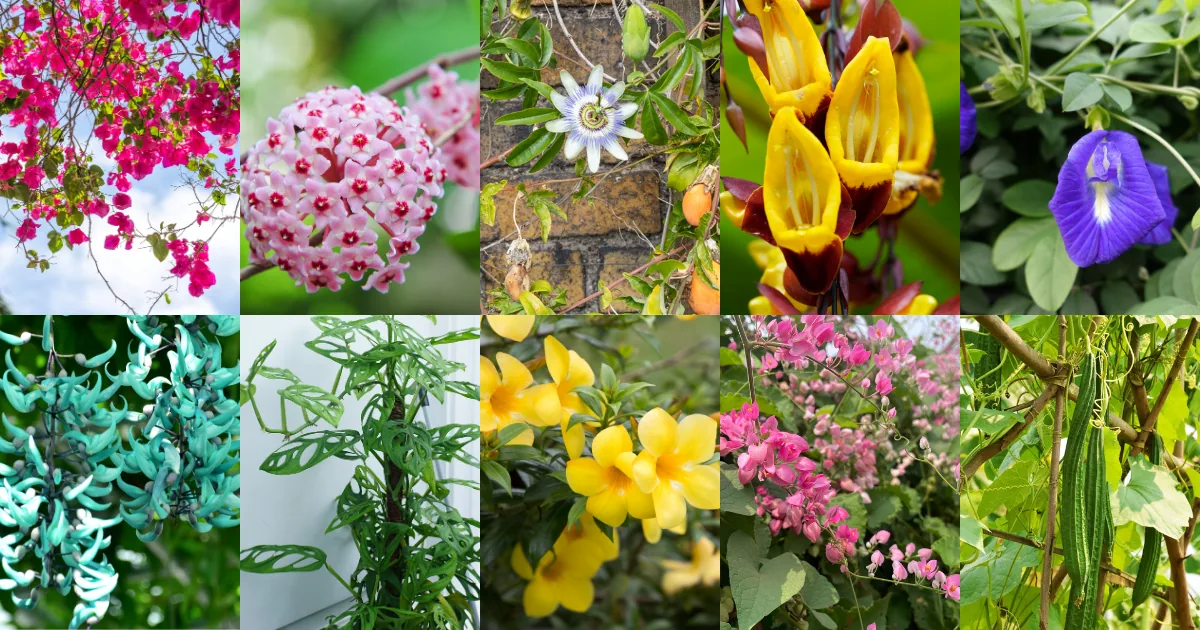
Why Grow Climbing Plants in Philippine Gardens
If you have ever looked at a bare concrete wall or a chain-link fence and wished it could be something more, climbing plants are the answer. In the Philippines, where lot sizes in Metro Manila subdivisions keep shrinking, vertical gardening with vines is one of the smartest ways to maximise your green space without sacrificing precious floor area. A single bougainvillea trained along a perimeter wall can deliver more visual impact than a dozen potted plants arranged on the ground.
Climbing plants in the Philippines serve purposes far beyond decoration. They provide natural shade that can lower indoor temperatures by 3 to 5 degrees Celsius during the summer months of March to May. They act as living privacy screens, blocking the view from neighbouring houses without the expense of raising a wall higher. Some, like passion fruit vine and luffa, produce edible harvests that save you money at the palengke. Others, like butterfly pea, yield flowers used in traditional teas and natural food colouring.
The Philippine climate is a paradise for most tropical climbers. With average temperatures between 25 and 34 degrees Celsius, abundant rainfall from June to November, and high humidity year-round, conditions are ideal for rapid vine growth. Most of the climbing plants in this guide will establish themselves within a single wet season and begin flowering by their second year. Some, like cadena de amor and butterfly pea, bloom within months of planting.
Whether you are working with a sprawling provincial garden or a compact Metro Manila balcony, this guide covers the ten best climbing plants for Philippine conditions. We have included sun and shade requirements, flowering seasons, the type of support each vine needs, and practical growing tips drawn from real experience in Philippine gardens. If you are also interested in ground-level planting, check out our guide on container gardening in the Philippines for complementary ideas.
1. Bougainvillea
The Undisputed Queen of Philippine Vines
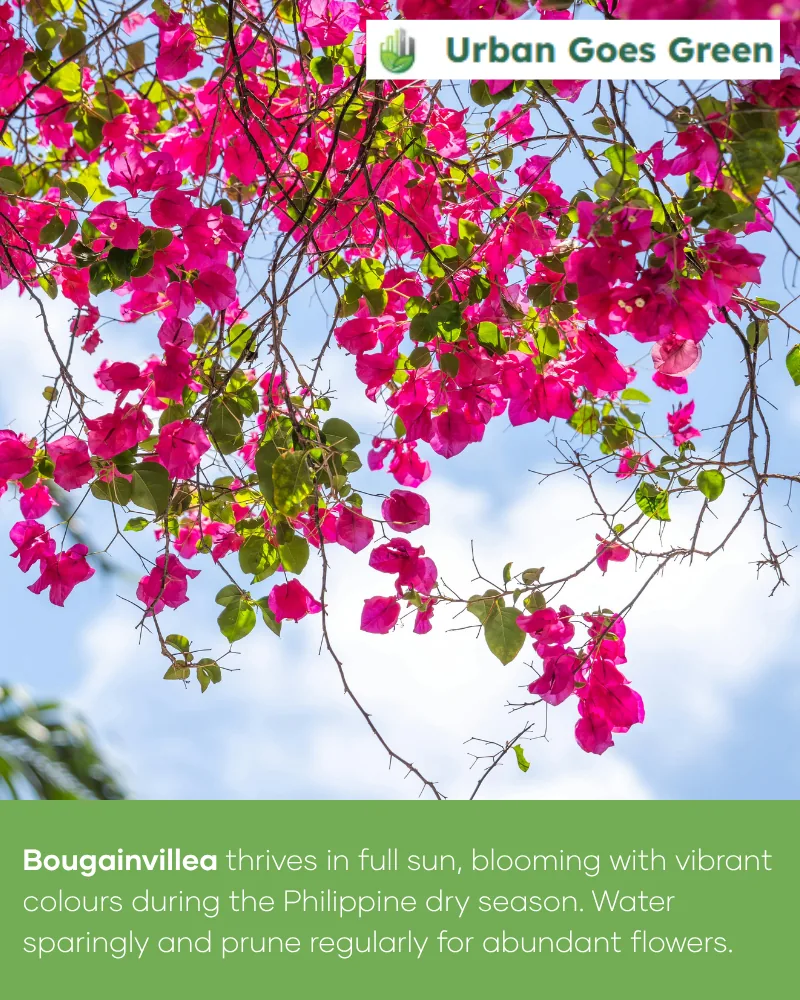
Bougainvillea is arguably the most recognisable climbing plant in the Philippines. Drive through any subdivision in Quezon City, Antipolo, or Tagaytay and you will spot cascades of magenta, orange, white, or purple bracts spilling over walls and gates. What most people call the "flowers" are actually modified leaves (bracts) that surround tiny, inconspicuous true flowers. This is what makes bougainvillea so spectacular. The colourful display lasts for weeks, not days.
In the Philippines, bougainvillea blooms most heavily during the dry season from January to May, when the combination of intense sunlight and reduced watering triggers prolific flowering. This makes it the perfect plant for adding colour to your garden during the hottest, driest months when many other plants struggle. Some cultivars, particularly the dwarf varieties, bloom almost year-round in Philippine conditions.
Growing Requirements
- Sunlight: Full sun, at least 6 hours of direct sunlight daily. Bougainvillea will not flower well in shade.
- Soil: Well-draining loam or sandy soil. Avoid waterlogged conditions, which cause root rot. A quality loam soil mix with added perlite works perfectly.
- Watering: Water deeply but infrequently. Allow the soil to dry out between waterings. Overwatering is the most common mistake and it suppresses flowering.
- Support: Bougainvillea is technically a scrambler, not a true climber. It needs to be tied to trellises, arbours, or wires because it does not have tendrils or aerial roots. Use soft garden ties to avoid damaging stems.
- Pruning: Prune after each flowering flush to encourage new growth and more blooms. Wear thick gloves because the thorns are sharp.
- Fertiliser: Apply a high-phosphorus fertiliser (such as 10-30-10) every 6 to 8 weeks during the growing season. Avoid high-nitrogen feeds, which produce leaves at the expense of flowers.
Best Varieties for Philippine Gardens
The most popular varieties locally include 'Barbara Karst' (bright red), 'Juanita Hatten' (deep magenta), 'Golden Glow' (orange-gold), and the dwarf 'Helen Johnson' for container growing. If you want a white variety, look for 'Jamaica White' or 'Miss Alice', both of which perform beautifully in the Philippine heat. For a multi-coloured display, some nurseries sell grafted bougainvillea with three or four colours on a single plant.
A mature bougainvillea can cover a 3-metre-wide fence section in just 18 to 24 months with proper care. Budget around ₱150 to ₱500 for a good-sized cutting at local garden centres, or propagate your own from hardwood cuttings taken during the dry season.
2. Jade Vine (Strongylodon macrobotrys)
A Philippine National Treasure
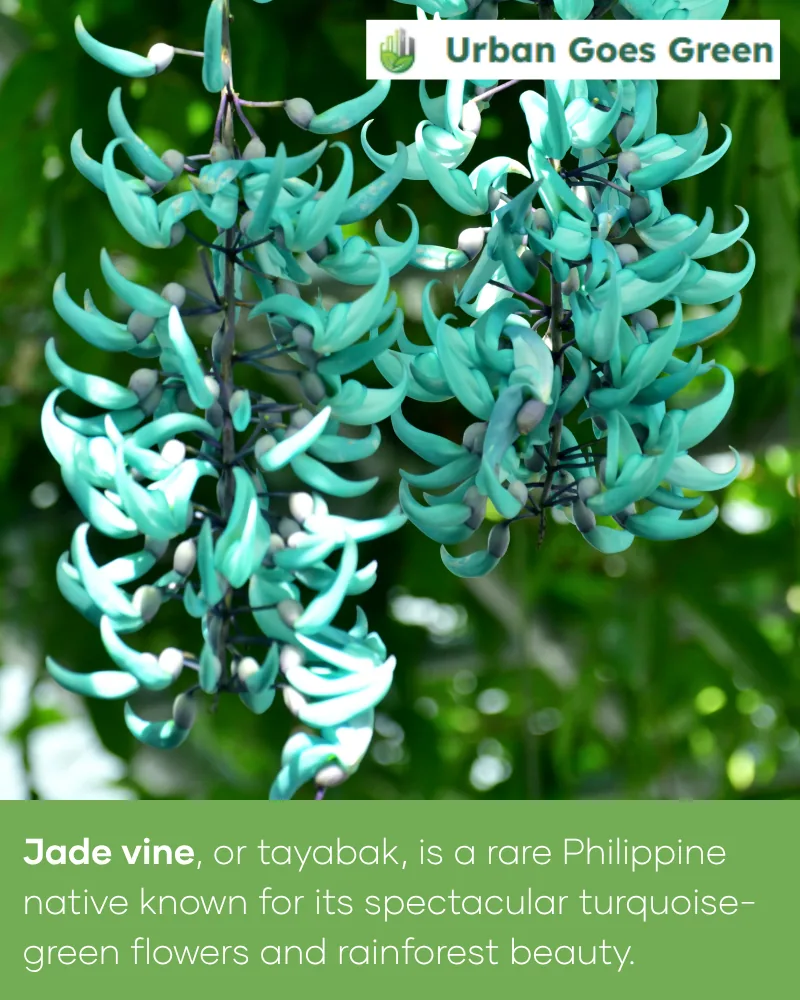
Jade vine is one of the most extraordinary plants on the planet, and it is native to the Philippine rainforests. Its claw-shaped flowers hang in clusters up to 3 metres long, displaying a luminous turquoise-green colour that is almost unmatched in the plant kingdom. The colour is so unusual that first-time viewers often assume the flowers are artificial. Jade vine is listed as vulnerable by the IUCN due to deforestation, making home cultivation an act of conservation as well as beauty. Locally it is called tayabak.
In the wild, jade vine grows in the damp, shaded understorey of lowland and montane forests in Luzon, particularly in the Sierra Madre range, Quezon Province, and parts of Mindoro. It is pollinated by bats, which are attracted to the flower's luminescence at dusk. In a garden setting, you may need to hand-pollinate if you want seeds, though most home gardeners grow jade vine for its spectacular flowers rather than its fruit.
Growing Requirements
- Sunlight: Partial shade to dappled sunlight. Jade vine is a forest plant that burns in full, direct Philippine sun. Morning sun with afternoon shade is ideal.
- Soil: Rich, well-draining soil with plenty of organic matter. Mix loam soil with compost and coconut coir in a 2:1:1 ratio.
- Watering: Keep consistently moist but never waterlogged. Mist the foliage during dry spells to mimic its forest habitat.
- Support: Needs a very strong pergola, arbour, or overhead trellis. Mature jade vines are heavy and woody, so flimsy supports will collapse. Concrete or steel frameworks are ideal.
- Flowering: Typically blooms from February to May. Plants may take 3 to 5 years from seed to first flower, though marcotted (air-layered) plants can bloom sooner.
- Temperature: Thrives between 22 and 30 degrees Celsius. Does not tolerate frost, but this is rarely a concern in the Philippines outside of Benguet and Mountain Province.
Jade vine is not as easy to find commercially as bougainvillea, but specialist nurseries in Laguna, Quezon, and Cavite often carry seedlings. Expect to pay ₱300 to ₱1,500 depending on size. If you know someone with a mature vine, air layering is the most reliable propagation method.
3. Hoya (Wax Plant)
The Collectible Climber
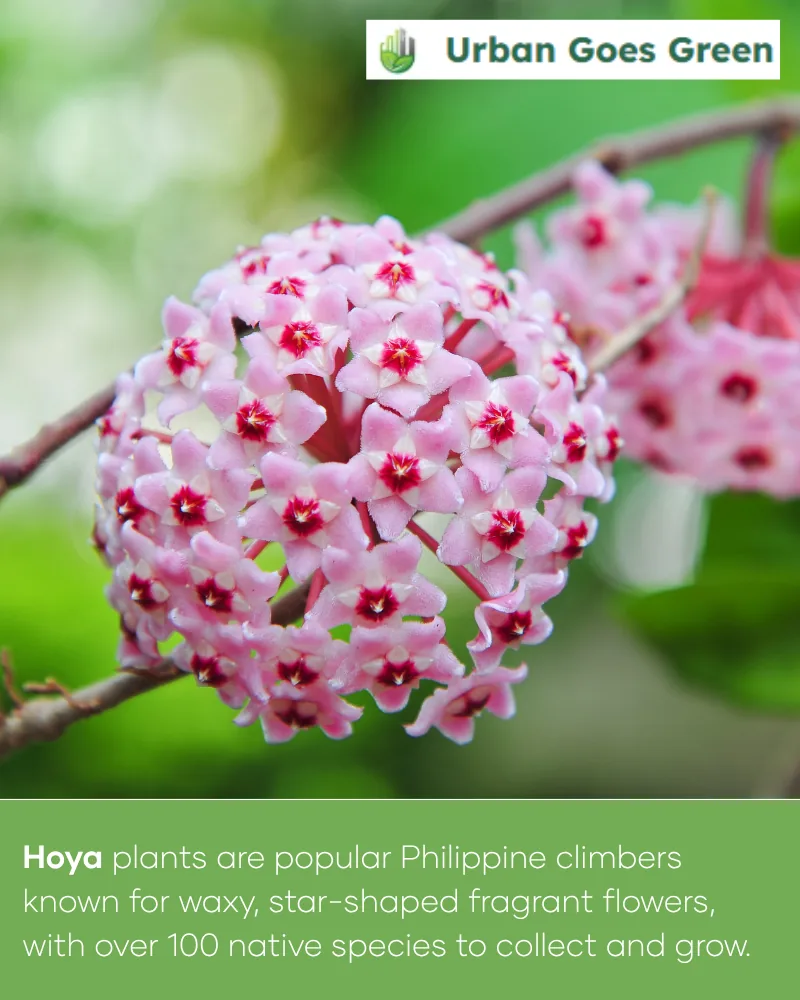
Hoya plants have exploded in popularity among Philippine plant enthusiasts over the past few years, and for good reason. These epiphytic climbers produce clusters of waxy, star-shaped flowers that look like they have been sculpted from porcelain. Many species are native to the Philippines, making them perfectly adapted to local conditions. The flowers are sweetly fragrant, particularly at night, and they produce nectar that drips like honey.
The Philippines is home to over 100 species of Hoya, more than almost any other country. Some of the most sought-after species include Hoya merrillii, Hoya mindorensis, and Hoya buotii, all named after Philippine locations or botanists. Collectors pay premium prices for rare Philippine hoyas, but common species like Hoya carnosa (the classic wax plant), Hoya pubicalyx, and Hoya lacunosa are widely available and easy to grow.
Growing Requirements
- Sunlight: Bright, indirect light. Hoyas tolerate some morning sun but will burn in harsh afternoon light. Place them under a tree canopy, on a shaded balcony, or near an east-facing window.
- Soil: Extremely well-draining, chunky mix. Use orchid bark, perlite, and a small amount of loam soil in roughly equal parts. Hoyas hate sitting in wet, dense soil.
- Watering: Allow the top 2 to 3 centimetres of soil to dry between waterings. Their succulent-like leaves store water, so they tolerate drought better than overwatering.
- Support: Provide a moss pole, small trellis, or wire frame. Hoyas are light climbers that attach with aerial roots, so they do not need heavy infrastructure.
- Flowering: Most hoyas bloom from April to August in the Philippines. Never cut off the flower stalk (peduncle) after blooming, as new flowers will emerge from the same point.
- Fertiliser: Feed with a balanced liquid fertiliser diluted to half strength every 2 to 4 weeks during the growing season (March to October).
Prices for hoyas vary dramatically in the Philippines. Common species like Hoya carnosa start at ₱100 to ₱250 for a rooted cutting. Rare Philippine endemics can command ₱5,000 to ₱50,000 or more among collectors. Start with the affordable varieties and work your way up as your confidence grows.
4. Monstera Adansonii (Swiss Cheese Vine)
Tropical Elegance on a Budget
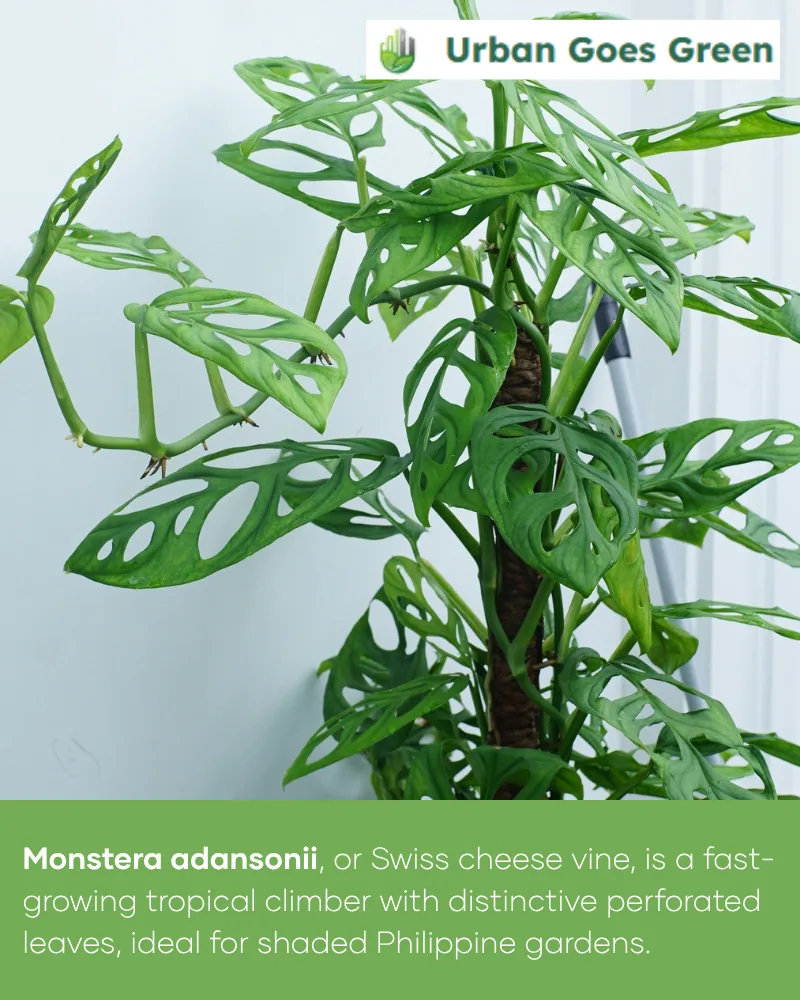
Monstera adansonii, commonly called the Swiss cheese vine because of the distinctive oval holes (fenestrations) in its leaves, is a fast-growing climber that adds an instant tropical look to any space. While its cousin Monstera deliciosa is more famous, the adansonii is better suited to smaller Philippine gardens and indoor spaces because its leaves stay a manageable size (typically 15 to 25 centimetres) and its vining habit makes it easy to train along supports.
In the Philippines, Monstera adansonii grows enthusiastically outdoors in shaded areas. Given a tree trunk or moss pole to climb, it will produce progressively larger and more fenestrated leaves as it gains height. The plant communicates what it needs through its leaves. Small leaves with few holes mean it wants more light or a support to climb. Large, perforated leaves indicate it is happy with its conditions.
Growing Requirements
- Sunlight: Bright, indirect light to medium shade. Avoid direct afternoon sun, which scorches the thin leaves. Under a mango tree or on a covered patio is perfect.
- Soil: Airy, well-draining mix. Combine loam soil, compost, coconut husk chips, and perlite. The roots need oxygen, so avoid compacted soil.
- Watering: Water when the top 3 centimetres of soil feel dry. During the rainy season, reduce watering significantly to prevent root rot.
- Support: A moss pole, coco coir pole, or tree trunk. The aerial roots will grip the surface and the leaves will grow larger as the plant climbs higher.
- Propagation: Extremely easy. Cut a stem below a node (the bump where aerial roots emerge), place it in water for 2 to 3 weeks until roots develop, then pot it up.
Monstera adansonii is widely available in Philippine nurseries and plant shops. A rooted cutting costs around ₱100 to ₱300, while a larger, well-established plant on a moss pole runs ₱500 to ₱1,500. Variegated forms are significantly pricier. For tips on the best soil for aroids like Monstera, visit our guide on urban gardening in the Philippines.
5. Passion Fruit Vine (Passiflora)
Beauty and Harvest in One Plant
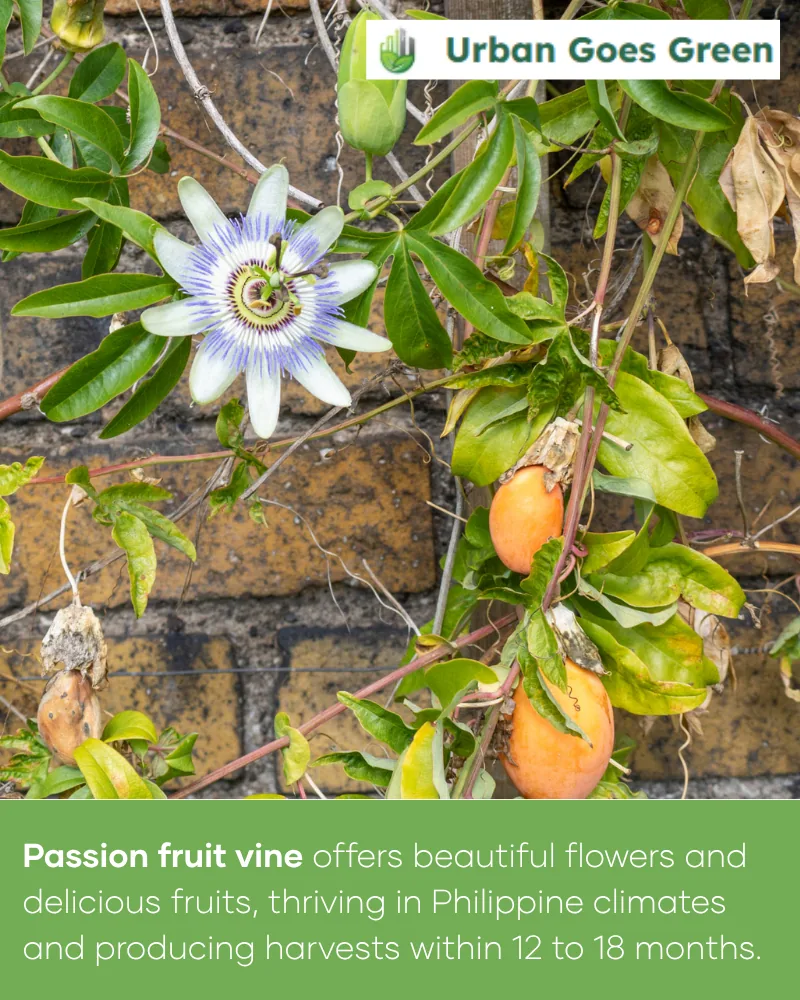
Passion fruit vine is one of the rare climbing plants that delivers both ornamental beauty and a delicious edible harvest. The flowers are architectural marvels with intricate corona filaments that have fascinated botanists for centuries. Spanish missionaries in the Americas named the plant after the Passion of Christ, seeing religious symbolism in each flower part. In the Philippines, passion fruit (locally called "passion" or "maracuya") grows vigorously in both lowland and highland areas.
The purple passion fruit (Passiflora edulis) is the most commonly grown variety in the Philippines, producing golf-ball-sized fruits with aromatic, tangy pulp that works beautifully in juices, desserts, and cocktails. The yellow variety (Passiflora edulis f. flavicarpa) produces larger fruits and is more heat-tolerant, making it better suited to lowland Metro Manila gardens. Both varieties can produce fruit within 12 to 18 months of planting from seed, or even sooner from cuttings.
Growing Requirements
- Sunlight: Full sun, at least 6 to 8 hours daily. More sun means more flowers and more fruit.
- Soil: Rich, well-draining loam with a slightly acidic pH of 6.0 to 6.5. Amend heavy clay soil with compost and sand.
- Watering: Regular, deep watering especially during fruit development. Inconsistent watering causes fruit drop.
- Support: Needs a sturdy trellis, pergola, or wire system. The vine climbs using tendrils and can cover a 3-metre by 3-metre area within a year. Use galvanised wire strung between posts for a productive fruiting setup.
- Pollination: Passion fruit flowers are partially self-fertile but produce better yields with cross-pollination. If you notice flowers but no fruit, hand-pollinate by transferring pollen between flowers using a small paintbrush.
- Fertiliser: Feed every 4 to 6 weeks with a balanced fertiliser during the growing season. Switch to a high-potassium formula when fruiting begins.
A healthy passion fruit vine can produce 30 to 50 fruits per season, with peak harvest from August to December in the Philippines. Seedlings cost ₱50 to ₱200 at local nurseries. For the best fruiting, plant at least two vines to improve cross-pollination.
Need Quality Soil for Your Garden?
Premium loam soil delivered same-day across Metro Manila via Lalamove. Starting at just ₱75 per pack.
6. Allamanda (Golden Trumpet)
Year-Round Golden Blooms
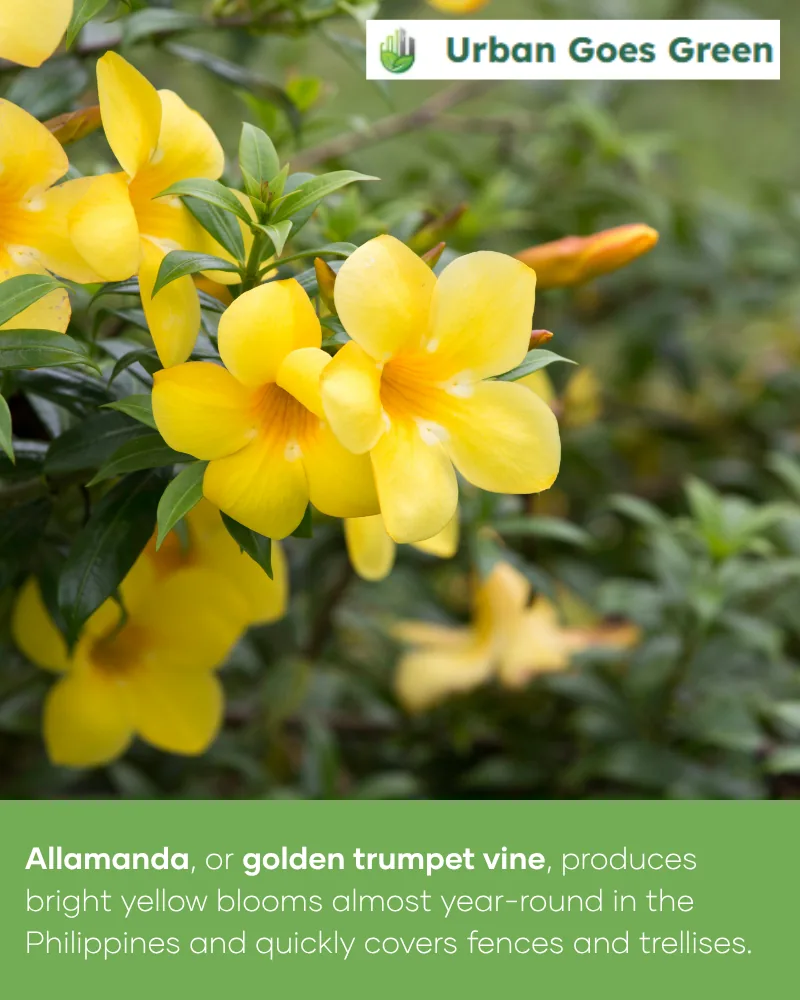
Allamanda cathartica, known locally as golden trumpet vine, produces large, funnel-shaped yellow flowers that bloom almost continuously in the Philippine climate. Each flower measures 5 to 8 centimetres across and has a rich, buttery yellow colour that practically glows in sunlight. Some cultivars produce double flowers, while the less common Allamanda blanchetii offers purple blooms for those who want something different.
This vigorous climber is a staple in Philippine public parks, resort gardens, and subdivision landscaping because of its low maintenance requirements and non-stop flowering. It grows quickly, covering a fence or trellis within 6 to 12 months, and can reach heights of 3 to 5 metres when supported. Without support, allamanda grows as a sprawling shrub, which is how it is often used along highway medians and commercial properties.
Growing Requirements
- Sunlight: Full sun. Allamanda needs at least 6 hours of direct sun for best flowering. It tolerates light shade but produces fewer blooms.
- Soil: Adaptable to most soil types but prefers fertile, well-draining loam. Amend poor soil with compost and aged manure.
- Watering: Moderate watering. Keep the soil evenly moist during the growing season. Established plants tolerate brief dry periods.
- Support: Allamanda is a scrambler like bougainvillea. It needs to be tied to supports because it does not twine or grip on its own. Bamboo or wire trellises work well.
- Pruning: Prune regularly to control size and shape. Cut back by one-third after heavy flowering to promote fresh, compact growth.
- Caution: All parts of allamanda are mildly toxic. The milky sap can irritate skin. Keep children and pets from chewing on the leaves or flowers.
Allamanda is widely sold in Philippine nurseries, typically as rooted cuttings for ₱80 to ₱250. It roots easily from semi-hardwood cuttings, so ask a neighbour for a trimming and propagate your own in a mix of sand and loam.
7. Thunbergia (Clock Vine)
The Fast-Growing Privacy Screen
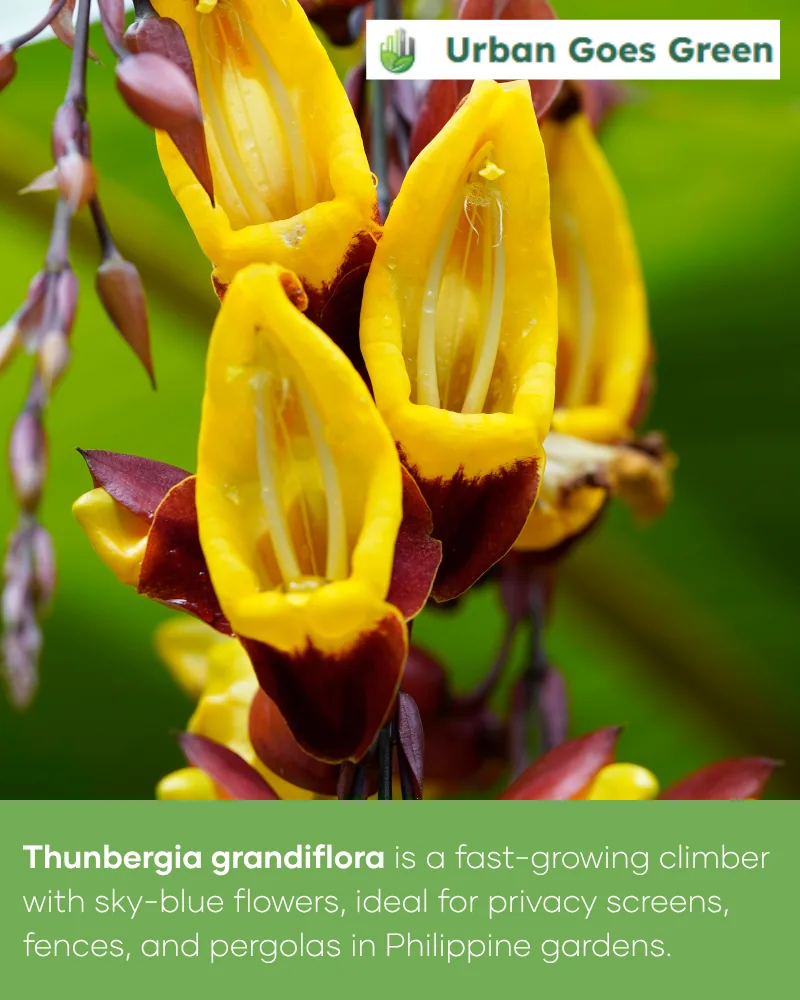
Thunbergia grandiflora, the Bengal clock vine or sky vine, is one of the fastest-growing climbers available in the Philippines. It produces large, pendulous clusters of sky-blue flowers that create a stunning waterfall effect when grown on an overhead pergola. The individual flowers are 5 to 7 centimetres across, with a creamy white throat that contrasts beautifully against the lavender-blue petals. It blooms heavily from the late wet season through the cool dry months (October to February).
For urban gardeners who need quick coverage, Thunbergia grandiflora is hard to beat. It can grow 5 to 8 metres in a single year under ideal conditions, rapidly covering unsightly walls, chain-link fences, or carport structures. The dense foliage provides excellent shade and privacy. However, this vigour is a double-edged sword. Without regular pruning, thunbergia can become invasive and smother neighbouring plants. In some areas of the Philippines, it has naturalised along roadsides and forest edges.
Growing Requirements
- Sunlight: Full sun to partial shade. Flowers best in full sun but tolerates up to 4 hours of shade.
- Soil: Rich, moist, well-draining soil. It thrives in the same loam-compost mix recommended for passion fruit.
- Watering: Regular watering, especially during establishment and the dry season. Mature plants are moderately drought-tolerant.
- Support: Strong trellis, pergola, or wire system. The vine twines around supports and becomes quite heavy when mature, so ensure your structure can handle the weight.
- Pruning: Essential. Prune hard at least twice a year to keep it under control. Cut back after flowering and again before the wet season starts.
- Propagation: Root cuttings in moist sand or water. Also spreads by underground runners, which is how it can become invasive if not contained.
The smaller relative, Thunbergia alata (black-eyed Susan vine), is a better choice for containers and small trellises. It produces cheerful orange flowers with dark centres and grows to only 2 to 3 metres. Both species are available at garden centres for ₱50 to ₱200.
8. Cadena de Amor (Antigonon leptopus)
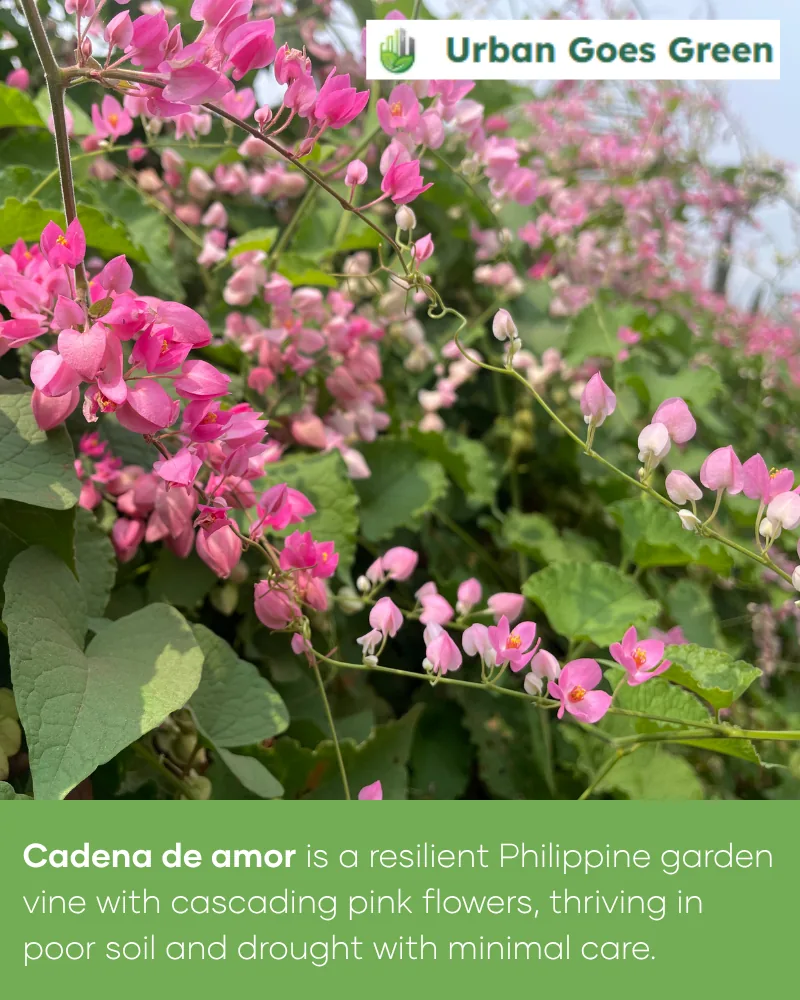
The Chain of Love
Cadena de amor, whose name translates to "chain of love," is one of the most charming and resilient climbing plants in the Philippines. Its cascading sprays of small, heart-shaped pink flowers appear from September through December, transforming ordinary fences into romantic, cottage-garden displays. The flowers range from pale pink to deep coral, and a white variety ('Album') is also available for those who prefer a more subdued palette.
This vine is native to Mexico but has become thoroughly naturalised in the Philippines, where it thrives in conditions that would defeat many other climbers. It tolerates drought, poor soil, salt spray, and neglect. You will find it growing wild along roadsides, over abandoned structures, and through barbed wire fences across the Visayas and Mindanao. Its toughness makes it an excellent choice for beginners or gardeners who cannot commit to regular maintenance.
Growing Requirements
- Sunlight: Full sun. Cadena de amor flowers best with at least 6 hours of direct sunlight. It will grow in shade but produces few blooms.
- Soil: Tolerates almost any soil type, including poor, rocky, and slightly alkaline soils. It performs even better in good-quality loam enriched with compost.
- Watering: Drought-tolerant once established. Water regularly during the first few months to help roots develop, then reduce to occasional deep watering during extended dry spells.
- Support: Climbs using tendrils that grip wire fences, chain-link, and thin trellis bars. It does not damage walls because it does not use aerial roots or suckers.
- Pruning: Cut back to the ground after flowering if needed. It regrows vigorously from its tuberous root system each year.
- Uses: The flowers, leaves, and tubers are edible. The flowers make a beautiful addition to salads, and the tubers can be cooked like potatoes in emergencies.
Cadena de amor is often shared between neighbours as root divisions or cuttings. It is also available in nurseries for ₱50 to ₱150. Plant it along a fence and you will have a flowering screen within one growing season. If you enjoy flowering garden plants, you might also like our guide on fragrant plants for Philippine gardens.
9. Butterfly Pea / Blue Ternate (Clitoria ternatea)

Edible Flowers and Natural Blue Dye
Butterfly pea, known locally as blue ternate, is a fast-growing annual or short-lived perennial vine that has gained immense popularity in the Philippines thanks to the wellness and food industries. Its vivid blue flowers are used to make naturally blue-coloured teas, rice dishes, desserts, and cocktails. When you add a squeeze of calamansi or lemon to blue ternate tea, it magically turns purple due to the change in pH. This colour-changing property has made it a favourite among home cooks and baristas across Metro Manila.
Beyond its culinary uses, butterfly pea is a nitrogen-fixing legume that actually improves soil fertility as it grows. Its roots host beneficial bacteria that convert atmospheric nitrogen into plant-available forms, enriching the soil for other plants nearby. This makes it an excellent companion plant for vegetable gardens. Grow it on a trellis next to your tomatoes, eggplants, or peppers and they will benefit from the extra nitrogen.
Growing Requirements
- Sunlight: Full sun. Butterfly pea thrives in the intense Philippine sun and produces more flowers with more light.
- Soil: Tolerates a wide range of soils but performs best in well-draining loam. As a legume, it is less dependent on soil fertility than most plants.
- Watering: Moderate. Water regularly during germination and early growth, then reduce once the plant is established. It is fairly drought-tolerant.
- Support: Provide a light trellis, string, or wire. Butterfly pea is a twining vine that wraps around thin supports. It grows to 2 to 4 metres and is not heavy enough to need robust structures.
- Flowering: Blooms within 60 to 90 days of germination and continues producing flowers for months. In the Philippines, it flowers almost year-round in frost-free areas.
- Seed saving: Allow some pods to mature and dry on the vine. Collect the black seeds and store them in a cool, dry place for next season. Seeds remain viable for 2 to 3 years.
Butterfly pea seeds are sold in small packets at gardening shops for ₱20 to ₱50. You can also find seedlings for ₱30 to ₱80. Soak seeds in warm water for 12 hours before planting to speed up germination. Direct sow into the ground or into a large pot near your trellis. For more on growing food in small spaces, see our essential gardening tools guide to make sure you have the right equipment.
10. Luffa / Patola (Luffa acutangula)
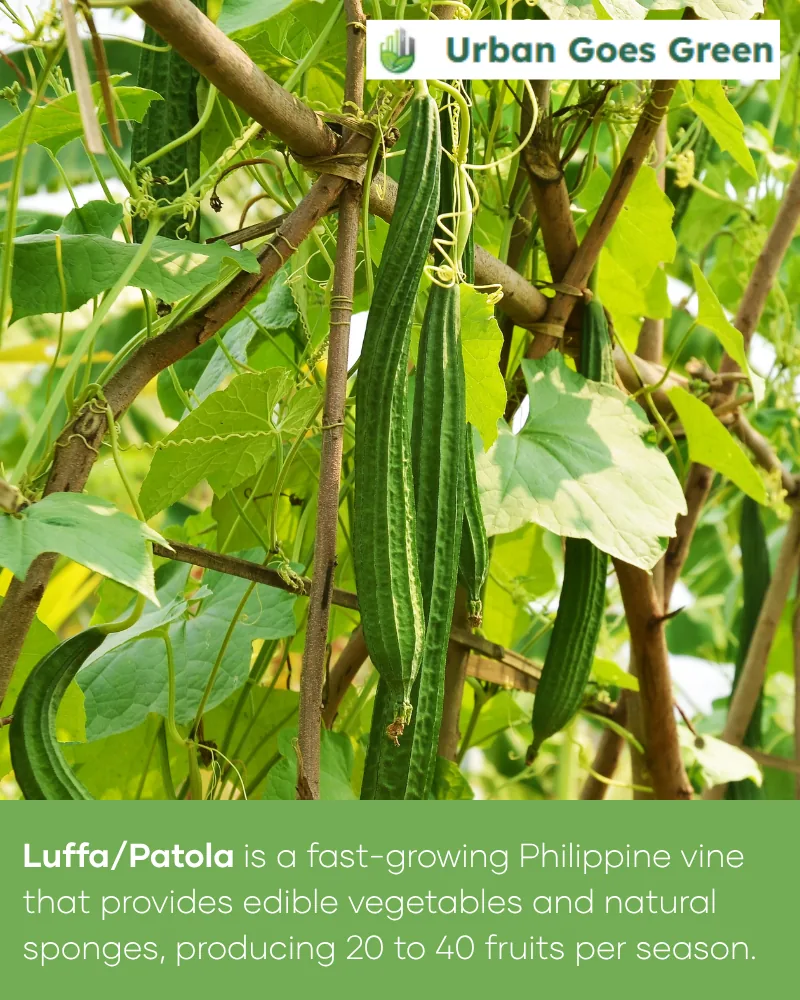
The Edible Sponge Vine
Patola, or angled luffa, is a dual-purpose vine that is both a vegetable crop and a source of natural sponges. Young fruits are harvested as a vegetable and cooked in soups, stir-fries, and miswa with patola, one of the most comforting Filipino home-cooked dishes. Mature fruits, if left on the vine, develop a fibrous interior that can be dried and used as a natural bath sponge, kitchen scrubber, or even a craft material.
Patola is a vigorous annual climber in the cucumber family (Cucurbitaceae) that grows rapidly during the wet season. It produces yellow flowers that open in the early morning and attract pollinators like bees and butterflies. A single well-maintained vine can produce 20 to 40 fruits over its 3 to 4 month growing season, providing a steady supply of vegetables for the family table. Growing your own patola is one of the most practical forms of urban gardening in the Philippines.
Growing Requirements
- Sunlight: Full sun, at least 6 hours daily. Patola is a warm-season crop that performs best during the Philippine wet season from June to November.
- Soil: Rich, fertile loam amended with generous amounts of compost or aged animal manure. Patola is a heavy feeder that rewards good soil with abundant harvests.
- Watering: Regular, consistent watering. Keep the soil evenly moist but not waterlogged. Mulch around the base to retain moisture and suppress weeds.
- Support: Needs a strong overhead trellis or arbour. Patola fruits hang downward and can be heavy (300 to 500 grams each), so the structure must handle the weight. A bamboo or wire overhead frame at 2 to 2.5 metres height is ideal.
- Pollination: Female and male flowers appear separately on the same vine. Bees usually handle pollination, but if fruit set is poor, hand-pollinate early in the morning.
- Harvest: Pick fruits when they are 20 to 30 centimetres long and still tender. Overripe patola becomes fibrous and bitter. For sponge production, leave select fruits on the vine until they turn brown and dry.
Patola seeds are available in gardening stores and even supermarkets for ₱15 to ₱50 per packet. Sow seeds directly into prepared beds after the first heavy rains in June. You can also start seeds indoors 2 to 3 weeks before the wet season for a head start.
Choosing the Right Support Structures
Different climbing plants require different types of support, and using the wrong structure can result in poor growth, damage to your property, or a collapsed trellis. Here is a quick guide to matching your chosen vine with the right support.
For Twining Vines (Butterfly Pea, Cadena de Amor, Thunbergia)
Twining vines wrap their stems around supports as they grow. They need thin supports that their stems can encircle, typically no thicker than 3 to 4 centimetres in diameter. String, wire, bamboo poles, and thin pipe work well. These vines cannot grip flat surfaces or thick posts, so avoid using wide wooden beams as their only support.
For Tendril Climbers (Passion Fruit, Patola)
Tendril climbers send out specialised grasping organs that coil around thin supports. Like twining vines, they need thin wires or strings to grip. Netting or wire mesh is excellent for tendril climbers because it provides numerous attachment points. Heavy-gauge fishing line strung in a grid pattern is an inexpensive and effective option.
For Scramblers (Bougainvillea, Allamanda)
Scramblers lean on and grow through supports but do not actively grip them. They need to be tied to their trellis or wall using garden ties, soft twine, or wire clips. A sturdy wooden or metal trellis works best. Plan to tie new growth every 2 to 4 weeks during the active growing season.
For Aerial Root Climbers (Hoya, Monstera)
These plants grip textured surfaces using roots that grow from their stems. Moss poles, coco coir poles, rough tree bark, and textured concrete walls are ideal. Smooth surfaces like painted walls or glass do not provide enough grip. Moss poles wrapped in sphagnum moss and kept moist will encourage the strongest root attachment.
General Care Tips for Climbing Plants in the Philippines
Dealing with Typhoon Season
The Philippines averages 20 typhoons per year, and climbing plants are particularly vulnerable to wind damage. Before a typhoon, secure loose vines to their supports with extra ties. After the storm, prune damaged growth cleanly to prevent disease entry. Most Philippine-adapted climbers recover quickly from typhoon damage, sending out new growth within 2 to 4 weeks of being cut back.
Pest and Disease Management
Common pests on climbing plants in the Philippines include aphids, mealybugs, scale insects, and spider mites. A strong spray of water dislodges aphids and mites. For mealybugs and scale, wipe affected areas with rubbing alcohol on a cotton swab. Neem oil spray applied weekly is an effective organic treatment for most pests. Fungal diseases like powdery mildew and leaf spot thrive in the humid Philippine climate. Improve air circulation by pruning dense growth and avoid overhead watering in the late afternoon.
Soil and Fertilisation
Most climbing plants are vigorous growers that deplete soil nutrients quickly. Top-dress with compost every 3 to 4 months and apply a balanced slow-release fertiliser at the start of each growing season. For flowering vines, supplement with a high-phosphorus fertiliser during bud formation. If your garden soil is heavy clay (common in many Metro Manila areas), improve drainage by incorporating sand, perlite, and organic matter. Quality loam soil from a reliable supplier gives your climbers the best possible start.
Training and Pruning
Regular training is essential for climbing plants. Guide new growth in the direction you want it to go while stems are still flexible. Once woody growth sets in a particular direction, it is very difficult to redirect. Prune for shape, remove dead or diseased growth promptly, and thin out overcrowded sections to improve air circulation. Most flowering vines bloom on new growth, so regular pruning actually increases flower production.
Combining Climbers for Year-Round Interest
No single climbing plant blooms every day of the year. To achieve continuous colour, plant a combination of vines with different flowering seasons. Bougainvillea peaks from January to May, cadena de amor from September to December, thunbergia from October to February, and passion fruit vine blooms from March to August. By planting two or three of these together on adjacent trellises, you can enjoy flowers in every month. For more ideas on creating a layered garden, explore our guide to fast-growing trees that can provide the canopy structure your climbing plants will appreciate.
Frequently Asked Questions
What are the easiest climbing plants to grow in the Philippines?
The easiest climbing plants for Philippine gardens are bougainvillea, cadena de amor, and butterfly pea (blue ternate). Bougainvillea is virtually indestructible once established, thriving in full sun with minimal watering. Cadena de amor spreads rapidly along fences and walls with almost no maintenance. Butterfly pea is an annual vine that self-seeds freely, producing edible blue flowers within just 60 to 90 days of planting. All three tolerate the intense Philippine heat and can handle the heavy rains during typhoon season without significant damage. For beginners, starting with these three gives you confidence before moving on to more demanding species like jade vine or hoya.
How do I build a trellis for climbing plants in a small Philippine garden?
For small Philippine gardens, a simple bamboo trellis is the most affordable and effective option. Cut bamboo poles to your desired height (1.5 to 3 metres is common for most vines), then lash them together in a grid pattern using nylon cord or galvanised wire. Secure the base into the soil at least 30 centimetres deep or attach it to a wall using masonry hooks. For balcony gardens, use a vertical string trellis by tying sturdy garden twine from a top rail to the base at 15-centimetre intervals. Metal or PVC pipe trellises are more durable options that resist rot during the wet season. Budget around ₱200 to ₱500 for a basic bamboo setup, or ₱800 to ₱1,500 for a metal frame from local hardware stores.
Can climbing plants damage walls and fences in Philippine homes?
Yes, some climbing plants can damage walls if not managed properly. Self-clinging climbers like certain species of Ficus pumila (creeping fig) attach directly to surfaces using aerial roots that can penetrate mortar joints and cause cracking over time. To avoid damage, use a detached trellis mounted 10 to 15 centimetres away from the wall surface. Twining vines like butterfly pea and passion fruit are gentler options because they wrap around supports rather than gripping walls. Bougainvillea is safe for fences but its thorns can scratch painted surfaces, so keep it pruned. For concrete perimeter walls common in Philippine subdivisions, training vines on a wire grid attached with standoff brackets is the safest approach, giving you lush greenery without structural risk.
Related Guides
Best Fragrant Plants in the Philippines
Fill your garden with the sweet scents of sampaguita, ylang-ylang, kalachuchi, and more.
Plant GuidesBest Fast-Growing Trees in the Philippines
Create shade and structure with narra, fire tree, rain tree, and other fast growers.
Growing GuidesContainer Gardening in the Philippines
Grow vegetables and ornamentals in pots, even on a small balcony or rooftop.
Growing GuidesUrban Gardening in the Philippines
A complete beginner's guide to starting your own urban garden in Metro Manila.