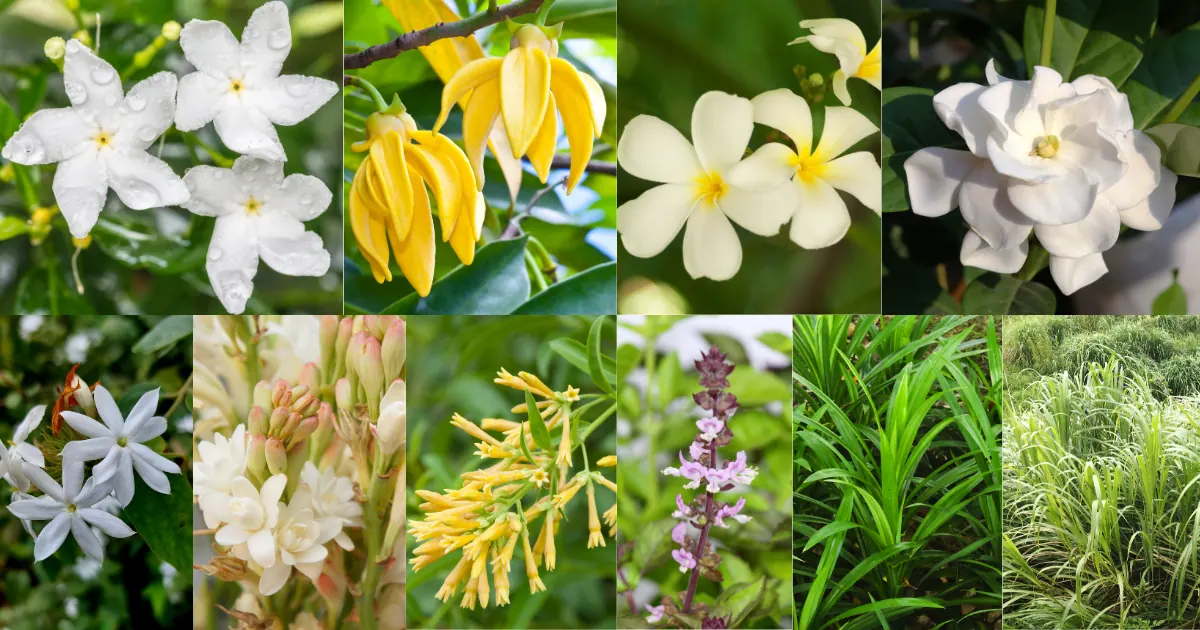
Why Grow Fragrant Plants in Your Philippine Garden
There is something deeply satisfying about stepping into a garden that greets you with fragrance before you even see a single flower. In the Philippines, where evenings are warm and windows are often left open, a well-placed fragrant plant can perfume an entire living room without any candles, diffusers, or artificial air fresheners. The scent of sampaguita drifting through a bedroom window on a summer evening is one of those simple pleasures that no store-bought product can replicate.
Fragrant plants in the Philippines serve practical purposes beyond simple pleasure. Citronella and certain varieties of basil help repel mosquitoes, reducing your reliance on chemical sprays during dengue season. Pandan leaves are an essential flavouring in Filipino cooking, used in everything from buko pandan salad to pandan-infused rice. Sweet basil is a kitchen staple that you can harvest daily from a windowsill pot. By growing fragrant plants, you are creating a garden that engages all your senses while providing functional benefits.
The Philippine climate, with its warm temperatures, high humidity, and abundant rainfall, is ideal for most tropical fragrant plants. Many of the world's most prized perfume ingredients, including ylang-ylang and sampaguita jasmine, are native to or extensively cultivated in the Philippines. This means you are not fighting against your climate to grow these plants. You are working with it. Whether your garden is a sprawling provincial lot, a modest suburban yard, or a collection of pots on a condominium balcony, there is a fragrant plant on this list that will work for your space.
This guide covers ten of the best fragrant plants for Philippine conditions. For each plant, we have included fragrance intensity ratings, the best placement to maximise scent enjoyment, blooming times, and practical growing advice. If you want to add vertical interest alongside fragrance, our guide to climbing plants in the Philippines has vines that pair beautifully with these scented selections.
1. Sampaguita (Jasminum sambac)
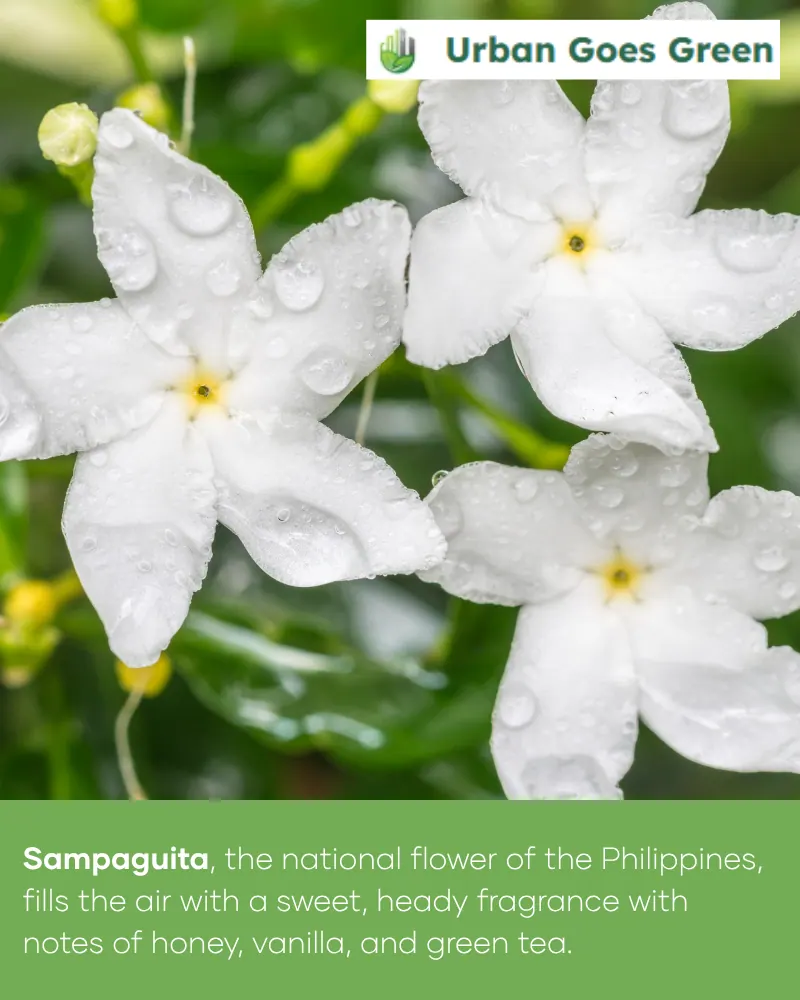
The National Flower
Sampaguita is the national flower of the Philippines, and no list of fragrant plants would be complete without it. This small, evergreen shrub produces clusters of waxy white flowers with an intensely sweet, heady fragrance that is strongest in the evening and early morning. The scent is complex, with notes of honey, vanilla, and green tea that linger in the air long after you have walked past the plant. A single blooming sampaguita bush near your front gate will greet every visitor with its iconic perfume.
Culturally, sampaguita holds deep significance in Philippine life. Garlands of sampaguita flowers are offered at churches, sold at intersections by street vendors, and draped around the necks of honoured guests. The flower appears on the ₱1,000 bill and is woven into countless Filipino songs and poems. Growing sampaguita at home connects you to a tradition that stretches back centuries in Philippine culture.
Growing Requirements
- Sunlight: Full sun to partial shade. Sampaguita flowers most heavily with at least 5 to 6 hours of direct sun, but tolerates some afternoon shade.
- Soil: Rich, well-draining loam. Amend heavy clay with compost and sand. A good loam soil provides the ideal texture and nutrients.
- Watering: Keep consistently moist but not waterlogged. Water daily during the dry season, less frequently during the rainy months.
- Fertiliser: Feed every 4 to 6 weeks with a balanced fertiliser. For more blooms, use a high-phosphorus formula during the flowering season.
- Pruning: Prune lightly after each flowering cycle to encourage bushy growth and more flower buds. Remove dead or yellowing branches promptly.
- Fragrance intensity: Strong. Detectable from 3 to 5 metres away, especially in the evening.
- Blooming time: Year-round in the Philippines, with peak flowering from April to September.
Best Placement for Scent
Place sampaguita near bedroom windows, main gates, or outdoor seating areas where you spend evenings. The fragrance intensifies after sunset, making it perfect for al fresco dining spots. In container gardens, position a pot of sampaguita on a balcony where the evening breeze will carry the scent indoors. A row of sampaguita planted along a walkway creates a fragrant corridor that is unforgettable during the blooming season.
Sampaguita is widely available at plant nurseries, garden centres, and even from vendors at Sunday markets. Expect to pay ₱80 to ₱300 for a healthy plant depending on size. The double-flowered variety ('Grand Duke of Tuscany') has larger, more densely petalled flowers with an even richer scent, though it blooms slightly less prolifically than the common single-flowered form.
2. Ylang-Ylang (Cananga odorata)
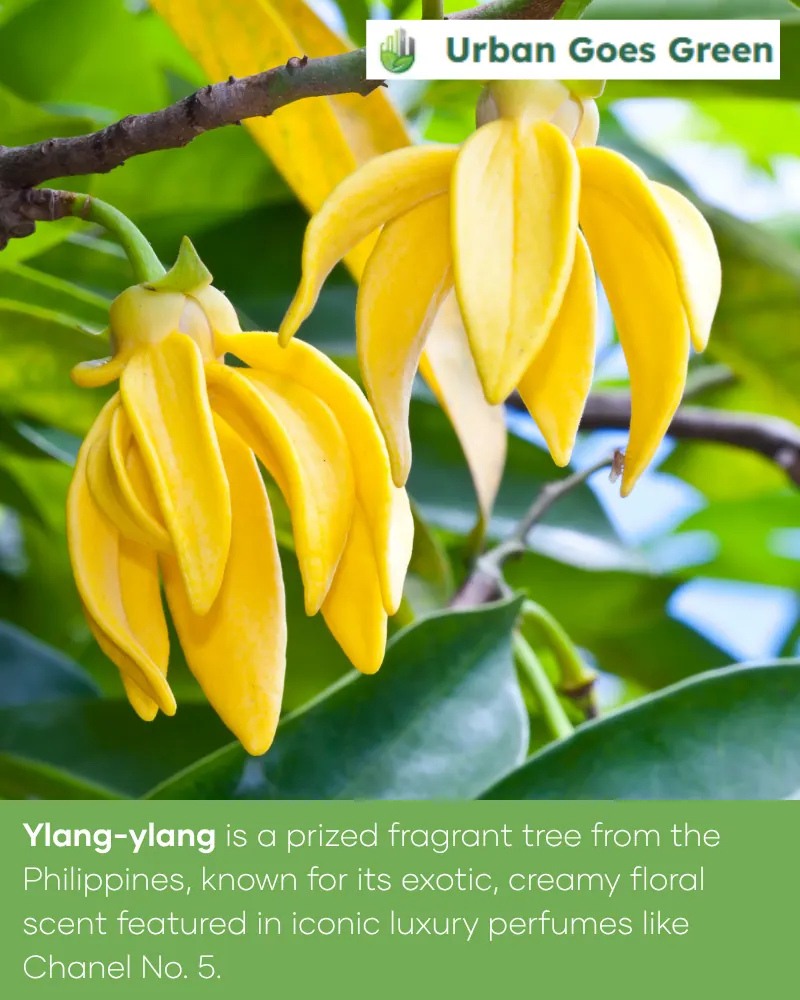
The Perfume Tree
Ylang-ylang is one of the most valuable fragrant plants in the world, and the Philippines has been one of its largest producers for over a century. The drooping, star-shaped yellow flowers release a rich, exotic fragrance that forms the heart of iconic perfumes like Chanel No. 5, Joy by Jean Patou, and countless other luxury scents. The name "ylang-ylang" comes from the Tagalog word "ilang-ilang," meaning "wilderness," a reference to where the tree was originally found growing wild in Philippine forests.
In a home garden, ylang-ylang is a medium to large tree that can reach 10 to 12 metres at maturity, though it can be pruned to stay smaller. The fragrance is extraordinarily powerful. A single mature tree can perfume an area of 20 to 30 metres radius on a calm evening. The scent has top notes of banana and custard, middle notes of jasmine and neroli, and a deep, creamy base that is unmistakably ylang-ylang. Once you have smelled it from a live tree, you will never forget it.
Growing Requirements
- Sunlight: Full sun. Ylang-ylang needs at least 6 hours of direct sun for best flowering.
- Soil: Fertile, well-draining loam. It tolerates a range of soil types but grows fastest in rich, organic soil.
- Watering: Regular watering during the first 2 years. Mature trees are moderately drought-tolerant.
- Space: Give this tree at least 5 to 8 metres of clearance from buildings and other trees. It develops a wide, spreading canopy.
- Fertiliser: Apply a balanced organic fertiliser every 3 months during the growing season. Compost top-dressing works well.
- Fragrance intensity: Very strong. Detectable from 10 to 30 metres away, especially in the evening.
- Blooming time: Blooms throughout the year in the Philippines, with peak production from March to July.
Best Placement for Scent
Because ylang-ylang is a large tree, it works best in gardens with ample space. Plant it upwind of your house so that the prevailing breeze carries the fragrance toward your living areas. It also makes an excellent shade tree for patios and outdoor living spaces. If your lot is small, consider planting the dwarf variety (Cananga odorata var. fruticosa), which stays below 3 metres and can even be grown in a large container. The dwarf form has a slightly lighter scent but still outperforms most other plants in fragrance intensity. For shade tree options to complement ylang-ylang, check out our fast-growing trees guide.
Ylang-ylang seedlings are available at plant nurseries for ₱150 to ₱500. The tree grows quickly, adding 1 to 1.5 metres of height per year in good conditions, and can begin flowering within 2 to 3 years of planting.
3. Kalachuchi / Plumeria (Plumeria spp.)
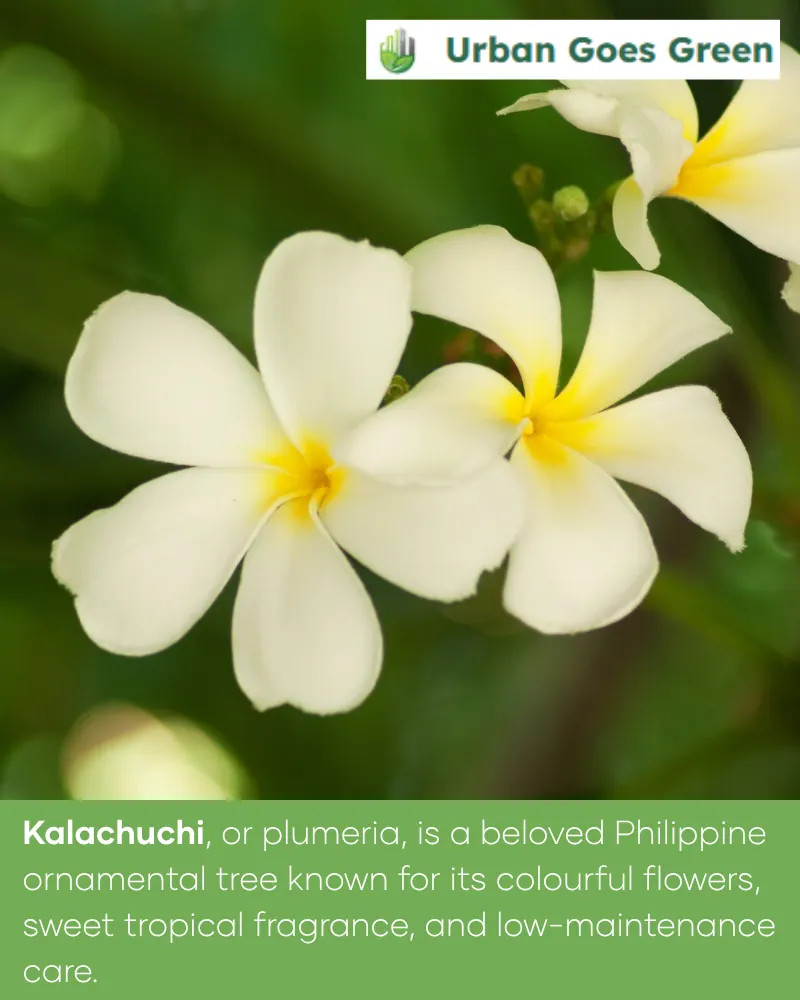
The Temple Tree
Kalachuchi, or plumeria, is one of the most beloved ornamental trees in the Philippines. Its thick, fleshy flowers come in a stunning range of colours, from pure white with yellow centres to deep pink, red, orange, and multi-coloured blends. Each flower releases a sweet, tropical fragrance that varies by cultivar. Some smell like coconut and vanilla, others like peaches and cream, and some have a complex floral-citrus character that is entirely unique.
In the Philippines, kalachuchi is commonly found in church grounds, old cemeteries, and traditional gardens. Despite the superstition that kalachuchi attracts spirits (an old wives' tale with no basis in reality), the tree is increasingly popular among modern urban gardeners who appreciate its beauty, fragrance, and low maintenance. It is drought-tolerant, pest-resistant, and can be grown from a simple branch cutting stuck into the ground.
Growing Requirements
- Sunlight: Full sun. Kalachuchi needs at least 6 hours of direct sun for prolific flowering.
- Soil: Well-draining sandy loam. Kalachuchi roots rot quickly in waterlogged soil, so drainage is critical. Mix sand or perlite into your loam soil.
- Watering: Allow soil to dry between waterings. During the dry season, water once a week. Reduce watering when the tree drops its leaves in the cool season (December to February).
- Fertiliser: Feed with a high-phosphorus fertiliser every 6 to 8 weeks during the flowering season (March to October). Bone meal is an excellent organic option.
- Pruning: Minimal pruning needed. Remove dead or crossing branches during the dormant season. Tip pruning encourages branching and more flowers.
- Fragrance intensity: Moderate to strong, depending on the variety. Strongest in the morning and early afternoon.
- Blooming time: March to October in the Philippines, coinciding with the warmer months.
Best Placement for Scent
Kalachuchi's fragrance is strongest during the day, particularly in warm, sunny conditions. Plant it near patios, gazebos, or carports where you spend daytime hours. It is also excellent as a container specimen for rooftop gardens, where the heat from concrete amplifies the fragrance release. Place it within 2 to 3 metres of outdoor seating for the best scent experience.
Kalachuchi cuttings are sold at garden centres for ₱100 to ₱500, with named hybrid varieties costing ₱500 to ₱2,000 or more. Propagation from cuttings is simple. Let a freshly cut branch dry for 3 to 5 days, then plant it in dry sand or well-draining soil. Roots and new growth appear within 4 to 8 weeks.
4. Gardenia (Gardenia jasminoides)
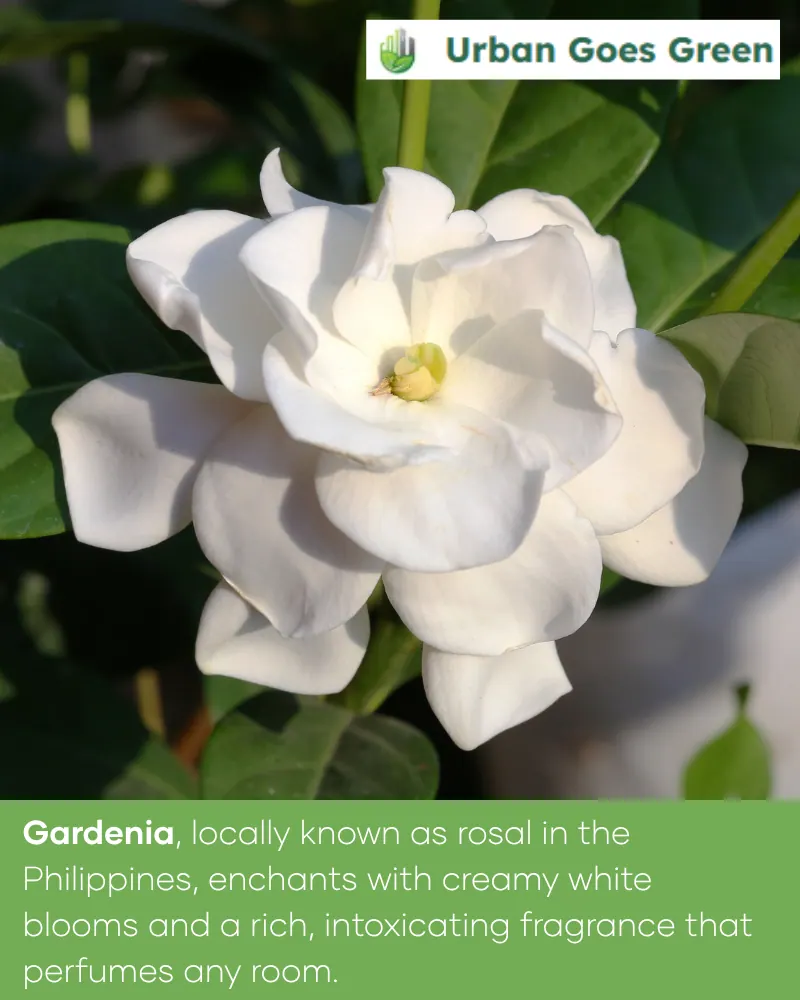
The Queen of Fragrance
Gardenia is often called the queen of fragrant flowers, and it earns that title every time it blooms. The large, creamy white flowers have a velvety texture and release a rich, intoxicating scent that is simultaneously sweet, green, and slightly musky. A single gardenia bloom placed on a bedside table will perfume an entire room. In the Philippines, gardenia is locally known as "rosal" and has been a garden favourite for generations.
Gardenia is slightly more demanding than some of the other plants on this list, but the reward is worth the effort. It prefers slightly acidic soil (pH 5.0 to 6.5), consistent moisture, and protection from harsh afternoon sun. The flowers bruise easily and turn brown when touched with wet hands, so handle them gently. Despite these quirks, gardenia grows reliably in Philippine conditions, especially in areas with consistent humidity and rich soil.
Growing Requirements
- Sunlight: Morning sun with afternoon shade. Direct afternoon sun can scorch the leaves and flowers.
- Soil: Slightly acidic, rich, well-draining soil. Mix compost, peat moss, and loam soil. Adding used coffee grounds occasionally helps maintain acidity.
- Watering: Keep evenly moist. Gardenias are sensitive to both drought and overwatering. Use mulch to maintain consistent soil moisture.
- Fertiliser: Feed with an acid-loving plant fertiliser every 4 to 6 weeks. Avoid lime-based fertilisers, which raise soil pH.
- Pests: Watch for aphids, mealybugs, and whiteflies. Neem oil spray is an effective organic treatment.
- Fragrance intensity: Very strong. Detectable from 3 to 5 metres, overwhelming up close.
- Blooming time: April to August in the Philippines, with occasional off-season blooms.
Best Placement for Scent
Gardenia is perfect for container growing on shaded balconies and patios. Place it near a doorway or window where you will catch the fragrance as you enter and exit. It also works beautifully as a low hedge along a covered walkway. Avoid exposed, windy locations, which dry out the plant and reduce bloom quality. Near a water feature or in a courtyard with good air circulation but wind protection is ideal.
Gardenia plants cost ₱150 to ₱500 at nurseries. The variety 'Veitchii' is the most commonly grown in the Philippines and is prized for its compact size and prolific blooming. For the best soil to keep gardenias happy, start with a quality loam soil and amend it with organic matter to boost acidity and drainage.
5. Jasmine (Jasminum spp.)
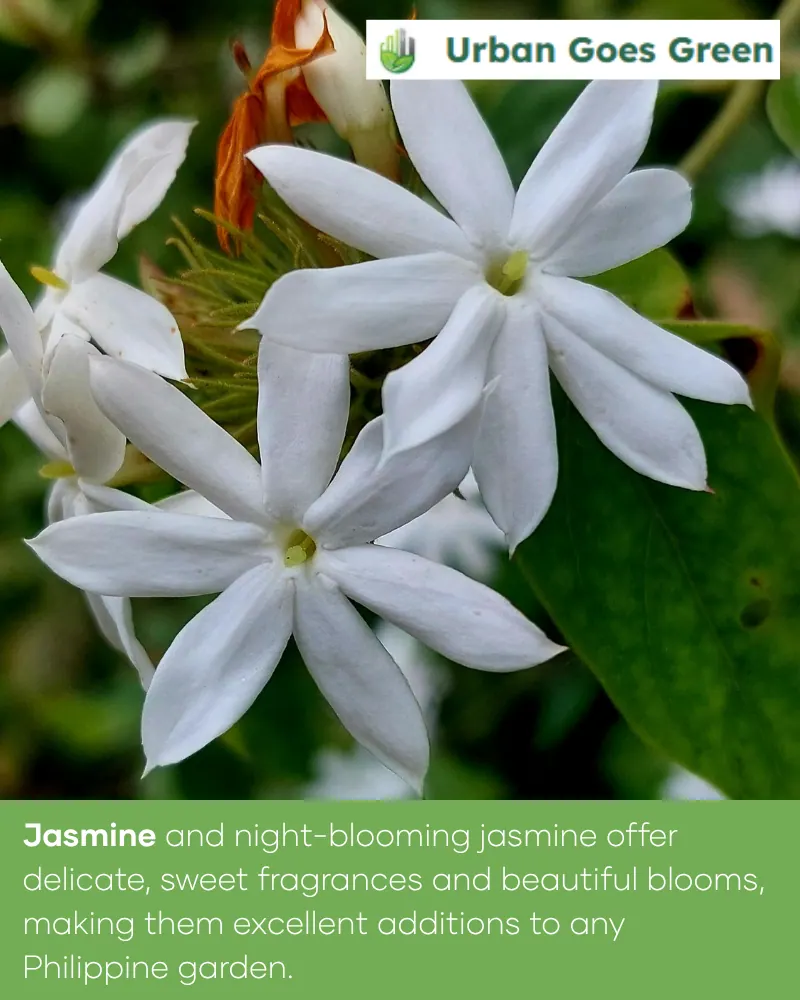
Beyond Sampaguita
While sampaguita is the most famous jasmine in the Philippines, several other jasmine species deserve a place in your fragrant garden. Star jasmine (Jasminum multiflorum), also known as "kampupot" in some regions, produces masses of small, star-shaped white flowers with a lighter, more delicate scent than sampaguita. Confederate jasmine (Trachelospermum jasminoides), despite not being a true jasmine, offers a similar sweet fragrance and is an excellent climbing vine for trellises and walls.
Night-blooming jasmine (Jasminum noctiflorum) is another lesser-known variety that performs well in Philippine conditions. As its name suggests, the flowers open in the evening, releasing a subtle, refined fragrance that is less intense than sampaguita but equally lovely. It grows as a sprawling shrub or can be trained as a climber, making it versatile for different garden styles.
Growing Requirements
- Sunlight: Full sun to partial shade, depending on the species. Star jasmine tolerates more shade than sampaguita.
- Soil: Well-draining, fertile loam enriched with compost. Jasmines are not fussy about soil but perform best in rich, organic mixes.
- Watering: Regular watering. Keep the soil moist but not soggy. Mulch helps retain moisture during the dry season.
- Support: Climbing varieties need a trellis, wall, or fence. Star jasmine is particularly attractive when trained over an archway or pergola entrance.
- Pruning: Prune after flowering to maintain shape and encourage new flower-bearing growth. Jasmines bloom on new wood.
- Fragrance intensity: Moderate to strong, varying by species. Star jasmine is lighter, sampaguita is intense.
- Blooming time: Most species bloom from March to September. Star jasmine has a concentrated bloom period in April to June.
Different jasmine species cost ₱80 to ₱400 depending on size and variety. Growing jasmine on a trellis near your outdoor dining area creates a living fragrance feature. For more climbing plant ideas, see our guide to climbing plants in the Philippines.
Need Quality Soil for Your Garden?
Premium loam soil delivered same-day across Metro Manila via Lalamove. Starting at just ₱75 per pack.
6. Tuberose / Azucena (Polianthes tuberosa)
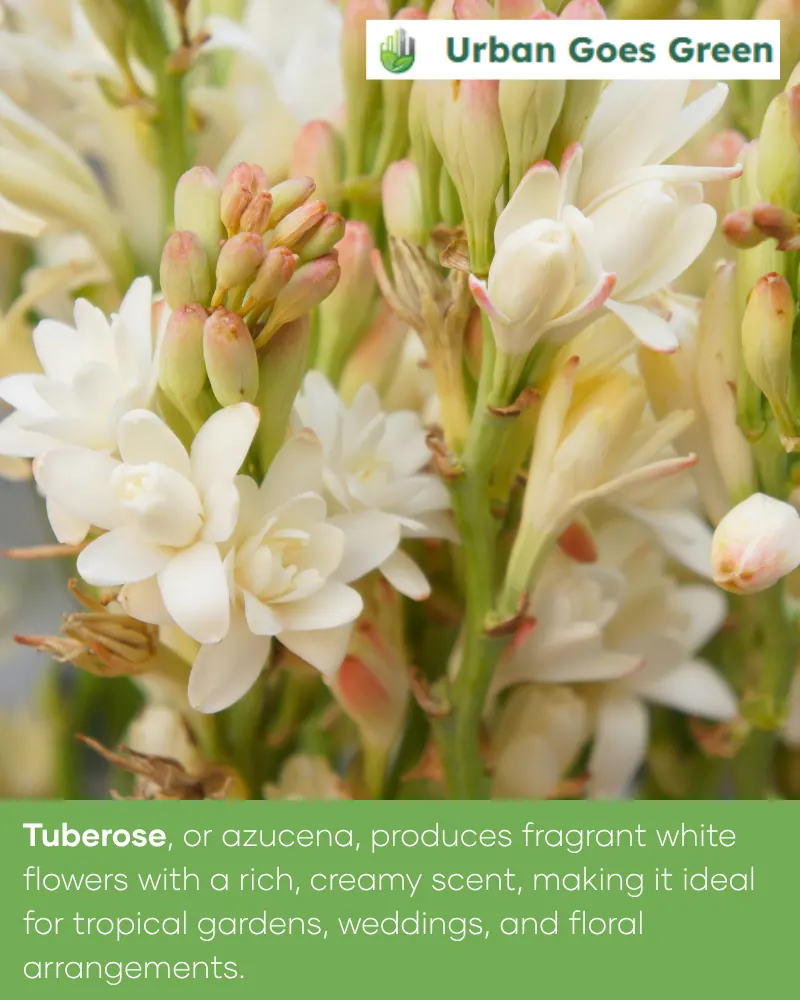
The Evening Star
Tuberose, known locally as azucena, produces tall spikes of waxy white flowers that release one of the most intense fragrances in the plant kingdom. The scent is rich, creamy, and narcotic, with notes of gardenia, coconut cream, and a warm, animalic undertone that perfumers describe as "indolic." In the Philippines, azucena is traditionally associated with religious festivals and wedding decorations, where its powerful fragrance fills churches and reception halls.
This bulbous perennial is surprisingly easy to grow in the Philippines. Each bulb sends up a tall flower spike (60 to 90 centimetres) adorned with clusters of tubular white flowers that open from the bottom up over a period of 2 to 3 weeks. A row of tuberose in bloom is one of the most gloriously scented sights in any tropical garden. The flowers also make exceptional cut flowers, lasting up to 10 days in a vase while continuing to release their perfume.
Growing Requirements
- Sunlight: Full sun to light afternoon shade. At least 6 hours of direct sun for best flowering.
- Soil: Rich, well-draining loam with plenty of organic matter. Avoid clay-heavy soil, which causes bulb rot.
- Watering: Regular watering during active growth. Reduce watering after flowering when the foliage begins to die back.
- Planting depth: Set bulbs 5 centimetres deep and 15 centimetres apart. Plant in clusters of 5 to 7 bulbs for the best visual and fragrance impact.
- Fertiliser: Apply a balanced fertiliser at planting time and again when the flower spike begins to emerge.
- Fragrance intensity: Very strong. One of the most powerful fragrances of any garden plant. Detectable from 5 to 10 metres.
- Blooming time: March to July in the Philippines, approximately 90 to 120 days after planting.
Best Placement for Scent
Tuberose is ideal for planting along pathways, near gates, or bordering a patio. Because the fragrance is exceptionally strong, a few bulbs go a long way. Avoid planting them directly outside bedroom windows, as the scent can become overpowering in an enclosed space at night. Instead, place them 3 to 5 metres from living areas so the fragrance drifts in gently rather than overwhelming you. They also grow well in large containers, making them suitable for balcony gardens in urban condos.
Tuberose bulbs are sold at garden shops and online for ₱30 to ₱80 per bulb, or ₱150 to ₱400 for a pack of five. Buy plump, firm bulbs and avoid any that feel soft or show signs of mould.
7. Dama de Noche (Cestrum nocturnum)
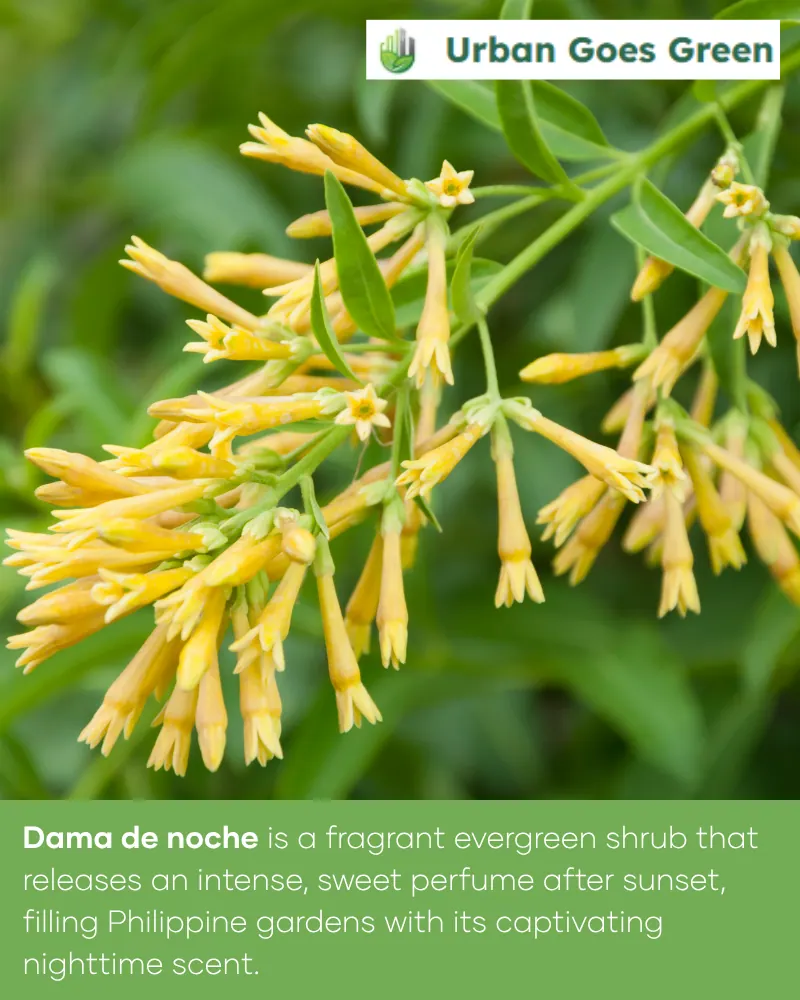
The Lady of the Night
Dama de noche is the undisputed champion of evening fragrance in Philippine gardens. This evergreen shrub produces clusters of small, tubular, greenish-white flowers that are unremarkable by day but release a staggeringly powerful perfume after sunset. The scent is sweet, heady, and almost intoxicating in its intensity. A single mature shrub can perfume an entire street on a warm, still evening. It is the plant that neighbours will ask you about, wondering where that incredible scent is coming from.
The name "dama de noche" (lady of the night) perfectly captures the plant's character. During the day, you would walk past it without a second glance. But as dusk falls and the temperature drops slightly, the flowers begin releasing their fragrance in waves that intensify as the night deepens. By midnight, the scent reaches its peak. By dawn, it fades again. This daily rhythm makes dama de noche one of the most theatrical plants you can grow.
Growing Requirements
- Sunlight: Full sun to partial shade. Flowers in any light condition but produces more blooms in brighter locations.
- Soil: Adaptable to most soil types. Performs well in standard loam with good drainage.
- Watering: Moderate. Water when the top layer of soil feels dry. Tolerates brief dry spells.
- Pruning: Prune regularly to control size, as it can become leggy and sprawling without management. Cut back by half after each flowering cycle.
- Propagation: Very easy from stem cuttings. Take 15 to 20 centimetre cuttings, remove lower leaves, and root in moist soil or water.
- Caution: All parts of dama de noche are toxic if ingested. Keep away from children and pets.
- Fragrance intensity: Extremely strong. The strongest night fragrance of any common garden plant. Detectable from 10 to 20 metres.
- Blooming time: Multiple times per year, with peak blooming cycles every 4 to 6 weeks during warm months.
Best Placement for Scent
Position dama de noche at least 5 metres from bedroom windows. Seriously. The fragrance is so powerful that it can cause headaches and difficulty sleeping if the plant is too close to sleeping areas. The ideal spot is near the edge of your property, near a gate, or beside an outdoor seating area where you enjoy evening gatherings. Plant it upwind of your sitting area so the breeze carries the scent toward you.
Dama de noche is inexpensive and widely available, costing just ₱50 to ₱200. It grows quickly and can reach 2 to 3 metres in height within a year. Many gardeners obtain it for free as cuttings from friends and neighbours.
8. Sweet Basil (Ocimum basilicum)
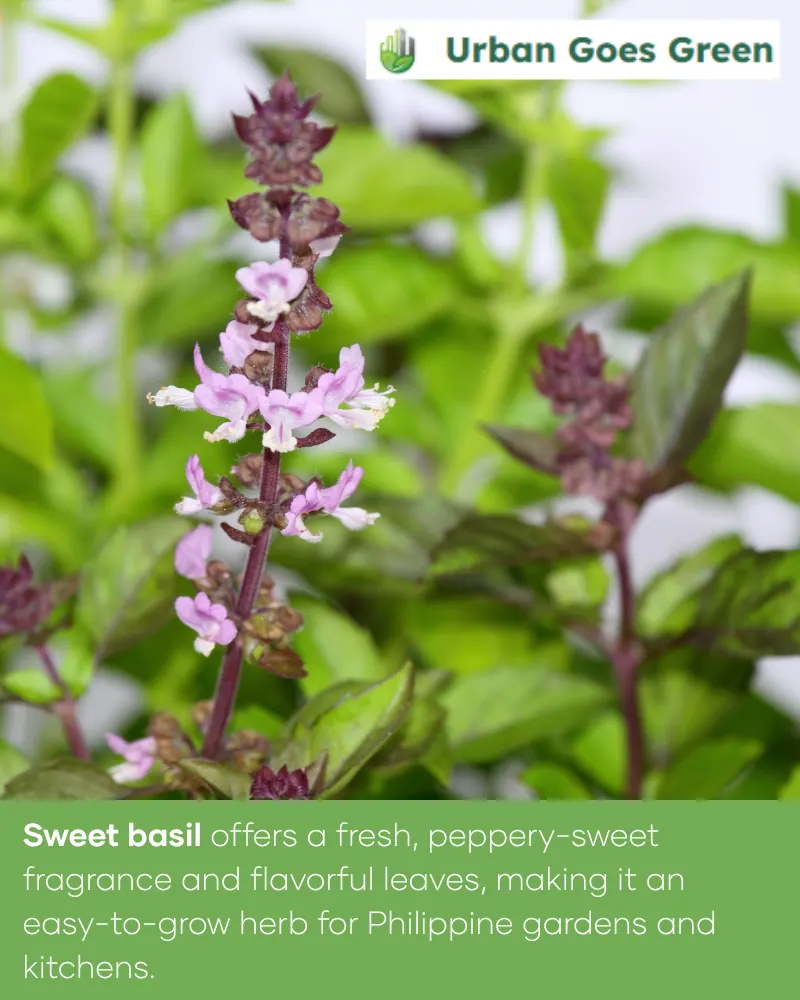
Fragrance You Can Eat
Sweet basil bridges the gap between ornamental garden and kitchen herb, offering a fresh, peppery-sweet fragrance that delights the nose while providing a constant supply of leaves for cooking. In the Philippines, basil (locally called "balanoy" in some Visayan languages) is used in adobo variations, pasta sauces, and as a topping for pizza and bruschetta. The fragrance of fresh basil on a warm afternoon is clean, bright, and appetising, a world apart from the dried basil sold in supermarket spice jars.
Sweet basil is one of the easiest fragrant plants to grow in the Philippines. It thrives in the heat, grows quickly from seed, and produces harvestable leaves within 3 to 4 weeks of planting. Frequent harvesting actually encourages bushier, more productive growth. Pinching off the flower buds as they appear redirects the plant's energy into leaf production and extends the harvest season by months.
Growing Requirements
- Sunlight: Full sun, at least 6 hours daily. Basil loves heat and intense Philippine sunshine.
- Soil: Rich, well-draining loam with plenty of compost. Basil is a moderately heavy feeder that rewards fertile soil with lush growth.
- Watering: Keep consistently moist. Basil wilts dramatically when thirsty but recovers quickly after watering. Avoid overhead watering in the late afternoon to prevent fungal issues.
- Container growing: Excellent in pots. Use a container at least 20 centimetres in diameter with good drainage. Position on a sunny kitchen windowsill or balcony railing.
- Harvesting: Pinch stems above a leaf node to encourage branching. Harvest from the top down, never removing more than one-third of the plant at once.
- Fragrance intensity: Moderate. Strongest when leaves are brushed or crushed. Fragrant within 1 to 2 metres.
- Lifespan: Treat as an annual or short-lived perennial. Replace plants every 3 to 4 months for the best leaf quality and fragrance.
Sweet basil seeds are available at every garden shop and many supermarkets for ₱15 to ₱40 per packet. Seedlings cost ₱30 to ₱80. For the most fragrant varieties, look for Genovese basil or Thai sweet basil, both of which perform exceptionally in Philippine conditions. For more ideas on growing edible plants at home, visit our container gardening guide.
9. Pandan (Pandanus amaryllifolius)
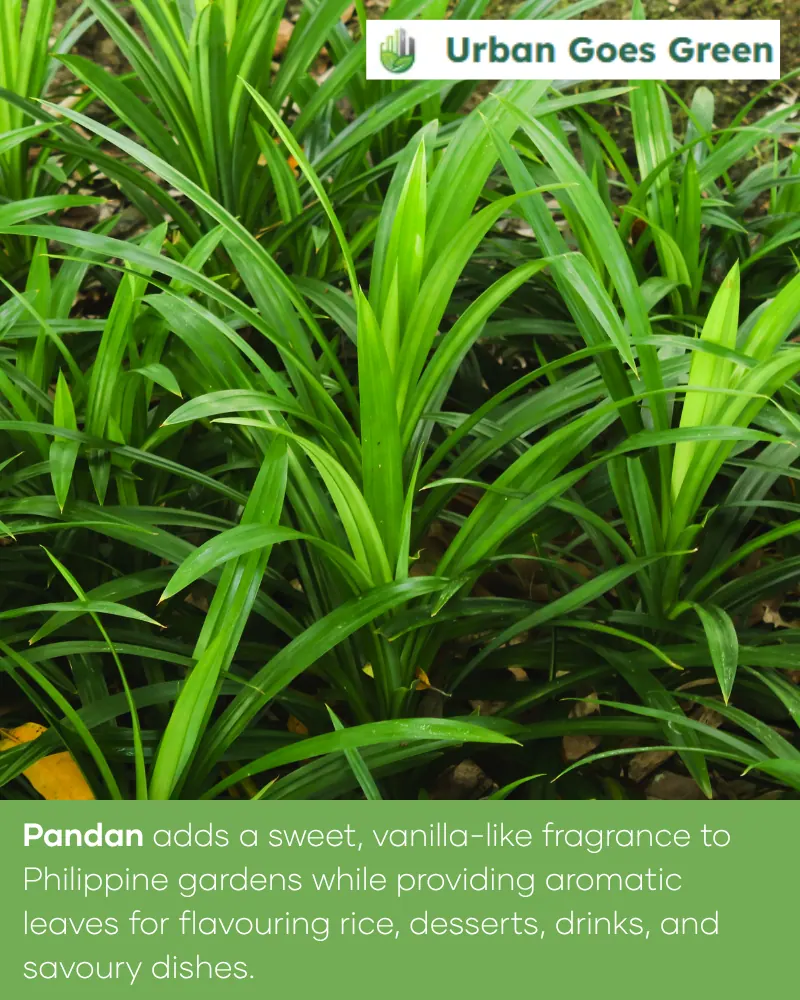
The Filipino Kitchen Essential
Pandan is so deeply woven into Filipino culture and cuisine that many people forget it is also a fragrant garden plant. The long, blade-like leaves release a sweet, vanilla-like aroma when bruised or torn, and they are used throughout Southeast Asian cooking to flavour rice, desserts, drinks, and savoury dishes. A pot of pandan growing near your kitchen door gives you an endless supply of leaves for cooking while perfuming the area with its subtle, pleasant fragrance.
In the garden, pandan grows as a clumping plant with upright, arching leaves that can reach 60 to 90 centimetres in length. It spreads slowly through basal shoots, eventually forming a dense, attractive cluster that works well as a border plant or container specimen. Unlike many other fragrant plants, pandan's scent is not overpowering. It is a gentle background fragrance that you notice most when you brush against the leaves or pick them for the kitchen.
Growing Requirements
- Sunlight: Partial shade to full sun. Pandan tolerates lower light than most plants on this list, making it suitable for shaded areas under trees or on covered patios.
- Soil: Moist, fertile soil rich in organic matter. Pandan is one of the few plants that actually tolerates (and even prefers) soil that stays consistently damp.
- Watering: Keep moist at all times. Pandan does not tolerate drought. During the dry season, water daily or place the pot in a saucer of water.
- Fertiliser: Feed monthly with a balanced liquid fertiliser. Organic compost tea works well and complements the plant's culinary use.
- Propagation: Divide established clumps by separating basal shoots with some roots attached. These establish quickly when replanted in moist soil.
- Fragrance intensity: Mild. Strongest when leaves are bruised, cut, or heated. Pleasant background fragrance near the plant.
- Harvest: Cut outer leaves as needed. Each plant produces new leaves from the centre continuously.
Best Placement for Scent and Convenience
The best spot for pandan is right next to your kitchen door or on a kitchen windowsill. This placement serves double duty. You can grab a leaf whenever you need one for cooking, and the gentle fragrance freshens the kitchen area. In the garden, pandan grows well under the shade of larger trees, making it an excellent understory plant beneath your ylang-ylang or kalachuchi. It also works as a potted plant on bathroom windowsills, where the humidity keeps it happy and the scent acts as a natural air freshener.
Pandan plants are among the most affordable on this list, costing ₱30 to ₱100 at nurseries. Many Filipino households share pandan divisions freely among neighbours and family members.
10. Citronella (Cymbopogon nardus)
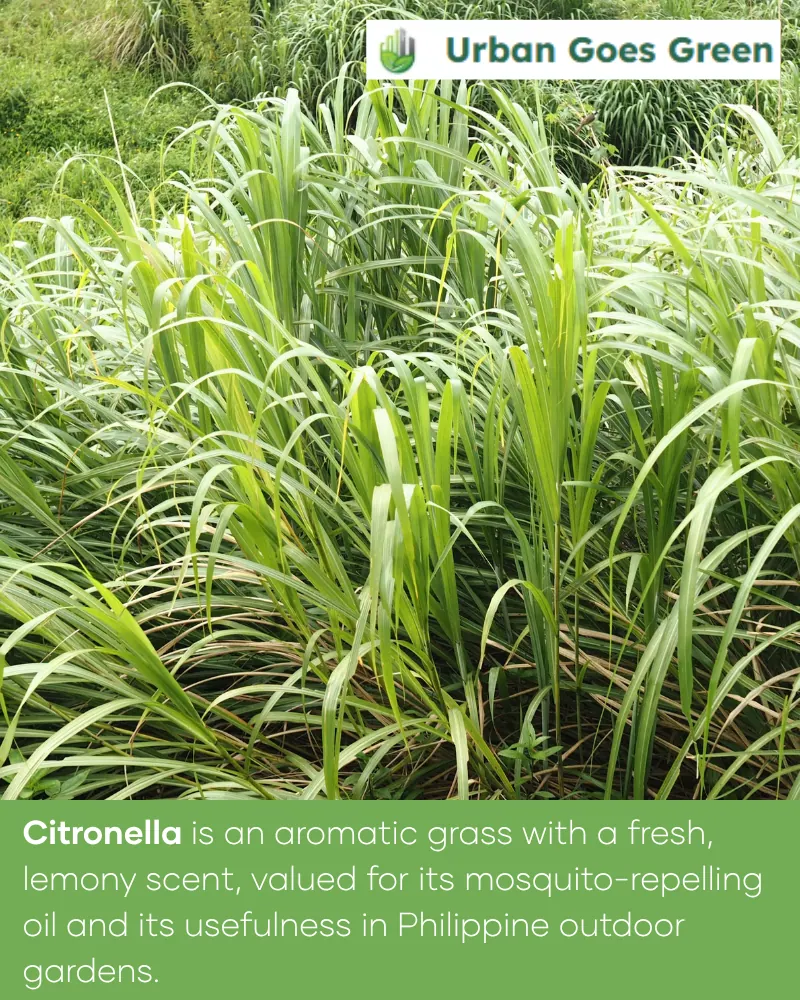
Fragrance That Fights Mosquitoes
Citronella is the most functional fragrant plant on this list. While its lemony, grassy scent is pleasant enough on its own, the real value is in its mosquito-repelling properties. Citronella oil is the active ingredient in many commercial mosquito repellent candles, sprays, and patches. Growing the plant itself provides a natural mosquito deterrent for outdoor areas, which is invaluable in the Philippines, where dengue, chikungunya, and Zika are ongoing health concerns.
Citronella is a clumping grass that grows to about 1 to 1.5 metres tall with aromatic, blue-green leaves. It looks similar to lemongrass (tanglad) and is often confused with it, but the two are different species. Citronella (Cymbopogon nardus or Cymbopogon winterianus) has a wider leaf base and a stronger, more pungent scent than lemongrass. Both are useful, but citronella is the superior mosquito repellent.
Growing Requirements
- Sunlight: Full sun. Citronella produces the most oil (and strongest scent) in full, direct sunlight.
- Soil: Well-draining loam. Tolerates a range of soil conditions but grows most vigorously in fertile, organically rich soil.
- Watering: Regular watering during establishment. Mature clumps are fairly drought-tolerant.
- Spacing: Plant 60 to 90 centimetres apart. Citronella spreads through basal division and will fill in gaps within a season.
- Harvesting: Crush or bruise leaves to release the scent and mosquito-repelling oils. Place crushed leaves in outdoor seating areas or rub them on skin as a natural repellent.
- Fragrance intensity: Moderate. Strongest when leaves are crushed. The growing plant has a mild citrusy background scent.
- Maintenance: Cut back clumps to 15 centimetres once a year (at the start of the wet season) to rejuvenate growth and maintain tidiness.
Best Placement for Mosquito Control
Plant citronella in borders around outdoor living areas, near doorways, and along garden paths. The plant alone will not create a mosquito-free zone (you need to crush the leaves to release the oils significantly), but it does contribute to reducing mosquito activity in the immediate area. For maximum effect, combine citronella planting with the practice of crushing a few leaves and placing them on tables during outdoor meals. Grow citronella alongside sweet basil, which also has mild mosquito-repelling properties, for a dual-purpose fragrant-functional border. For advice on organising your garden tools for this kind of planting, see our essential gardening tools guide.
Citronella divisions cost ₱30 to ₱100 at garden shops. A single purchased clump will provide enough divisions to border an entire patio within one growing season.
Strategic Placement for Maximum Fragrance
Understanding Scent Drift
Fragrance in a garden is not static. It moves with air currents, rises with warmth, and intensifies with humidity. In the Philippines, the dominant wind direction varies by season. During the amihan (northeast monsoon, October to March), breezes come from the northeast. During the habagat (southwest monsoon, June to September), they come from the southwest. Planting fragrant plants upwind of your outdoor living spaces, based on the season when you spend the most time outdoors, maximises the scent you experience.
Layering Fragrances by Time of Day
Different plants release their fragrance at different times. By combining morning, daytime, and evening bloomers, you can create a garden that smells wonderful around the clock.
- Morning fragrance (6 AM to 10 AM): Sampaguita, gardenia, tuberose
- Midday fragrance (10 AM to 4 PM): Kalachuchi, sweet basil, pandan
- Evening fragrance (6 PM onwards): Dama de noche, ylang-ylang, night-blooming jasmine
Container Placement for Apartments
If you live in a condominium or apartment, grow fragrant plants in containers on your balcony or by your windows. Sampaguita, gardenia, sweet basil, and pandan all thrive in pots. Position them so that the prevailing breeze carries the fragrance into your living space. An east-facing balcony is ideal for morning sun, which warms the plants and stimulates fragrance release just as you start your day. For more about growing plants in limited spaces, our urban gardening guide covers everything you need to know.
Frequently Asked Questions
Which fragrant plant in the Philippines has the strongest scent?
Dama de noche (Cestrum nocturnum) has the strongest and most far-reaching fragrance of any commonly grown plant in the Philippines. A single mature shrub can perfume an entire garden and even reach neighbouring properties when it blooms on warm, humid evenings. The scent is intensely sweet and carries on the slightest breeze. Ylang-ylang is another powerhouse, with a fragrance so potent that it is a key ingredient in Chanel No. 5 and many other luxury perfumes. For daytime fragrance, gardenia and sampaguita are the strongest performers. The key is to place these plants near windows, gates, or outdoor seating areas where you spend the most time, so you can enjoy the scent without needing to walk into the garden.
Can I grow fragrant plants indoors in the Philippines?
Yes, several fragrant plants grow well indoors in Philippine homes, provided they receive adequate light. Sweet basil and pandan are the easiest indoor options because they tolerate the lower light levels found in most apartments and condominiums. Place them near a window that receives at least 4 hours of bright, indirect light. Sampaguita and gardenia can also be grown indoors in large pots near east-facing windows, but they flower less prolifically than outdoor specimens. Avoid placing strongly scented plants like dama de noche or ylang-ylang inside bedrooms, as the intense fragrance can cause headaches in enclosed spaces. For indoor growing, use well-draining potting soil with perlite, and ensure your pots have drainage holes to prevent root rot from the high humidity common in Philippine homes.
When is the best time to plant fragrant flowers in the Philippines?
The best time to plant most fragrant flowers in the Philippines is at the start of the wet season, from late May through June. The regular rainfall helps new plants establish their root systems without the stress of daily manual watering. The warm, humid conditions during this period promote rapid growth. Sampaguita, gardenia, kalachuchi, and ylang-ylang all respond well to wet-season planting. For herbs like sweet basil and pandan, you can plant year-round as long as you provide consistent watering during the dry months. Avoid planting during the peak of the dry season (March to early May) unless you can commit to daily watering, because young plants are vulnerable to heat stress. Tuberose bulbs are best planted in January or February so they are well-rooted before their summer blooming period.
Related Guides
Best Climbing Plants in the Philippines
Transform walls and fences with bougainvillea, jade vine, passion fruit, and more tropical vines.
Plant GuidesBest Fast-Growing Trees in the Philippines
Create shade and structure with narra, fire tree, rain tree, and other quick growers.
Growing GuidesContainer Gardening in the Philippines
Grow vegetables and ornamentals in pots, even on a small balcony or rooftop.
Growing GuidesUrban Gardening in the Philippines
A complete beginner's guide to starting your own urban garden in Metro Manila.