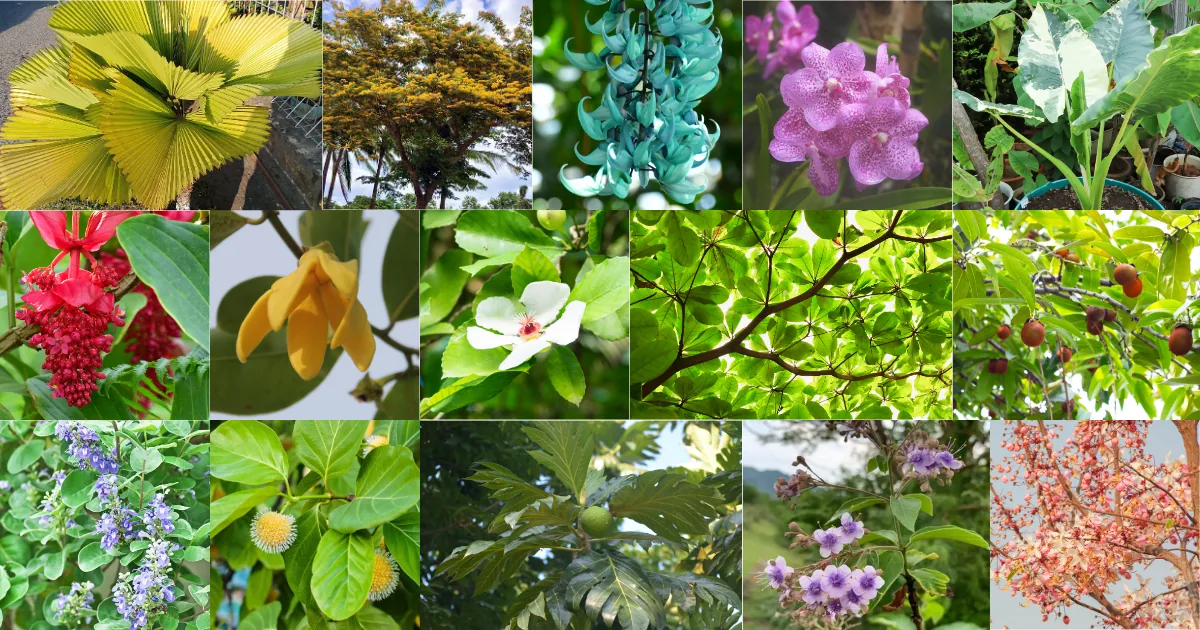
Why Grow Native Philippine Plants
Native Philippine plants guide your garden toward biodiversity and ecological resilience. The Philippines is one of 18 mega-biodiverse countries on Earth, home to over 14,000 plant species. Roughly half of them are endemic, meaning they grow nowhere else in the world.
Growing native plants in your garden supports local pollinators like butterflies and bees. These species have evolved alongside our native wildlife for millions of years. They also require less water, fertiliser and pest control than imported ornamental plants because they are perfectly adapted to Philippine soil and climate.
Sadly, deforestation and habitat loss threaten many native species. By planting them in our gardens, parks and communities, we help preserve our natural heritage for future generations. Here are 15 native plants every Filipino gardener should know.
Quick answer: native, endemic or indigenous?
Native plants grew in the Philippines before people brought anything in. They come in two kinds. Endemic plants grow naturally here and nowhere else. Indigenous plants are native here but also grow wild in nearby countries.
Endemic on this list: jade vine, waling-waling, alocasia zebrina, kapa-kapa, katmon, antipolo and Philippine teak.
Indigenous on this list: anahaw, narra, ilang-ilang, talisay, kamagong, molave, bangkal and balayong.
Sampaguita is not on the list. It is the national flower, but it came from South Asia centuries ago, so it is not native.
1. Anahaw (Saribus rotundifolius)
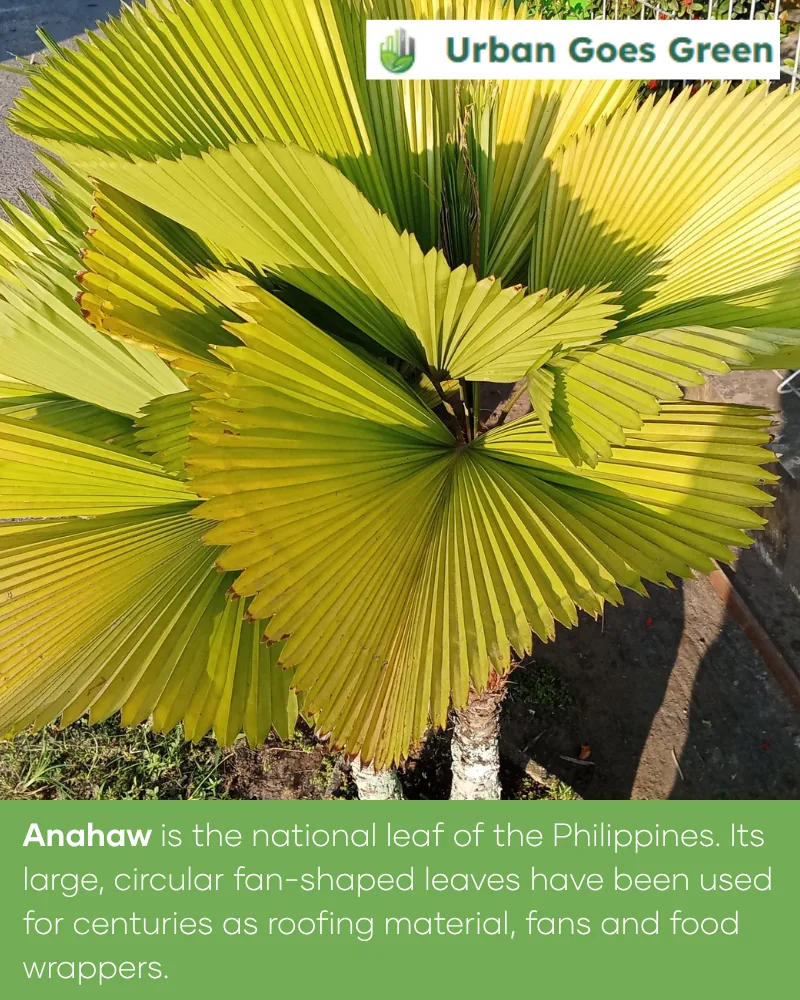
Anahaw is the national leaf of the Philippines. This fan palm grows across Philippine forests from Luzon to Mindanao. Its large, circular fan-shaped leaves have been used for centuries as roofing material, fans and food wrappers. Anahaw grows up to 20 metres tall and thrives in partial shade to full sun. It makes an excellent landscape tree for large gardens. Young anahaw palms also work well as potted accent plants on patios and entryways. Its leaves are widely seen as a symbol of Filipino resilience.
2. Narra (Pterocarpus indicus)
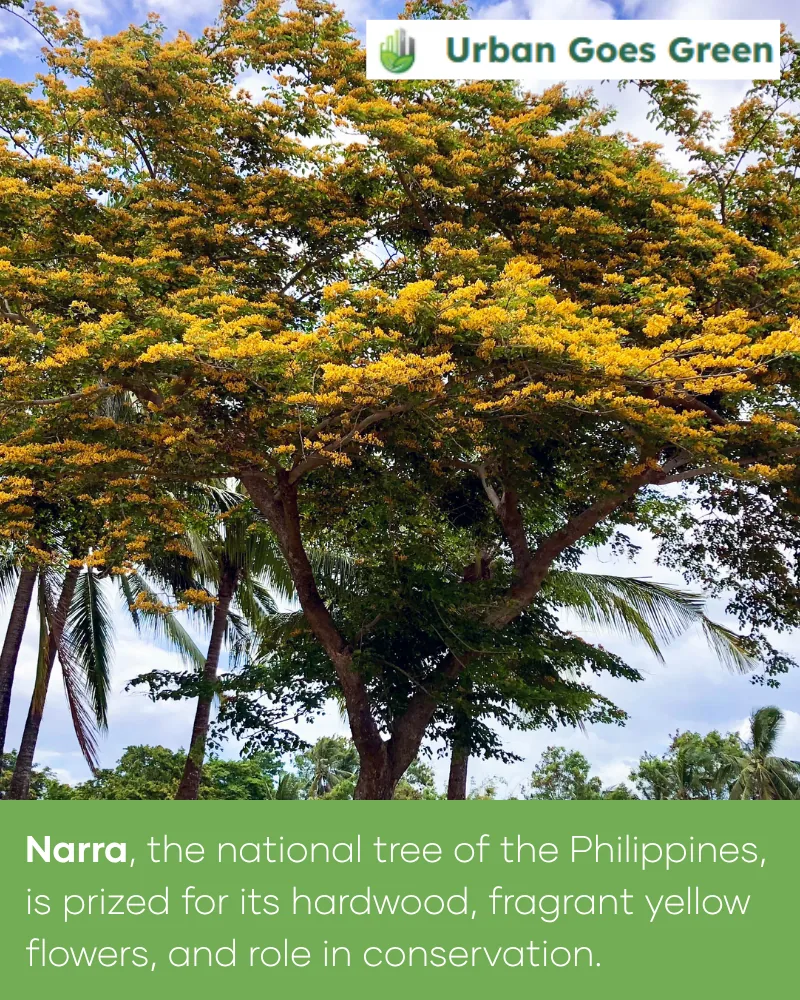
Narra is the national tree of the Philippines and one of the most valued hardwoods in Southeast Asia. This majestic tree grows up to 30 metres tall with a spreading canopy and produces clusters of fragrant yellow flowers. Narra wood features a rich reddish-brown colour prized for furniture, carvings and construction. Decades of illegal logging have made narra a threatened species in the wild. Planting narra in your property contributes to conservation. It grows well in lowland areas with full sun and well-drained soil.
3. Jade Vine (Strongylodon macrobotrys)
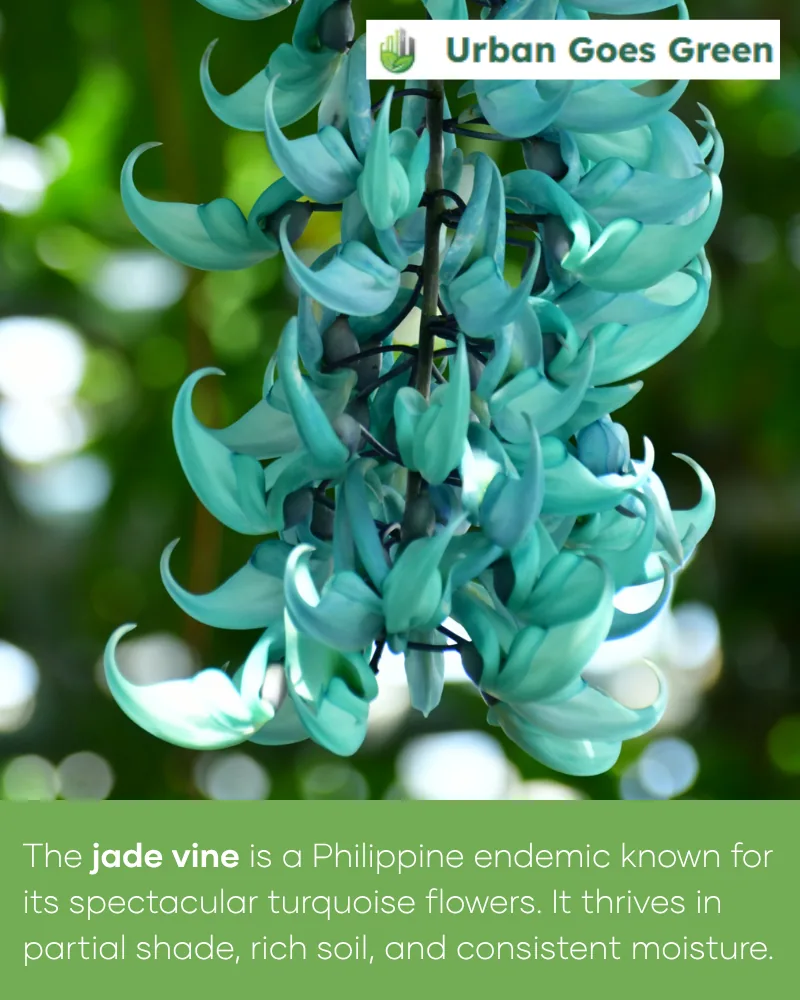
The jade vine is one of the most spectacular plants on Earth and it is endemic to the Philippines. Its hanging clusters of turquoise, claw-shaped flowers can reach up to 3 metres long. Found naturally in the rainforests of Luzon, Mindoro and Catanduanes, the jade vine is now classified as vulnerable due to deforestation. Growing jade vine requires a strong trellis or large tree for support. It needs partial shade, rich soil and consistent moisture. Several botanical gardens across the Philippines propagate jade vine for conservation, including the UP Diliman campus. Our tayabak (jade vine) guide has the full care details.
4. Waling-Waling (Vanda sanderiana)
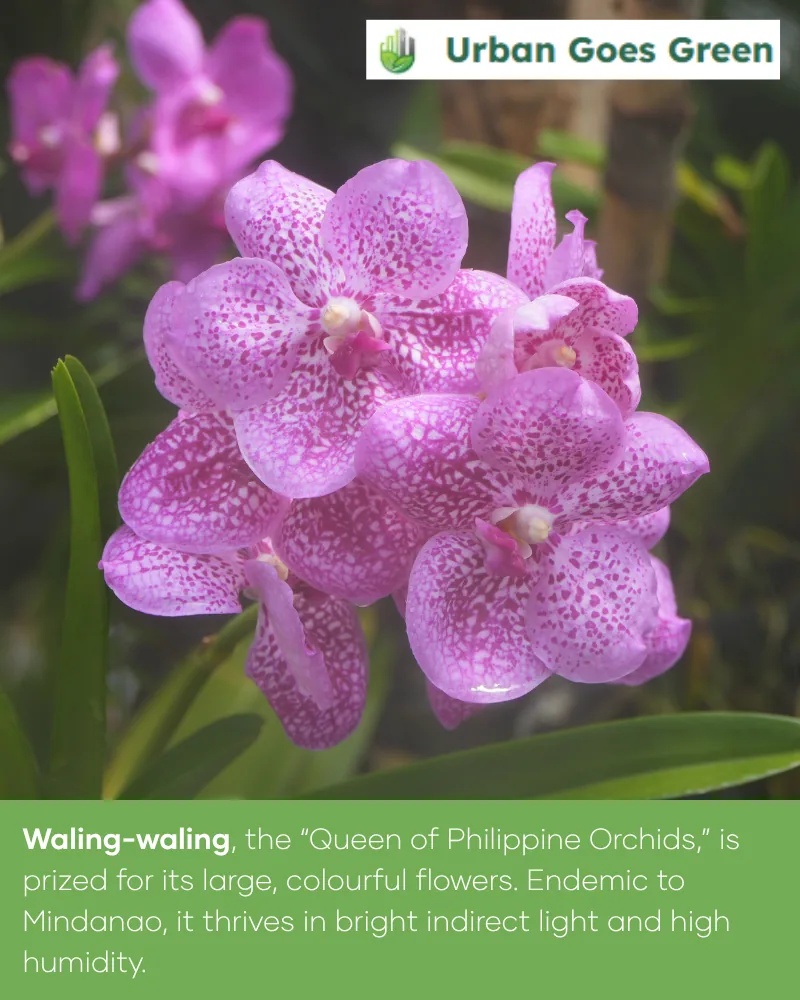
Waling-waling is called the "Queen of Philippine Orchids" for good reason. This stunning orchid produces large, flat flowers up to 15 cm across in shades of pink, purple and white with distinctive markings. Endemic to Mindanao, waling-waling grows as an epiphyte on large trees in tropical forests. It is now rare in the wild due to over-collection and habitat loss. Cultivated waling-waling grows well mounted on tree fern slabs or in large wooden baskets with minimal media. It needs bright indirect light and high humidity to thrive.
5. Alocasia Zebrina
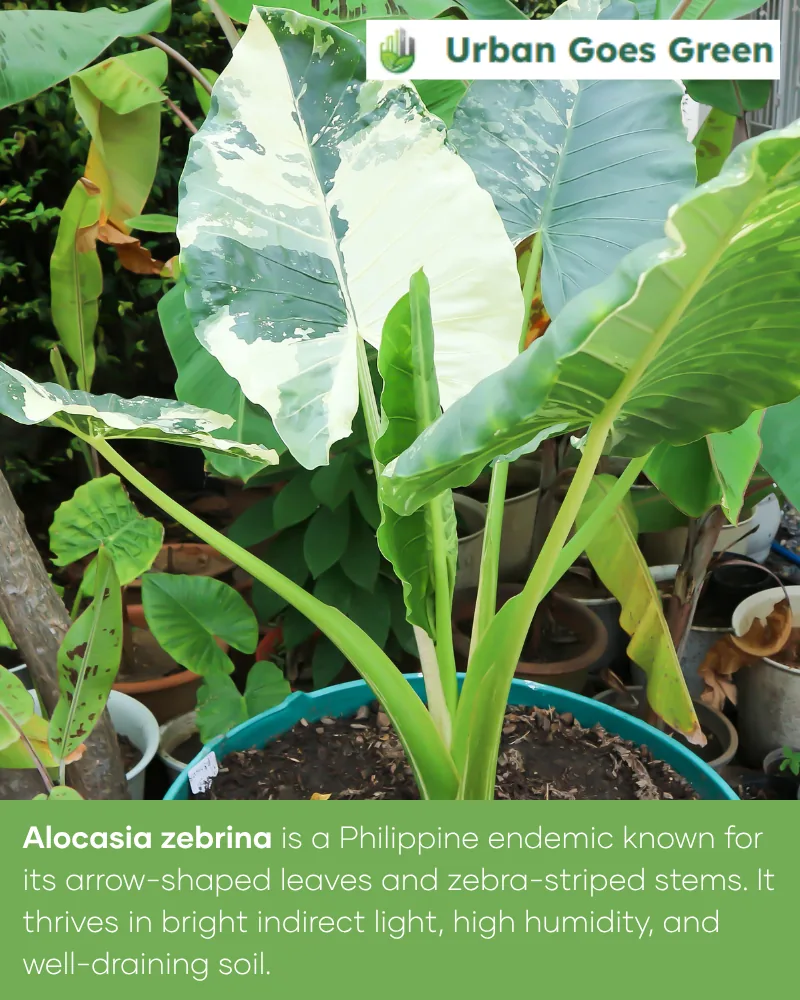
Alocasia zebrina is a Philippine endemic that became an international plant sensation during the 2020 houseplant boom. Its arrow-shaped leaves sit atop distinctive zebra-striped stems that give the plant its name. Found wild in the forests of Luzon and several other islands, alocasia zebrina grows well as a houseplant or garden accent in shaded areas. It prefers bright indirect light, high humidity and well-draining soil rich in organic matter. This plant proves that Philippine native species can compete with any imported ornamental for beauty and visual impact.
6. Kapa-Kapa (Medinilla magnifica)
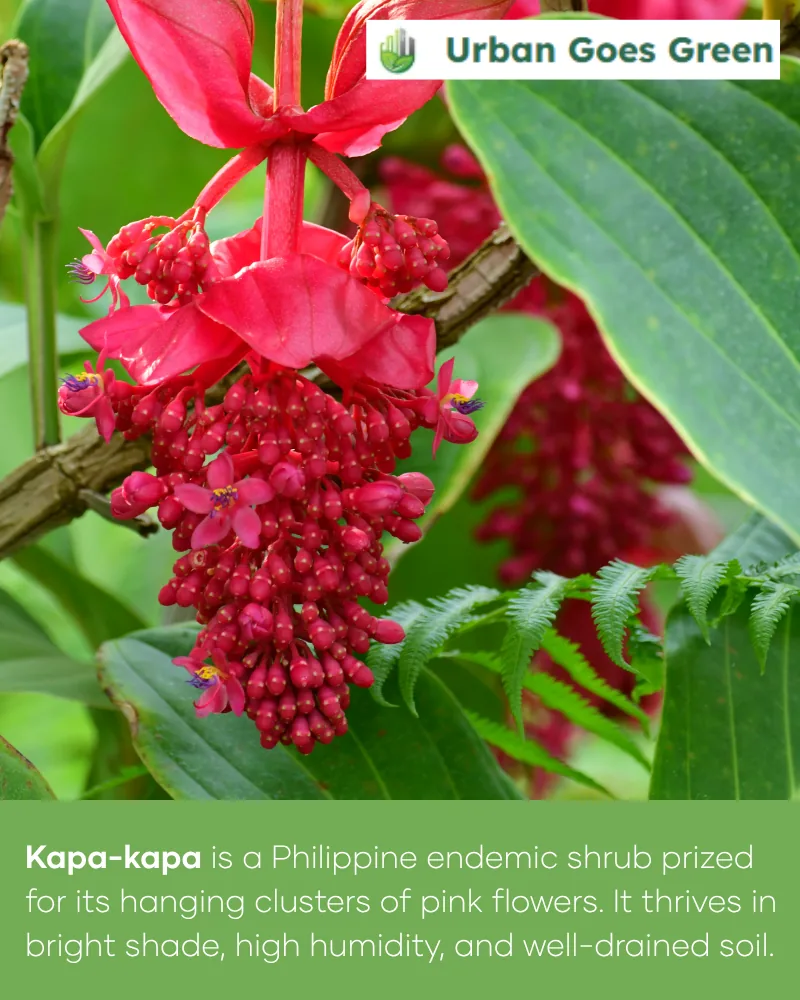
Kapa-kapa is a Philippine endemic shrub known for its hanging clusters of pink flowers wrapped in large pink bracts. In the wild it grows on trees and rocks in the mountain forests of Luzon. Abroad it is sold as an expensive houseplant, often under the name "rose grape". At home it reaches about 1 to 2 metres. Give it bright shade, high humidity and a loose, well-drained mix like the one you would use for orchids or aroids. It does not like hot afternoon sun or soggy roots, so a covered patio or a shaded corner of the garden suits it best.
7. Ilang-Ilang (Cananga odorata)
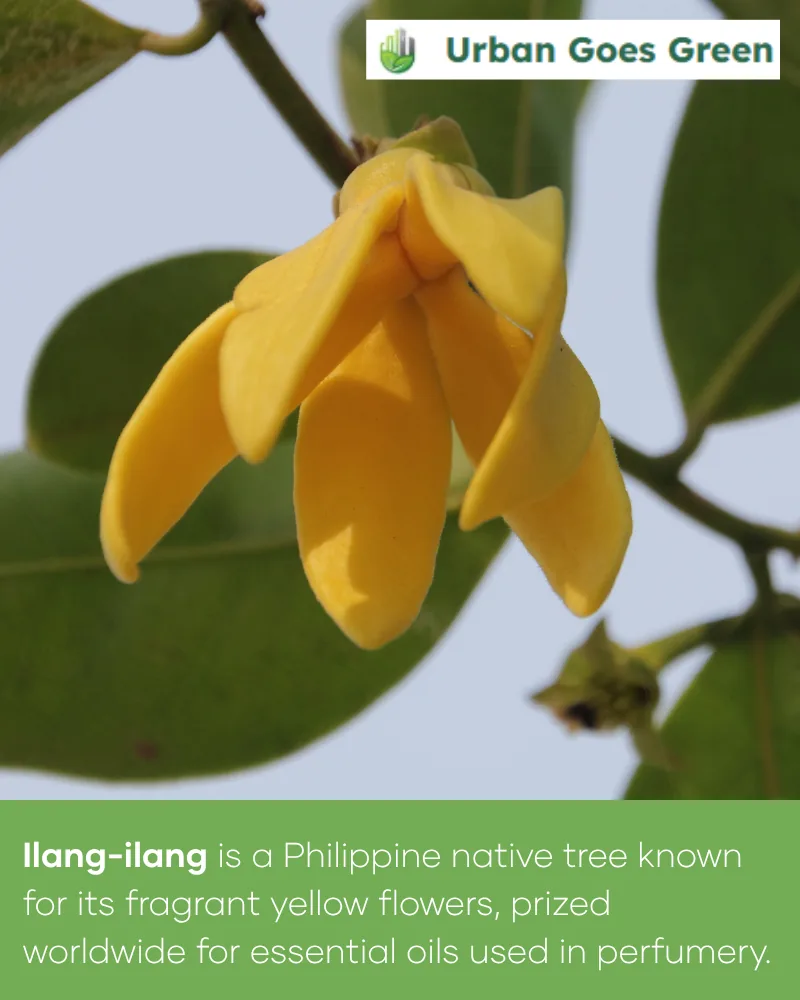
Ilang-ilang (also spelled ylang-ylang) is famous worldwide as the source of essential oil used in perfumery, including the iconic Chanel No. 5. This fast-growing tree is native to the Philippines and produces drooping yellow flowers with an intensely sweet fragrance. Ilang-ilang trees grow up to 12 metres tall in full sun conditions. They flower throughout the year in Philippine weather. Plant one in a spacious garden where its fragrance can fill the air on warm evenings. The essential oil industry provides income for farming communities across Batangas and Quezon provinces.
More Native Philippine Plants Worth Growing
8. Katmon (Dillenia philippinensis)
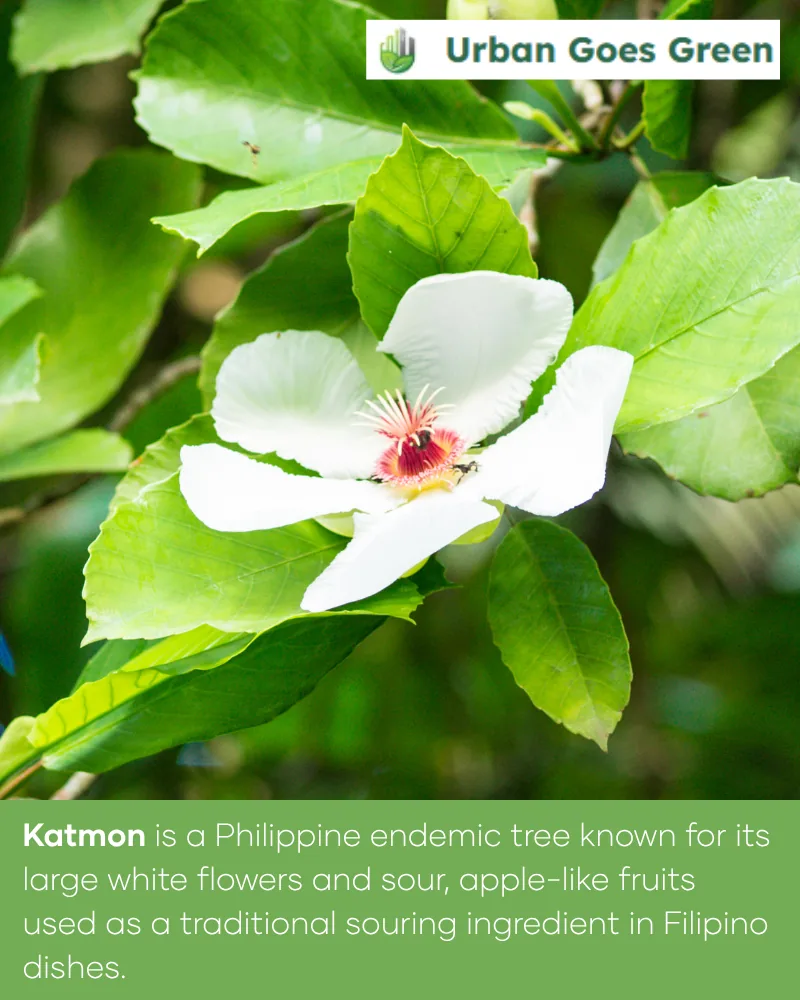
Katmon is a Philippine endemic tree with large white flowers and distinctive acidic fruits used in traditional cooking. The round fruits resemble green apples and are used as souring agents in sinigang and other Filipino dishes. Katmon grows well in lowland areas and makes an attractive shade tree with its broad, leathery leaves.
9. Talisay (Terminalia catappa)
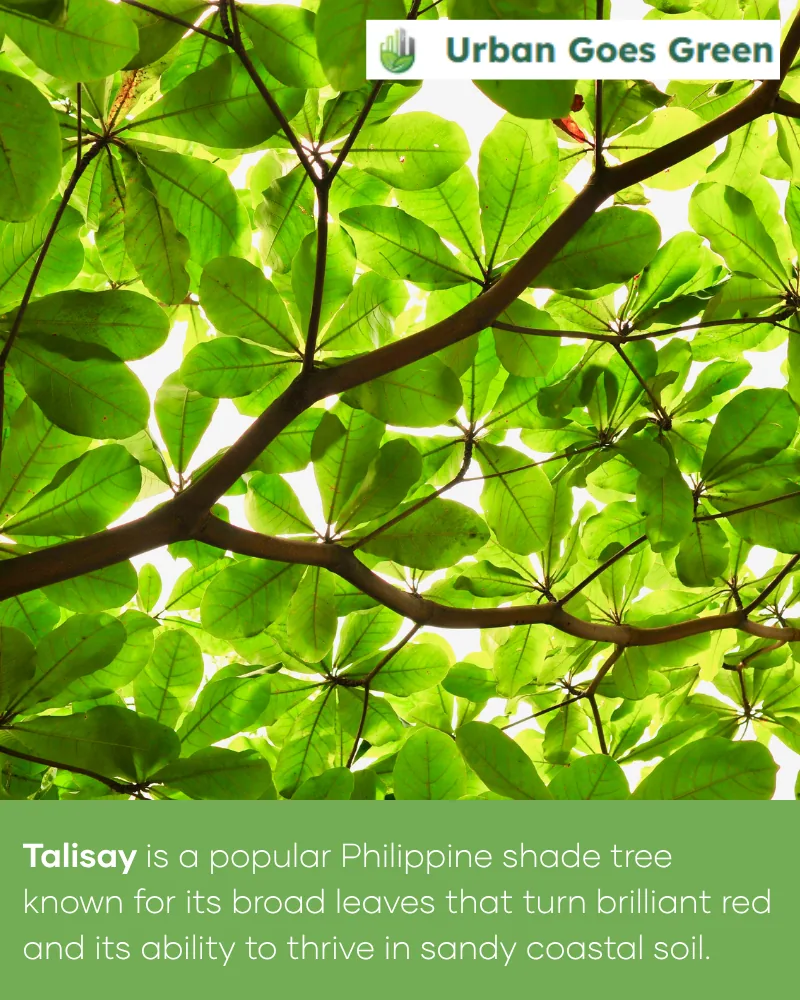
Talisay is the iconic shade tree found along Philippine beaches, parks and school grounds nationwide. Its large, leathery leaves turn brilliant red before dropping, creating a seasonal display. Talisay leaves are also valued in aquarium keeping because they release tannins that benefit tropical fish. The tree produces edible nuts similar to almonds. Talisay grows fast in full sun and tolerates poor, sandy soil, making it perfect for coastal landscaping.
10. Kamagong (Diospyros blancoi)
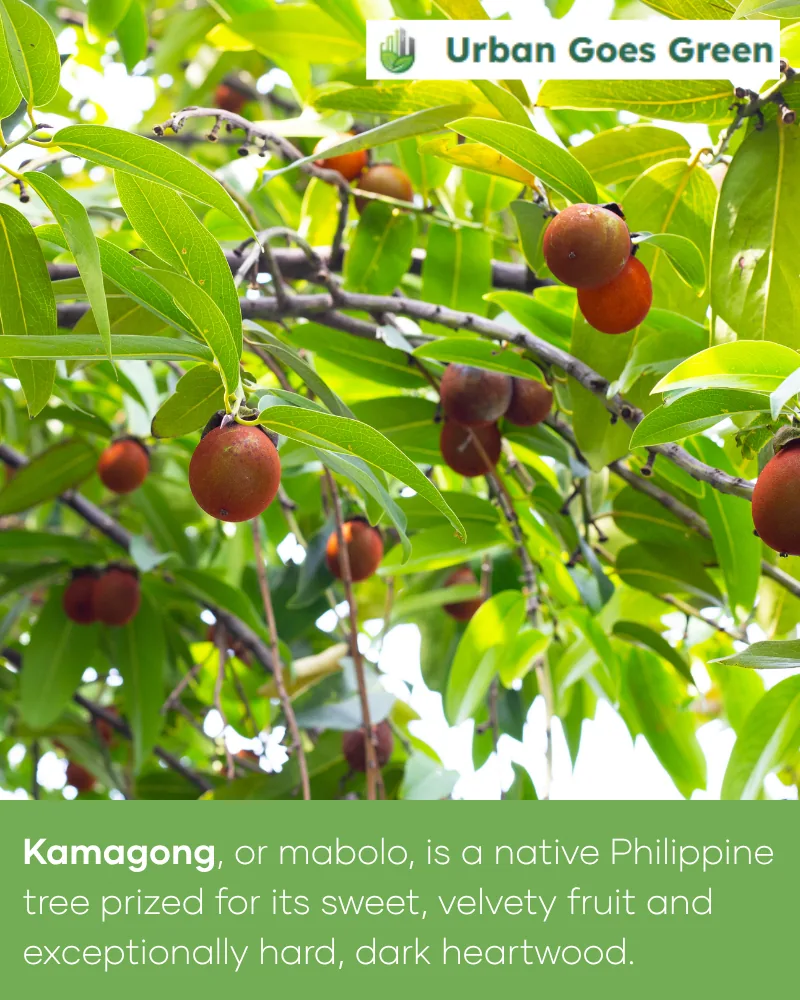
Kamagong, also known as mabolo, is a native Philippine tree prized for both its exotic fruit and extremely hard, dark heartwood. The velvety, reddish fruit has a strong aroma and sweet flesh. Kamagong wood is nearly black and is considered one of the finest carving woods in the world. This slow-growing tree reaches 15 to 25 metres at maturity. It makes an excellent specimen tree for large gardens, providing shade and seasonal fruit.
11. Molave (Vitex parviflora)
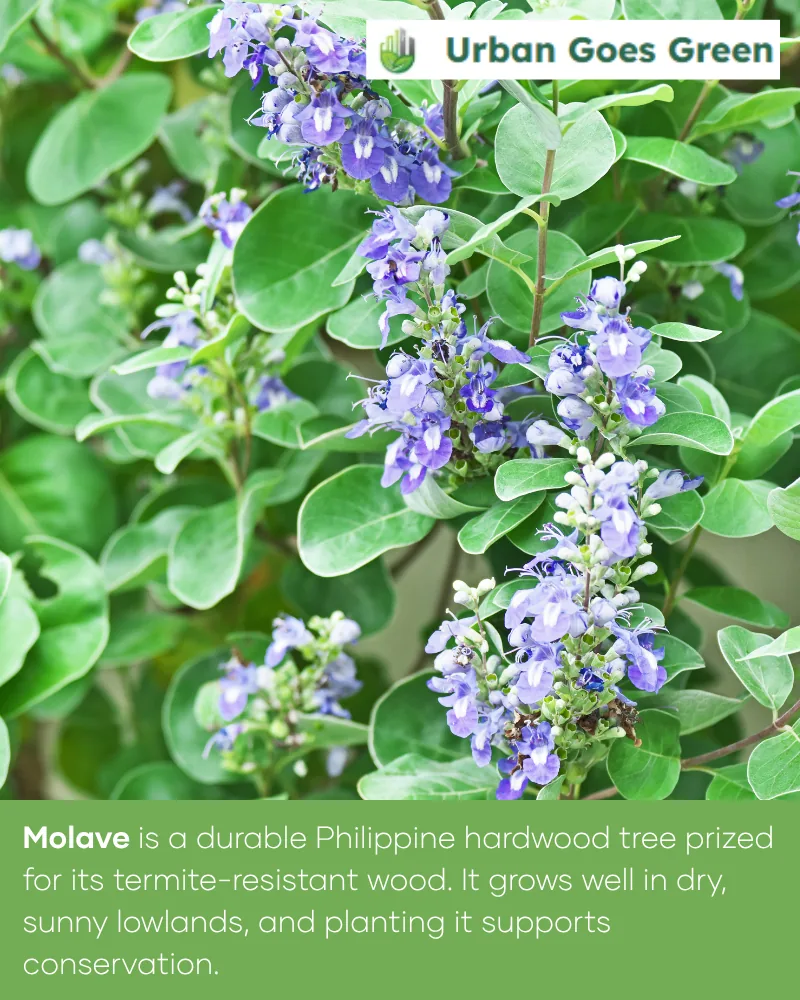
Molave is a premium Philippine hardwood tree known for its exceptional durability. Molave wood resists termites and weather damage, making it traditional building material for Filipino homes. The tree grows slowly but reaches impressive heights of 20 to 30 metres. It produces small lilac-coloured flowers that attract butterflies. Molave is threatened in the wild after centuries of logging, so planting it helps conservation. It grows well in dry lowland areas with full sun exposure.
12. Bangkal (Nauclea orientalis)
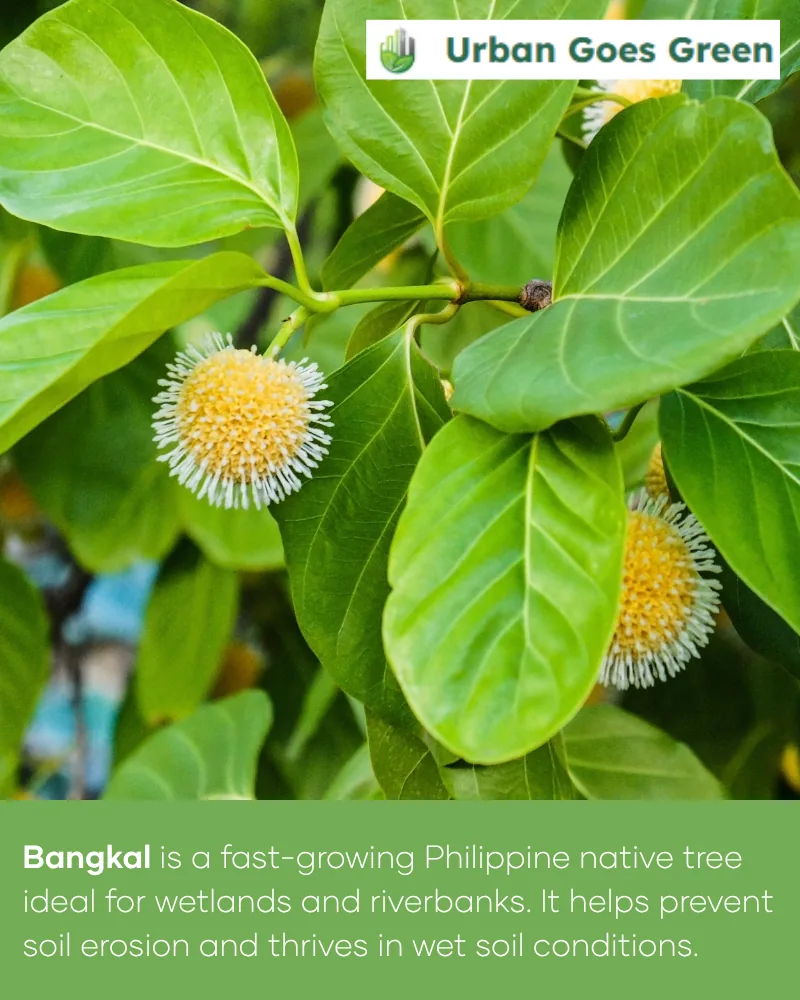
Bangkal is a fast-growing native tree that thrives along riverbanks and wetlands throughout the Philippines. It produces round, ball-shaped flower heads and grows up to 30 metres tall. Bangkal wood is lightweight and used for making boats, furniture and paper pulp. This tree grows rapidly in wet soil conditions, making it ideal for riparian buffer zones and flood-prone areas. It stabilises riverbanks and prevents soil erosion.
13. Antipolo (Artocarpus blancoi)
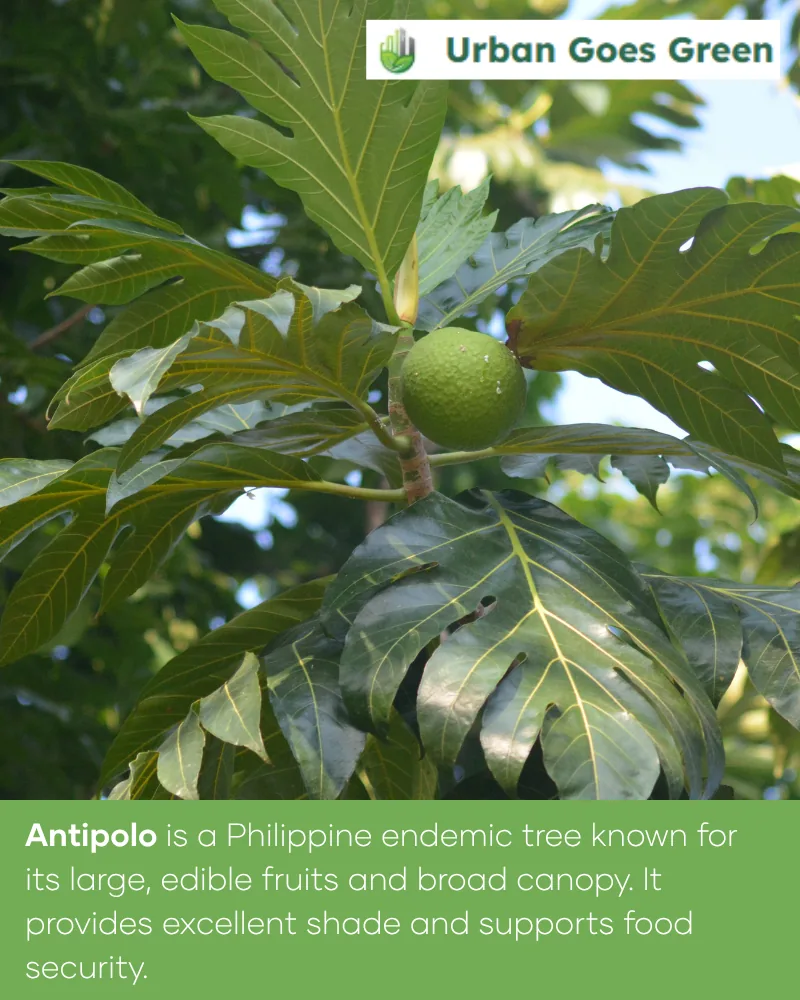
Antipolo is a Philippine endemic breadfruit tree that gave Antipolo City its name. It produces large, round, edible fruits with starchy flesh that tastes similar to breadfruit or potato when cooked. The tree grows up to 20 metres tall with a broad canopy. Antipolo is an excellent shade tree for large gardens and contributes to food security when the fruits are harvested.
14. Philippine Teak (Tectona philippinensis)
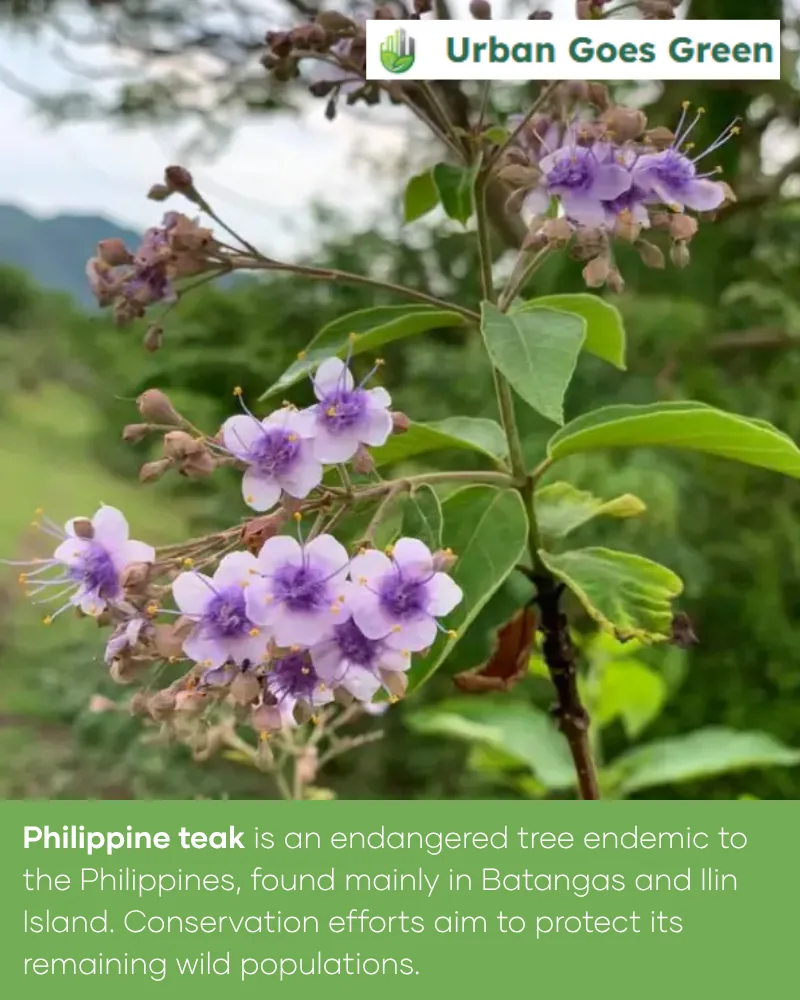
Philippine teak is an endangered endemic species. It survives in only a few dry limestone areas, mainly in Batangas and on Ilin Island off Mindoro. Unlike the common teak found across Southeast Asia, this species is uniquely Filipino. It produces quality hardwood and grows in dry limestone areas. Conservation efforts are underway to protect remaining wild populations and establish plantations.
15. Balayong (Cassia nodosa)
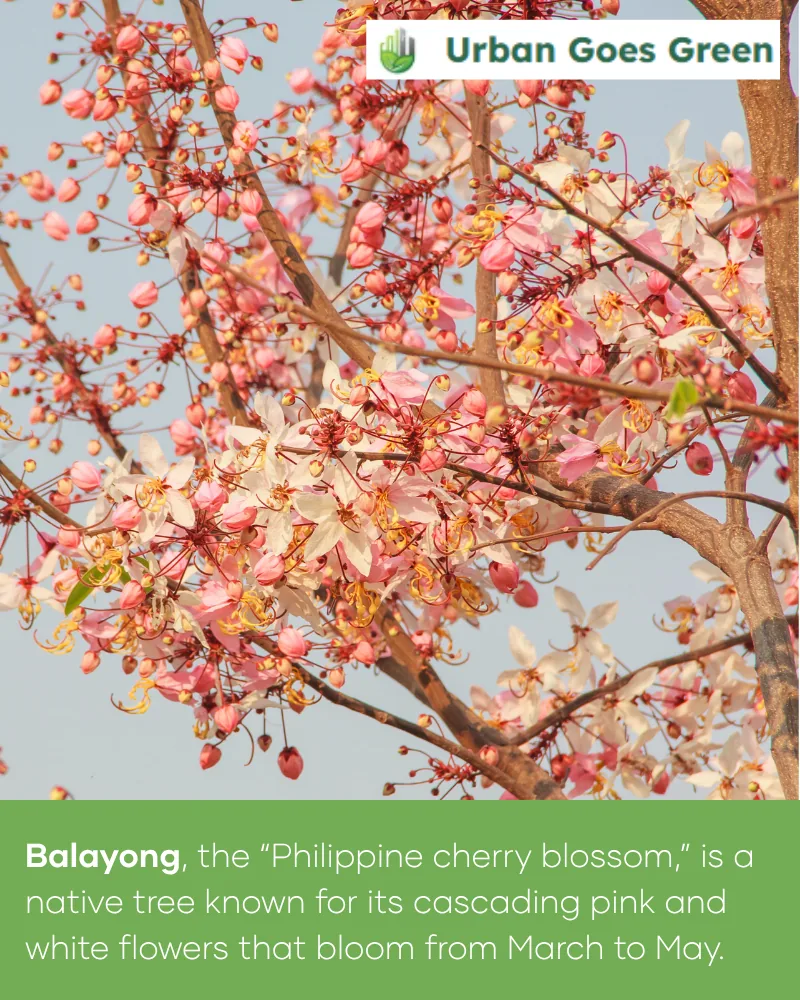
Balayong is known as the "Philippine cherry blossom" because its pink flowers create a stunning seasonal display similar to Japanese sakura. This native tree blooms between March and May, covering itself in cascading clusters of pink and white flowers. Balayong grows well in parks, roadsides and large gardens across the Philippines. Puerto Princesa in Palawan has a whole park of them, Balayong People's Park.
Explore Our Philippine Plant Guide
Browse our directory of 400+ Philippine plants with detailed care guides, growing tips and species profiles. Free to access for all Filipino gardeners.
Conservation Tips for Native Plants
Growing native plants is an act of conservation. Follow these guidelines to support Philippine biodiversity.
- Buy from reputable nurseries that propagate plants legally. Never purchase wild-collected specimens of endangered species.
- Report illegal collection of endangered native plants to the DENR (Department of Environment and Natural Resources).
- Join local tree planting events that focus on native species. Many organisations across the Philippines organise regular planting activities.
- Share propagated plants with neighbours and community gardens to increase the population of native species in urban areas.
- Learn about CITES regulations before buying or selling protected species like waling-waling and jade vine.
- Support botanical gardens like the Philippine National Botanic Garden and UP Diliman that propagate and conserve native species.
- Replace invasive ornamentals with native alternatives in your garden. Native plants support more wildlife than imported species.
- Document native plants in your area using apps like iNaturalist to contribute to biodiversity monitoring.
Where to Source Native Plants
Urban Goes Green promotes native plant awareness through our comprehensive plant guide directory. Browse species profiles for detailed growing information on Philippine native and ornamental plants.
For landscaping projects that feature native species, explore our landscaping services. We help Filipino homeowners create beautiful, biodiverse gardens with locally adapted plants.
Frequently Asked Questions
What is the national tree of the Philippines?
The narra (Pterocarpus indicus) is the national tree of the Philippines, declared through Proclamation No. 652 in 1934. Narra is prized for its extremely durable hardwood, which features a beautiful reddish-brown grain used in fine furniture and carvings. The tree grows up to 30 metres tall and produces clusters of fragrant yellow flowers. Decades of illegal logging have made narra a threatened species in the wild. Planting narra trees is an act of conservation and national pride.
Is the jade vine endangered?
Yes, the jade vine (Strongylodon macrobotrys) is classified as vulnerable on the IUCN Red List and is considered endangered in the wild. This stunning plant with turquoise claw-shaped flowers is endemic to the Philippines, found only in the tropical forests of Luzon, Mindoro and Catanduanes. Habitat destruction from deforestation and land conversion threatens its survival. Growing jade vine in gardens and parks helps preserve the species. Several botanical gardens in the Philippines actively propagate jade vine for conservation.
Can I grow native Philippine plants in my garden?
Yes, many native Philippine plants grow well in home gardens. Anahaw, kapa-kapa, talisay and alocasia zebrina are excellent choices for residential landscaping. They are adapted to the local climate and require less maintenance than imported ornamental plants. Source native plants from reputable nurseries that propagate them legally rather than collecting from the wild. Growing native plants helps preserve biodiversity and supports local ecosystems by providing food and shelter for native wildlife.
Is sampaguita native to the Philippines?
No. Sampaguita (Jasminum sambac) is the national flower of the Philippines, declared in 1934, but it is not native. It came from South Asia and has been grown here for centuries. If you want a native flowering plant, try kapa-kapa, jade vine, waling-waling, ilang-ilang or balayong.