Everything You Need to Know About Dragon Fruit — Care, Propagation & More
Your complete Filipino gardener’s guide to growing, caring for, and harvesting Pitahaya — from cutting to fruit.
What Can You Eat?
Discover the edible parts and how Filipinos enjoy this plant in everyday cooking.
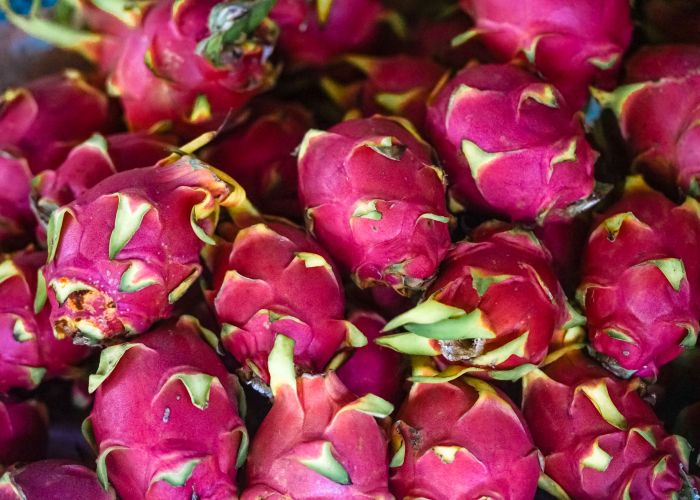
Eaten fresh by slicing in half and scooping the flesh. Popular in smoothies, fruit shakes, and salads. Also used in wine-making and as natural food coloring (red-fleshed varieties). The flower buds can be cooked as a vegetable.
Dragon fruit farming has boomed in the Philippines, particularly in Ilocos Norte, Tarlac, and parts of Mindanao. It is seen as a high-value crop for smallholder farmers. The striking appearance makes it popular for fiestas and fruit gift baskets.
Germination Guide
From cutting to rooted plant — here’s what to expect.
Planting Instructions
Everything you need to prepare — soil, spacing, depth, and the best Philippine planting months.
Propagation Methods
Learn the best ways to multiply your plants — from seeds to cuttings.
Care Guide
Keep your plant happy and thriving with the right light, water, and nutrients.
Full sun (6-8 hours); partial shade in extreme heat areas
Moderate; let soil dry between waterings. Increase slightly during flowering and fruiting.
Balanced NPK (16-16-16) every 2 months; switch to high-K during fruiting. Apply aged manure or compost quarterly.
20-35°C
60-80%
Prune excess branches; allow only 3-4 main stems per post. Remove dead or diseased segments promptly.
Harvest Guide
Know when and how to harvest for the best yield and flavor.
Skin turns from green to bright pink/red. The "ears" (bracts) start to wither slightly. Fruit yields to gentle pressure. Harvest 3-4 days after full color change for best sweetness.
Twist or cut fruit with pruning shears, leaving 2 cm of stem attached. Handle gently to avoid bruising. Store at room temperature for 2-3 days or refrigerate for up to 2 weeks.
Common Problems & Solutions
Spot issues early and fix them fast.
Stem rot (soft, brown, mushy segments)
Cause: Overwatering or poor drainage; fungal infection (Fusarium)
Solution: Cut away all rotted sections with a sterile knife. Improve drainage. Reduce watering frequency. Apply fungicide to cut surfaces.
Flowers drop without setting fruit
Cause: Poor pollination (dragon fruit flowers open at night); extreme heat; nutrient deficiency
Solution: Hand-pollinate by transferring pollen between flowers using a soft brush at night (8-11 PM). Plant multiple varieties for cross-pollination.
Ants and mealybugs on stems
Cause: Mealybugs attracted to sap; ants farm them for honeydew
Solution: Spray with neem oil or 70% isopropyl alcohol diluted with water. Apply sticky barriers on posts to block ants.
Sunburn (yellow, dry patches on stems)
Cause: Sudden exposure to intense direct sun after a cloudy period
Solution: Gradually acclimate new cuttings to full sun. Use 30% shade net during extreme heat (above 38 degrees C).
Perfect Plant Partners
Plants that grow well together.