Everything You Need to Know About Oyster Mushroom (Kabute) — Cultivation, Care & More
Your complete Filipino gardener’s guide to growing, caring for, and harvesting Oyster Mushrooms — from spawn to plate.
What Can You Eat?
Discover the edible parts and how Filipinos enjoy this plant in everyday cooking.
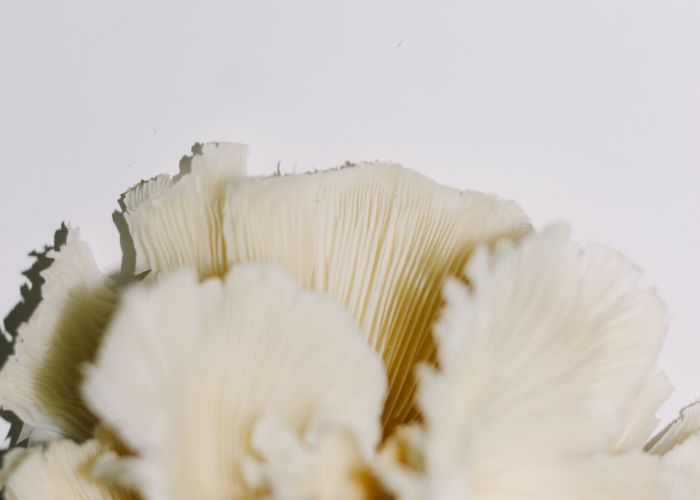
Adobong kabute, sinigang na kabute, sisig, and as a burger patty substitute. Also stir-fried with oyster sauce or added to pancit.
Oyster mushroom farming has become a popular livelihood project across the Philippines, from Benguet to Bukidnon. Kabute is prized as a meat substitute in Filipino vegetarian cooking and is increasingly grown in urban home setups using simple grow bags on shelves. The mushroom industry has been supported by DOST and DA training programmes in many provinces.
Spawn Run Guide
From inoculation to full colonisation — here’s what to expect.
Growing Setup
Everything you need to prepare — substrate, environment, and the best Philippine growing months.
Propagation Methods
Learn how to multiply your mushroom production.
Care Guide
Keep your mushrooms thriving with the right environment.
Indirect light / shade — never direct sun
Mist 2-3 times daily; maintain 80-90% relative humidity in fruiting area
All nutrients come from the substrate; no additional fertiliser needed
25-30°C for incubation; 20-28°C for fruiting
Good airflow is critical during fruiting — use fans or open windows 2-3 times daily
Keep the growing area clean. Disinfect shelves between batches to prevent green mould.
Harvest Guide
Know when and how to harvest for the best yield and flavour.
Caps are 5-10 cm wide, edges begin to flatten or curl slightly upward. Harvest before caps fully flatten for best texture.
Twist and pull the entire cluster gently from the substrate. Use a clean knife to trim the base. Each bag can produce 2-3 flushes.
Common Problems & Solutions
Spot issues early and fix them fast.
Green mould (Trichoderma) on bags
Cause: Contaminated spawn, poor pasteurisation, or unclean environment
Solution: Remove contaminated bags immediately. Disinfect the area with 70% alcohol. Improve pasteurisation process and source spawn from reputable labs.
No pinning after full colonisation
Cause: Insufficient fresh air, low humidity, or wrong temperature
Solution: Increase ventilation, mist more frequently, and ensure temperature drops to 20-28°C. Cut additional holes in the bag.
Long, thin stems with small caps
Cause: Insufficient light or poor air exchange
Solution: Move bags closer to indirect light. Improve ventilation to allow CO2 to escape.
Fruit flies or gnats around bags
Cause: Decaying organic matter attracting insects
Solution: Use fine mesh screens on windows. Remove spent substrate promptly. Set up sticky traps near the growing area.
Perfect Plant Partners
Plants that pair well with mushrooms in your garden or kitchen.