Everything You Need to Know About Kamias (Bilimbi) — Care, Propagation & More
Your complete Filipino gardener’s guide to growing, caring for, and harvesting Kamias — the beloved souring agent for sinigang and Filipino pickles.
What Can You Eat?
Discover the edible parts and how Filipinos enjoy this plant in everyday cooking.
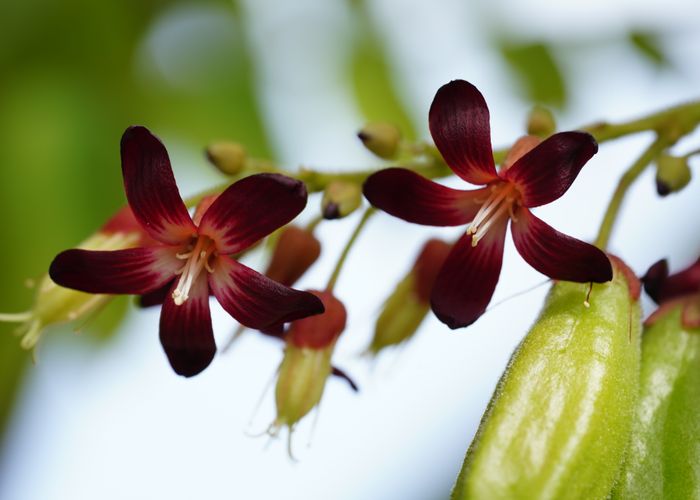
Kamias is a prized souring agent in sinigang na kamias, giving it a distinctly tangy, slightly astringent flavor. The fruit is also pickled (atsara), dried as a souring agent for storage, candied, or used in fish dishes like paksiw.
Kamias trees are a common sight in Filipino backyards, especially in rural provinces. The tree produces an abundance of fruit that neighbors freely share. It is one of several traditional souring agents alongside sampaloc and calamansi. Kamias is also used in folk medicine as a remedy for coughs and skin conditions.
Germination Guide
From seed to sprout — here’s what to expect and how to get started.
Planting Instructions
Everything you need to prepare — soil, spacing, depth, and the best Philippine planting months.
Propagation Methods
Learn the best ways to multiply your plants — from seeds to cuttings.
Care Guide
Keep your plant happy and thriving with the right light, water, and nutrients.
Full sun (6-8 hours daily)
Regular watering during dry season; drought-tolerant once established
Apply complete fertilizer (14-14-14) twice a year. Supplement with organic compost around the drip line.
25-35°C (tropical; not frost-tolerant)
60-90% (thrives in humid Philippine climate)
Mulch around the base. Prune lower branches for clearance. Remove dead or crossing branches annually.
Harvest Guide
Know when and how to harvest for the best yield and flavor.
Fruit is ready when it is light green, slightly translucent, and yields to gentle pressure. Overripe fruit turns yellowish and drops from the tree.
Pick fruit by hand directly from the trunk and branches (cauliflorous fruiting). Shake branches gently to collect ripe fruit. Use immediately or preserve by drying, pickling, or freezing.
Common Problems & Solutions
Spot issues early and fix them fast.
Fruit fly infestation
Cause: Oriental fruit fly attracted to ripe fruit
Solution: Set up fruit fly traps using methyl eugenol bait. Harvest fruit promptly when ripe. Pick up fallen fruit to reduce breeding sites.
Leaf spot disease
Cause: Fungal infection during prolonged wet weather
Solution: Improve air circulation by pruning dense growth. Apply copper-based fungicide if severe. Remove affected leaves.
Poor fruiting
Cause: Insufficient sunlight, young tree, or nutrient deficiency
Solution: Ensure full sun. Apply balanced fertilizer. Be patient with young trees; kamias is generally prolific once mature.
Scale insects on bark
Cause: Scale insect colonization on trunk and branches
Solution: Scrub off with a stiff brush. Apply horticultural oil spray. Encourage natural predators.
Perfect Plant Partners
Plants that grow well together.